



News:
Brokerage
Posted: March 7, 2017
Year in review: Analyzing the self storage industry by Malagisi
 Nick Malagisi, Sperry Van Ness Commercial Realty
For the past six years, I have been invited to participate on a national broker panel at UBS headquarters. This panel is part of a day-long self storage REIT conference held annually in New York City.
An earlier panel in the day featured CEOs from five publicly traded REITS in the real estate industry. They answered questions from an audience made up of analysts from the “top looking down.” Meanwhile, our humble broker panel took questions from “boots on the ground, and up.”
Part of our responsibility during the day-long event is to make ourselves available to the various analysts. Institutional interest in the self storage sector has never been stronger, and I found myself booked with meetings every half hour for the balance of the day after our national broker panel interview for the first time in my six years attending this conference.
And why not? The cap rates for stabilized class A product in our industry are lower than every other product type, except for apartments. Plus, self storage has the lowest default rate of all the product types in the CMBS market! Furthermore, year over year growth in NOI has ranged from a low of 6.9% to a high of 9.5% in each of the last five years coming out of the last recession. Yes, the stock prices of the five publicly traded REITS took a sharp decline in the 4Q of 2016. Why was that?
Apparently, the analysts noticed that that the rate of growth began slowing down in 3Q of 2016. Many of the analysts are looking ahead and seeing higher interest rates affecting cap rates with new development coming online while comparing the self storage industry to the rest of the commercial real estate industry. Have we seen the peak of the real estate cycle already? Well, yes, we are only going to see a more normal 4-5% NOI growth instead of the 7-9% growth of the past 5 years. Obviously the stock market is all about anticipating what’s coming ahead.
National economists are predicting a 3% GDP growth rate this year thanks to the positive Trump administration stimulus agenda, and commercial real estate should participate in the demand for new space for businesses. Let’s hope that politics doesn’t get in the way of the economy.
Nick Malagisi, SIOR, is the national director self storage at SVN Commercial Real Estate Advisors, Buffalo, N.Y.
Tags:
Brokerage
MORE FROM Brokerage
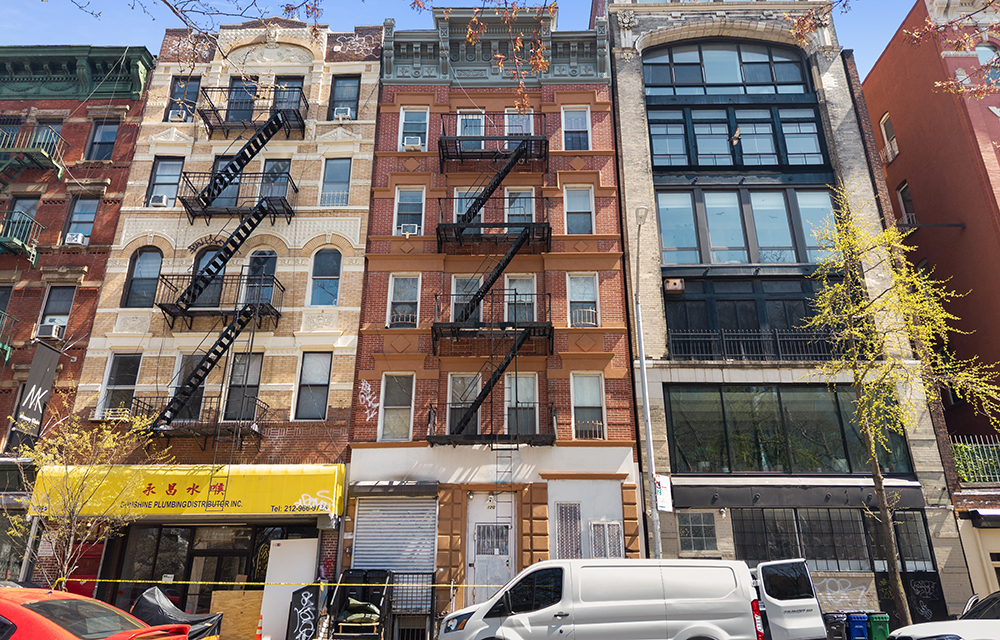
Investment Property Realty Group sells 120 Forsyth St. for $1.35 million
Manhattan, NY Investment Property Realty Group (IPRG) closed the sale of 120 Forsyth St., a mixed-use building located in the Lower East Side section of the city, for $1.35 million.



 (2).gif)

Columns and Thought Leadership

New York’s streets are full again, and the retail numbers prove it - by Noam Aziz
Walk down any New York block this year and you can feel it. The sidewalks are crowded, the storefronts are lit, and the energy that defines this city is back at full volume.

Hunt commercial real estate question and answer: Fortune 500 wisdom - by David Hunt
Yes, there are lessons to be learned from the largest companies in America when comes to managing your real estate. But the decision to buy or lease real estate may not be one of

A guide to finding the right NYC property management company - by Sanjay Gandhi
Being a small to midsize landlord in NYC is an increasingly demanding endeavor. From navigating complex regulations, increased compliance demands to dealing with tenant issues and remediating violations. It is wise to enlist the assistance of a partner, a professional

Positive forecast for New York’s pro-housing push? - by Philip Butler
New York’s housing crisis remains a hot button topic despite growing consensus that varied and affordable housing is desperately needed statewide. Governor Hochul has recently introduced several initiatives to overcome N.Y.’s anti-housing
.gif)