



News:
Brokerage
Posted: January 17, 2023
Will Your Buildings be Local Law 97 Compliant by 2025? - by Alexander Hochhausl

Over 70% of New York’s greenhouse gas emissions come from buildings. In New York City, those emissions come from 1 million buildings burning fossil fuels for heating, cooling, and power.
New York City’s 2019 Climate Mobilization Act, a first-of-its-kind legislation for the City, included passage of the New York City Building Emission Law, also known as Local Law 97. The new law sets increasingly stringent caps on greenhouse gas emissions that building owners must meet by 2024 and certify compliance by May 1, 2025 or face civil penalties.
Under the New York City law, if your building exceeds 25,000 gross square feet or if you have multiple buildings on the same lot that together exceed 50,000 gross s/f, you may need to measure and report carbon emissions to the Department of Buildings.
If you know that your building is exempt from the emissions limits, the law still requires owners to undertake and report on thirteen prescriptive steps addressing weatherization, lighting, and equipment maintenance, controls, and upgrades.
What happens if your building is not compliant by the 2025 filing deadline? The simple answer is that you will be fined. For example, a 100,000-square-foot office building that exceeds the emission limit by 20% will receive a bill from the City for over $45,000! Another bill will be sent every year you are not in compliance. This will continue until 2030, when the emission limits are further reduced, leading to increased fines.
The good news is that NYSERDA, NYC agencies, and utilities offer a variety of financial incentives and financing to assist building owners with paying for assessments and upgrades. There are also financial assistance options tied to the consultation and engagement of registered professionals throughout the measurement and compliance process.
Alexander Hochhausl is a department manager for H2M architects + engineers, Melville, NY.
Tags:
Brokerage
MORE FROM Brokerage
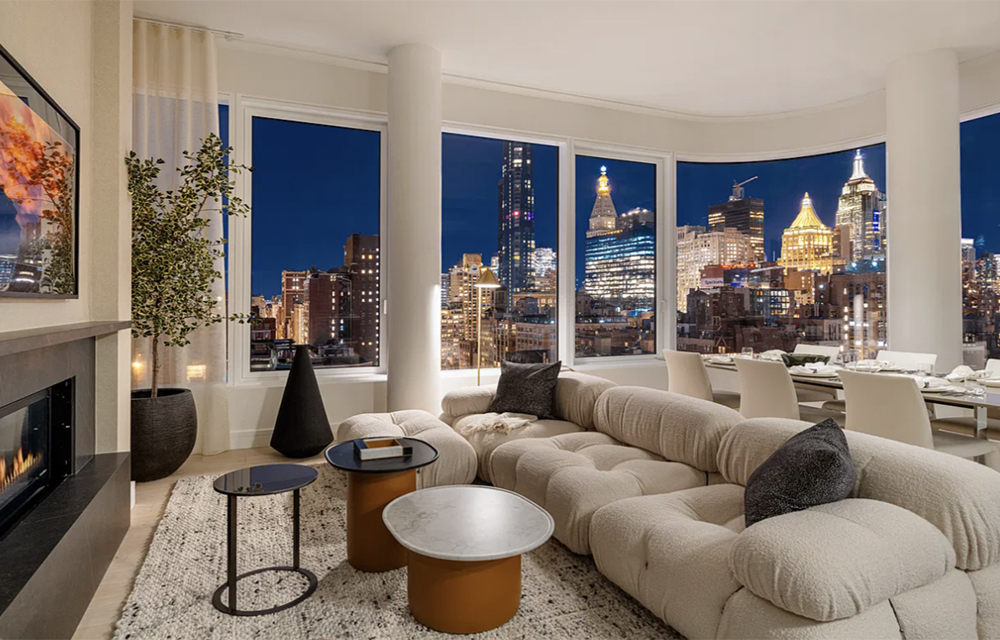
200E20TH sells out in Gramercy, penthouse A closes out sales at the CetraRuddy-designed condominium residences
Manhattan, NY 200E20TH, the CetraRuddy-designed architectural masterwork that brought a curved, contemporary sensibility to Gramercy’s Beaux-Arts streetscape, has



 (2).gif)

Columns and Thought Leadership

New York’s streets are full again, and the retail numbers prove it - by Noam Aziz
Walk down any New York block this year and you can feel it. The sidewalks are crowded, the storefronts are lit, and the energy that defines this city is back at full volume.

Hunt commercial real estate question and answer: Fortune 500 wisdom - by David Hunt
Yes, there are lessons to be learned from the largest companies in America when comes to managing your real estate. But the decision to buy or lease real estate may not be one of

Hunt CRE question and answer: Choosing a real estate agent - by David Hunt
First, we will only work with one agent exclusively. The primary reason is that we want that agent to legally represent our client’s interests. In New York State, a real estate agent has a fiduciary

The art of investing in real estate - by Thomas Donovan
Real estate investing is as much an art as it is a skill. No one can time the market, or the factors that drive it, perfectly. Location, zoning, size, transportation, and neighborhood density give you a baseline for
.gif)