



News:
Brokerage
Posted: September 27, 2022
Westchester IDA votes preliminary approval of incentives for Yorktown redevelopment project
Yorktown, NY The Westchester County Industrial Development Agency (IDA) has voted preliminary approval of financial incentives for the redevelopment of a vacant car dealership on Rte. 202 into a 16,000 s/f school bus storage facility.
Applicant Presidential Associates 3805 LLC is requesting a total of $362,576 in tax benefits comprised of $117,770 in sales tax exemptions, $52,000 in mortgage recording tax exemptions and a $192,806 real property tax exemption.
The 2.7-acre property, which had been vacant for five years, is located at 3805 Crompond Rd. (Rte. 202). It will be occupied by Bird Bus Sales, a distributor and dealership of Blue Bird and Mirco Bird buses and commercial buses. The company, which is the leading electric bus dealer in the Northeast, is moving its existing operations from Elmsford. The new location will have 8,000 s/f of sales office space and 8,000 s/f of warehouse space.
“The financial incentives to be provided by the IDA will not only create jobs but will also help retain an important business that supports the transportation needs of our County’s schools. The company’s commitment to sustainability through bus electrification aligns with our county’s energy policies and goals,” said Westchester County executive George Latimer.
“The IDA is pleased to vote preliminary approval of incentives for this project which will transform an abandoned property into a new facility for school bus storage. We are particularly pleased to see that the new owner of this property is a leader in school bus electrification, alternative fuels and 100 percent zero emission electric bus sales in New York State,” said IDA chair Joan McDonald.
Bird Bus Sales, which is headquartered in Plainview, Long Island, is a pioneer in the alternative fuel and clean energy sector of the bus industry and is the top-selling distributor of gasoline, electric and propane school buses in its market. Bird Bus Sales plans to eliminate diesel-powered vehicles from its portfolio by 2027 and gasoline- powered vehicles shortly thereafter.
The $6.5 million project is estimated to create between 30 and 35 construction jobs of which 35% are expected to be Westchester County hires. The project is also expected to retain 8 direct jobs on-site resulting in approximately $301,000 in earnings and $692,000 in economic activity within the County. The applicant said it would comply with the IDA’s Labor Policy.
Tags:
Brokerage
MORE FROM Brokerage
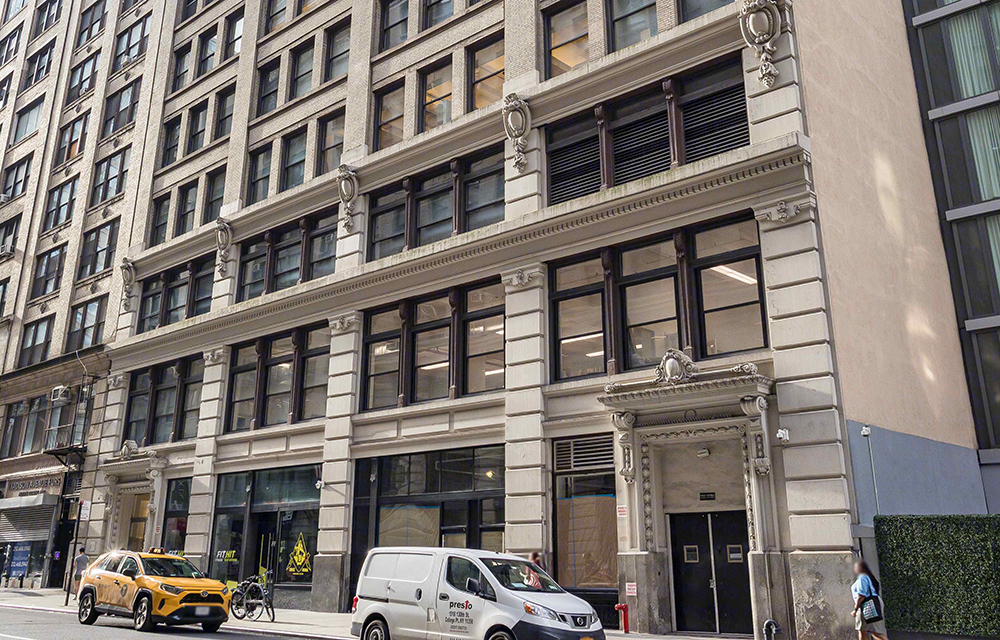
Koeppel Rosen inks 16-year 33,783 s/f lease for coworking firm Nomadworks at 122 West 27th St.
Manhattan, NY According to Koeppel Rosen LLC, leasing and management agent for the Rosen family portfolio, Nomadworks has signed a new 16-year, two-month lease totaling 33,783 s/f at 122 West



Quick Hits
 (2).gif)

Columns and Thought Leadership

The art of investing in real estate - by Thomas Donovan
Real estate investing is as much an art as it is a skill. No one can time the market, or the factors that drive it, perfectly. Location, zoning, size, transportation, and neighborhood density give you a baseline for

New York’s streets are full again, and the retail numbers prove it - by Noam Aziz
Walk down any New York block this year and you can feel it. The sidewalks are crowded, the storefronts are lit, and the energy that defines this city is back at full volume.

Hunt CRE question and answer: Choosing a real estate agent - by David Hunt
First, we will only work with one agent exclusively. The primary reason is that we want that agent to legally represent our client’s interests. In New York State, a real estate agent has a fiduciary

Hunt commercial real estate question and answer: Fortune 500 wisdom - by David Hunt
Yes, there are lessons to be learned from the largest companies in America when comes to managing your real estate. But the decision to buy or lease real estate may not be one of
.gif)