

News: Brokerage

Vachon and de la Garza of KeyBank CDLI secure $10.6 million for Cornerstone’s acquisition of 52-unit Silver Lake Meadows


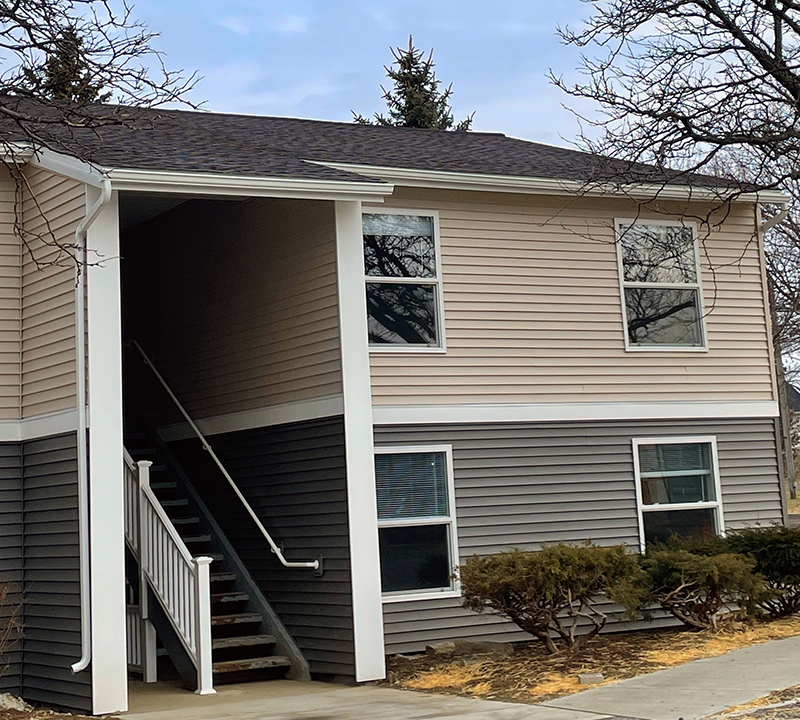
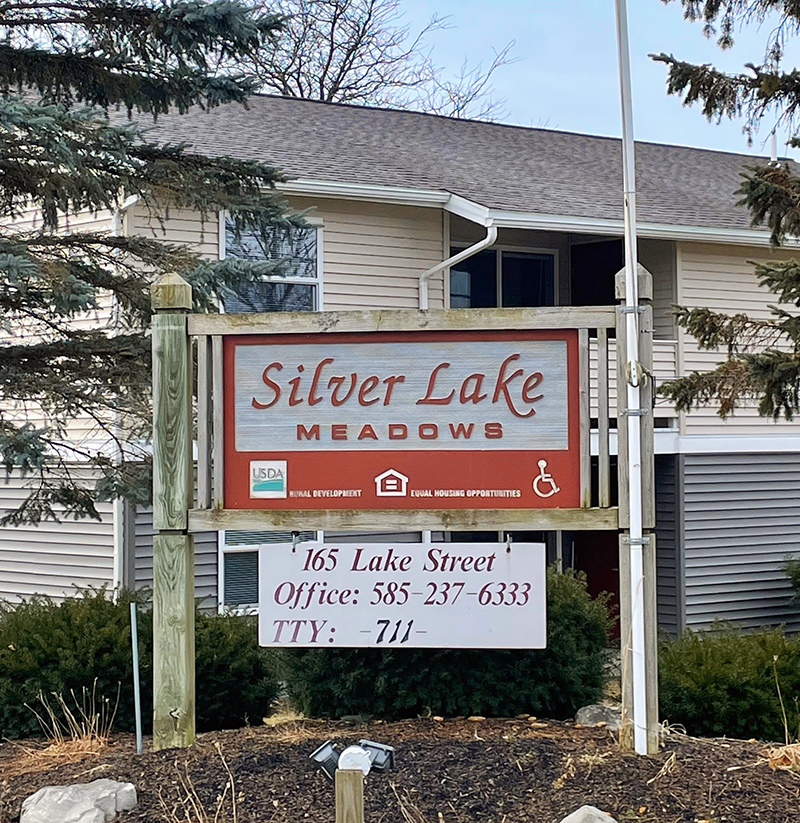
Perry, NY KeyBank Community Development Lending and Investment (CDLI) provided $10.6 million to Rochester’s Cornerstone Group, Ltd. (Cornerstone) for the acquisition and rehabilitation of Silver Lake Meadows, a 52-unit, fully subsidized family project at 165 Lake St.

The sponsor for Silver Lake Meadows is Wyoming County Community Acton, Inc. (WCCA), a nonprofit agency dedicated to helping individuals and families improve their lives. WCCA partnered with Cornerstone, a leader in affordable housing development in upstate New York, for the project. Cornerstone will manage the day-to-day operations of the property.

Silver Lake Meadows is an existing 52-unit affordable apartment, seven building community for individuals and families earning no more than 30%, 50% and 60% of the area median income. There are 14 one-bedroom units and 38 two-bedroom units, with six total accessible units which will be retrofitted to meet ADA and Section 504 requirements. All buildings were part of a rehabilitation in 2003, but there are now capital needs and energy efficiency improvements required to extend the buildings’ useful lives.

The buildings will be rehabilitated in conformance with the New York State Energy Research and Development Authority (NYSERDA) multifamily performance program and will work to reduce overall utility costs by 20%.

The project also benefits from project-based subsidy provided by the U.S. Department of Agriculture Rural Development (RD) on all 52 units. The site has a central location within the village and is within walking distance to the regional bus stop and multiple grocery stores. There is available parking throughout the site containing 96 spaces.

The $10.6 million in KeyBank CDLI funds include a $5.4 million in 9% Low Income Housing Tax Credit (LIHTC) equity and $5.5 million construction loan structured by John-Paul Vachon and Kate de la Garza of KeyBank.

Additional funding sources include a NYSERDA energy grant, $96 million WCCA loan and $453 million from a Federal Home Loan Bank. The permanent financing will also include a new RD 538 loan underwritten by Rose Capital.

MORE FROM Brokerage

NYSCAR June 2026 president’s message - by Mercedes Brien

As I write this letter, we are preparing to be at the Annual Conference being held at the Rivers Casino, Schenectady, New York. I look forward to reporting on the conference in my next letter. We have some great courses coming up via Zoom. Please be sure to keep watch on upcoming courses by visiting nyscar.org/resources and tools/professional development.
READ ON THE GO
DIGITAL EDITIONS
Subscribe
Columns and Thought Leadership
A fresh start - by Shallini Mehra and Amit Doshi

A fresh start - by Shallini Mehra and Amit Doshi

For the past several years, the New York City multifamily housing market has been defined by disruption. The combined impact of the HSTPA rent laws and a sharply higher interest rate environment has fundamentally reduced
The death of the generic offering memorandum: What buyers expect in 2025 - by Kimberly Zar Bloorian

The death of the generic offering memorandum: What buyers expect in 2025 - by Kimberly Zar Bloorian

There was a time when an offering memorandum (OM) was pretty bare bones, some photos, a few bullet points on income, and a rent roll thrown in at the back. That used to get the job done. Not anymore. In 2025, buyers are sharper, faster, and more selective. They’re looking
The anticipated effect of Basel III and ISO 20022 implementation on commercial real estate - by Michael Zysman

The anticipated effect of Basel III and ISO 20022 implementation on commercial real estate - by Michael Zysman

July 1, 2025 is the deadline for US banks to begin to adopt Basel III banking standards and July 14, 2025 is the deadline for U.S. banks to adopt ISO 20022 messaging standards. Both will have a significant effect on the banking and commercial real estate (CRE) finance sectors.
Tri-state capital  migrates nationally amid  regulation pressure - by Reese Weaver

Tri-state capital migrates nationally amid regulation pressure - by Reese Weaver

New York tri-state multifamily investors are increasingly reallocating capital to less-regulated markets across the U.S. as rent control and legislative risk erode returns at home. With over 60% of New York City’s rental housing stock classified as rent-stabilized, the traditional value-add model — buying under-performing buildings,