



News:
Brokerage
Posted: August 3, 2021
Uniland Dev. unveils town center concept plan for Eastern Hills Mall
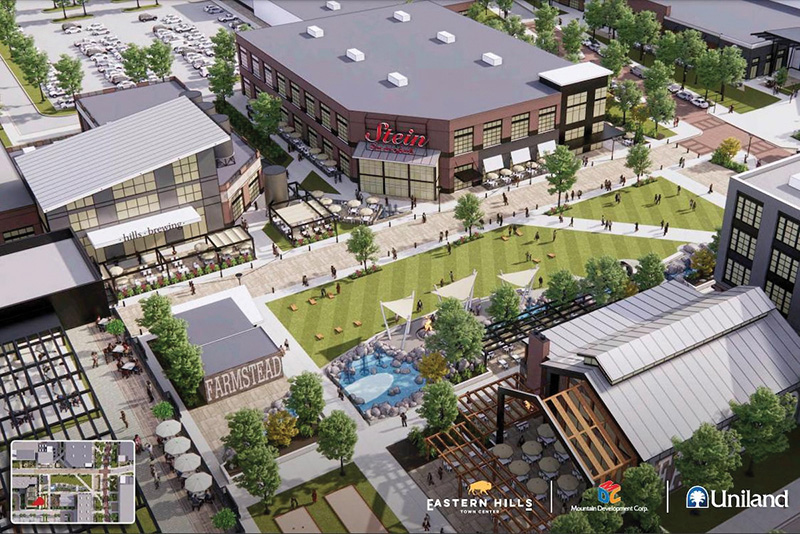
Amherst, NY Uniland Development Co. and Mountain Development Corp. (MDC) unveiled plans for the conversion of Eastern Hills Mall into a walkable, mixed-use Town Center.
The Eastern Hills Town Center revitalizes an aging, 100-acre shopping complex through the development of new office, medical, residential, shopping, dining, recreational and civic areas to create a truly unique environment. Located on the Clarence/Amherst border between Main St., Transit Rd. and Sheridan Dr., the project has the potential to become a new regional destination for both residents and tourists, as nothing on this scale currently exists in Western New York.
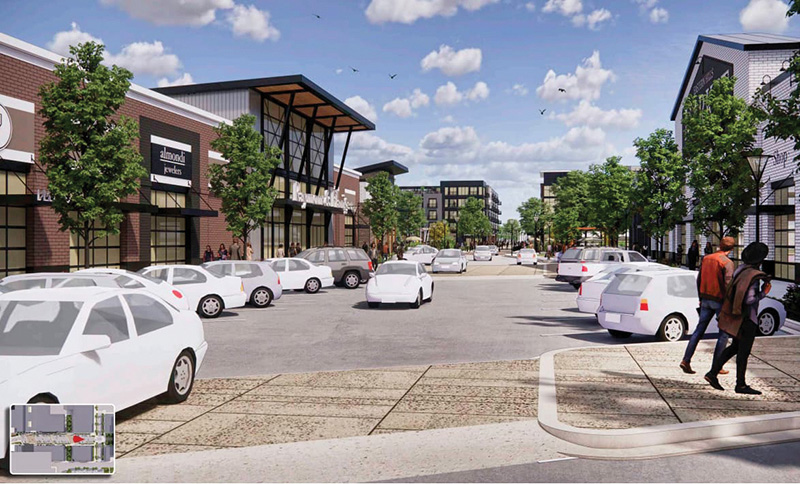
“Our goal is to create one of the most compelling places to live, work and visit in WNY,” said Carl Montante, Jr., vice president of marketing and strategic initiatives for Uniland. “Restaurants within the town center will have patios offering views of lush landscaping and sidewalks as opposed to parking lots. Residents will be able to walk to the grocery store, park, and ice cream shop, and experience movies, concerts, and other events. Office workers will be able to walk to restaurants, fitness centers, and have access to numerous services like healthcare, childcare, and salons. In our market research we wanted to take the best aspects of popular areas in the Buffalo region and combine them in one master-planned 100-acre project. This project is all about placemaking, creating vibrancy and building community.”
Town centers have grown in popularity across the U.S. as more people desire the appeal of a suburban location and the lifestyle benefits of an urban-like, walkable village that blends retail, entertainment, health and wellness with office space and residential living options. Most of site will be accessible within a 10-minute walk, supporting smartgrowth by reducing car dependency and enhancing quality of life.
Eastern Hills Mall operations will continue during development.
Phase one is still evolving based on demand. Upon full buildout, Uniland and MDC are planning over 1,000 apartments, one million s/f of office space, a brewery, several restaurants, and a park for outdoor events. The start of phase one also depends on the public sector completing certain off-site infrastructure improvements to accommodate the amount of new development envisioned. Full build-out of the project is expected to take ten or more years to complete. Uniland is currently looking to attract restaurants, breweries, and businesses seeking office space to be the first to enjoy the numerous benefits of locating at the Eastern Hills Town Center.
Tags:
Brokerage
MORE FROM Brokerage
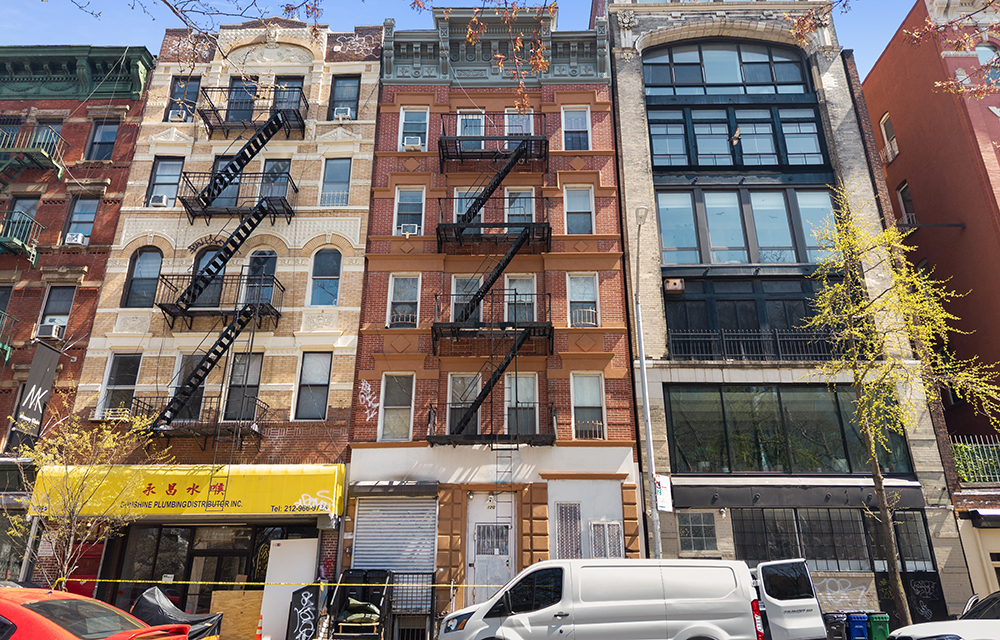
Investment Property Realty Group sells 120 Forsyth St. for $1.35 million
Manhattan, NY Investment Property Realty Group (IPRG) closed the sale of 120 Forsyth St., a mixed-use building located in the Lower East Side section of the city, for $1.35 million.



Quick Hits

Columns and Thought Leadership

A guide to finding the right NYC property management company - by Sanjay Gandhi
Being a small to midsize landlord in NYC is an increasingly demanding endeavor. From navigating complex regulations, increased compliance demands to dealing with tenant issues and remediating violations. It is wise to enlist the assistance of a partner, a professional

Positive forecast for New York’s pro-housing push? - by Philip Butler
New York’s housing crisis remains a hot button topic despite growing consensus that varied and affordable housing is desperately needed statewide. Governor Hochul has recently introduced several initiatives to overcome N.Y.’s anti-housing

Hunt commercial real estate question and answer: Fortune 500 wisdom - by David Hunt
Yes, there are lessons to be learned from the largest companies in America when comes to managing your real estate. But the decision to buy or lease real estate may not be one of

New York’s streets are full again, and the retail numbers prove it - by Noam Aziz
Walk down any New York block this year and you can feel it. The sidewalks are crowded, the storefronts are lit, and the energy that defines this city is back at full volume.
.gif)