



News:
Brokerage
Posted: January 19, 2021
The unveiling of the new Moynihan Train Hall - by Joe Aquino

The new Moynihan Train Hall, which connects to Penn Station, should provide a tremendous boost to the retail scene in the lower part of Midtown Manhattan. Retailers in and around the building will see increased traffic from commuters, tourists, and locals who live, work, and play in the surrounding neighborhoods, and this already vibrant part of the city will become even livelier, and more important to the local economy, thanks to this new development.
Moynihan Train Hall—a $1.6 billion project located between Eighth and Ninth Aves. at 31st to 33rd Sts., in the James A. Farley building (formerly New York City’s main post office)—opened on December 31, 2020. It features elaborate lounges, shops, restaurants, and passageways to Penn Station, a 92-ft.-high skylight, and installations by artists Kehinde Wiley, Stan Douglas and Elmgreen & Dragset. Eating and shopping options at Moynihan include Magnolia Bakery, H&H Bagels, Starbucks, Damselfly Flower, and fancy greeting card seller Lovepop. Look for other retail tenants to come on the scene in the near future.
The new facility will serve Long Island Railroad, Metropolitan Transportation Authority, and Amtrak passengers. In addition, Moynihan Train Hall offers easy connections to two of New York City’s primary subway routes: the A/C/E line, which runs beneath Eighth Ave., and the 1/2/3 line beneath Seventh Ave. Commuters can access these lines via the Lower Concourse or aboveground at 33rd St. Local bus connections—headed uptown, downtown, and crosstown—are also available at 34th St.
The Moynihan Train Hall and Penn Station will operate as one Amtrak complex. Amtrak will maintain a presence at Penn Station, but Moynihan Train Hall will be its New York City base. Amtrak customers will use Moynihan Train Hall as their “front door” for boarding trains, and on arriving to New York passengers will have the option to exit at either The Moynihan Train Hall or Penn Station. Connections between those trains and other modes of transportations will probably become faster, more efficient, and pleasanter. The new building has expanded Penn Station’s concourse space by 50%, alleviating the previous congestion issues commuters faced.
The partnership that developed Moynihan Train Hall consists of The Empire State Development Corp., Moynihan Station Development Corp., Amtrak, MTA, LIRR, the Port Authority of New York and New Jersey, the Related Companies, and Vornado Realty Trust. When the original structure opened as a post office in 1913, efficient artificial lighting systems for gigantic buildings were still in the development process. Thus, the postal workers who sorted the mail needed natural light to see what they were doing. The solution: the spectacular skylight that has remained in place to this day, and which now offers visitors a visual treat worthy of New York City.
The original Penn Station was designed by McKim, Mead & White in 1910. The original Penn Station was demolished and rebuilt in 1965 to incorporate the new Madison Square Garden. Today, Penn Station is the busiest railroad station in the Western Hemisphere, serving more than 600,000 passengers per weekday as of 2019. It is located below Madison Square Garden, near many Midtown Manhattan landmarks, including Hudson Yards, the Highline, Herald Square, the Empire State Building, Koreatown, and Macy’s department store.
The Moynihan Train Hall has opened up many opportunities for New York City’s business community. Observers of the real estate market foresee high-end retailers taking space there, and in nearby buildings. The resulting increase in foot traffic will make the area more desirable to office and residential developers, and should lead to increased property values and rental rates. This development has combined with current lulls in commercial and residential leasing to create unforeseen and unheard-of opportunities for the business community. Owner/investors, commercial renters, and startup specialists are all likely to find tremendous growth opportunities in and around Moynihan Train Hall.
Joseph Aquino is the president at JAACRES, New York, N.Y.
Tags:
Brokerage
MORE FROM Brokerage
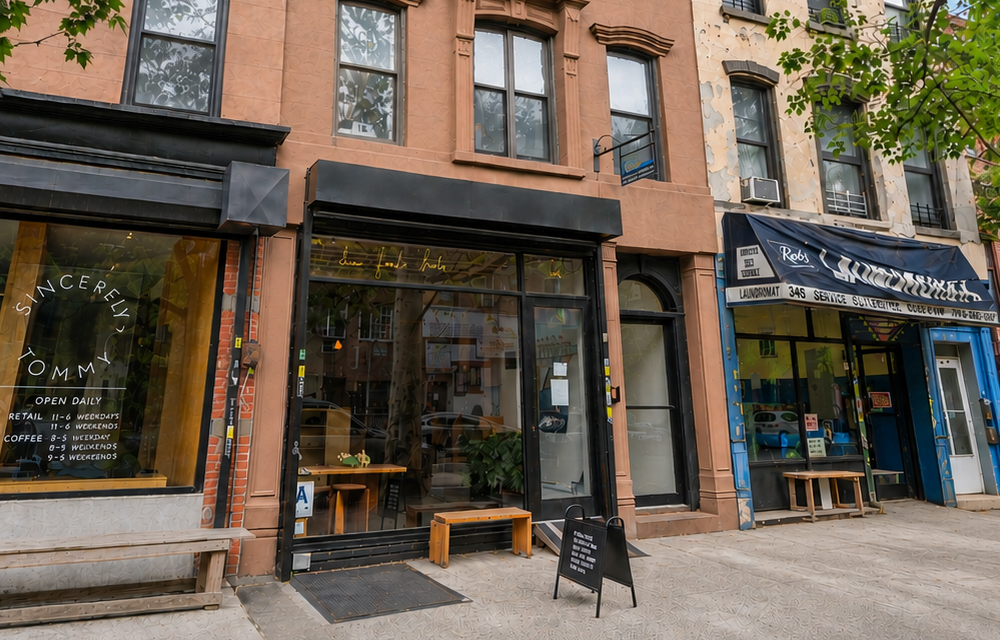
Bestreich, Reynolds, Davila, and Flaherty of Investment Property Realty Group close $1.97 million sale of 343A Tompkins Ave. in Bed-Stuy
Brooklyn, NY Investment Property Realty Group (IPRG) closed the sale of 343A Tompkins Ave., a mixed-use building located in the Bed-Stuy section of the borough, for $1.97 million.


Quick Hits

Columns and Thought Leadership

A guide to finding the right NYC property management company - by Sanjay Gandhi
Being a small to midsize landlord in NYC is an increasingly demanding endeavor. From navigating complex regulations, increased compliance demands to dealing with tenant issues and remediating violations. It is wise to enlist the assistance of a partner, a professional

Hunt commercial real estate question and answer: Fortune 500 wisdom - by David Hunt
Yes, there are lessons to be learned from the largest companies in America when comes to managing your real estate. But the decision to buy or lease real estate may not be one of

Hunt CRE question and answer: Choosing a real estate agent - by David Hunt
First, we will only work with one agent exclusively. The primary reason is that we want that agent to legally represent our client’s interests. In New York State, a real estate agent has a fiduciary

New York’s streets are full again, and the retail numbers prove it - by Noam Aziz
Walk down any New York block this year and you can feel it. The sidewalks are crowded, the storefronts are lit, and the energy that defines this city is back at full volume.
.gif)