



News:
Brokerage
Posted: August 24, 2009
Snapshot thoughts on the current Capital Region commercial real estate market
"Is it half full or half empty?" In the ongoing battle of the optimist versus the pessimist, the debate is unabated in the summer of 2009 when discussing commercial real estate in the Capital Region. However, there are many U.S. markets where the debate is moot as the grip of the harshest recession in decades has lease rates and sales prices, in both office and industrial sectors, plummeting to levels not seen in a generation. As is our history, the Albany region did not buy a ticket for the roller coaster ride of aggressive growth and then precipitous drops experienced by bigger markets during previous cycles. So here are some snapshot thoughts on the current Capital Region market.
CBRE-Albany recently published the 2nd Quarter 2009 Office and Industrial Market Reports for the Capital Region. Not surprisingly, the trends, if not the actual numbers, parallel the national market fairly closely. The national office market availability rate increased to 16.5% for the 2nd quarter of 2009, up from 15.5% the previous reporting period. The Capital Region's vacancy rate increased by approximately 1% as well, rising from 10.5% to 11.6%. The region's economic engines have historically centered on the three major employment groups throughout the region of state government, education, and healthcare. In most past recessions, these sectors typically held up well, proving to be somewhat bullet proof. However, the breadth and depth of the current economic slowdown has impacted these areas as well.
Albany Medical Center, waiting for stabilization in the capital markets, has decided to phase in its plans for a major expansion and reorganization of facilities in midtown Albany. The state of New York, occupiers of office space in excess of 14 million s/f in the region of which nearly 30% is as a tenant, is caught in a significant fiscal crunch itself that is impacting the timeliness and value of its leases with the private sector.
Reflecting trends in private sector lease negotiations, the state is now requesting periods of rental abatement in its RFP's for new or expanded space. Aside from the state itself, there are hundreds of businesses and not-for-profits in the Albany area doing direct and indirect business with New York or operating as a result of state funding. Many of these entities are in limbo while waiting to learn if their businesses will continue to benefit from their state contracts.
The industrial market in Albany has slowed as well since the 3rd quarter of 2008. The 8.5 % vacancy in effect at that time has jumped to 10.5% as of the end of June 2009. This increase very closely mimics the North American industrial vacancy jump from 8.5% in June of 2008 to 10.9% this past June. The largest block of space added to the market was the approximate 300,000 s/f of space formerly occupied by Kaz Manufacturing in Hudson. The close-in Capital Region markets of Albany, Schenectady, Rensselaer, and Saratoga counties actually had a more manageable vacancy factor of 9% as of June 30th.
As the Capital Region's unemployment rate (now at 7.4% as of June 30th up from 4.5% a year ago) continues to rise heading into the 4th quarter of 2009, the vacancies throughout the region will increase as well in both the office and industrial market sectors. Occupiers will shed excess space in an effort to control costs in advance of an economic recovery. The above stats and trends seem to make it easy for the pessimist to take the lead on the debate of "half full or half empty?"
But not so fast. There are many reasons to believe that the optimist will have the final say in reviewing the Capital Region's commercial real estate market heading into the fourth quarter of 2009. GE Healthcare had the ribbon cutting in June on its new 230,000 s/f digital mammography production facility in Rensselaer County while announcing in late July that GE Transportation would be constructing a 260,000 s/f battery plant on the main GE campus in Schenectady. These two projects will employ 400-500 people collectively. Empire Merchants North is well under construction for its new 250,000 s/f headquarters and distribution operations in Greene County. Angio Dynamics has announced it will be moving its administrative offices to a new 50,000 s/f building to be built along the Northway (I-87) in Colonie. And the number one arrow in the quiver for the optimistic view is the construction and operation of the Global Foundries chip fabrication plant in Malta (Saratoga). This project, called Fab 2, is expected to create more than 1,400 jobs along with about 5,000 spin-off jobs. It will further provide thousands of construction jobs between August 2009 and the planned opening in 2012.
The recession that began in December 2007 is still leaving its mark on the Capital Region's commercial real estate market, but all indications point towards better days ahead for the Albany region. Let's give this round to the optimists.
Richard Sleasman, SIOR, is executive vice president of CB Richard Ellis-Albany, Albany, N.Y.
Tags:
Brokerage
MORE FROM Brokerage
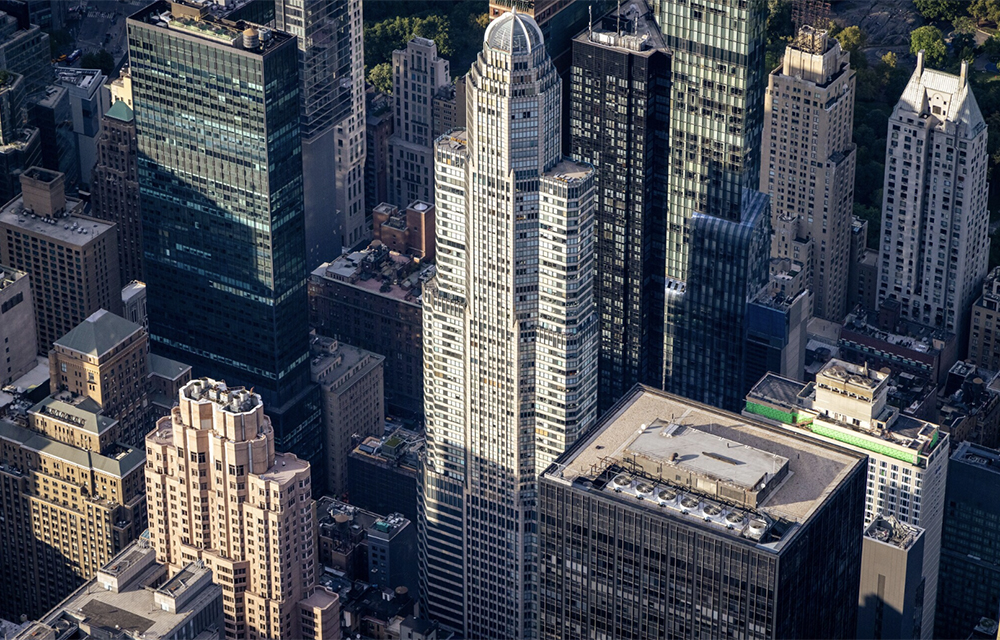
REALM, DelShah Capital and A.M. Properties acquire 377,000 s/f CitySpire office condominium
Manhattan, NY REALM, in partnership with DelShah Capital and A.M. Properties, acquired CitySpire, a 377,000 s/f office condominium comprising 24 floors within the 70-story tower at 156 W 56th St. in Midtown. Adjacent to Central Park with transit access and amenities, CitySpire is a Class A office asset located in one of the city’s most sought-after office corridors.





Columns and Thought Leadership
The anticipated effect of Basel III and ISO 20022 implementation on commercial real estate - by Michael Zysman
July 1, 2025 is the deadline for US banks to begin to adopt Basel III banking standards and July 14, 2025 is the deadline for U.S. banks to adopt ISO 20022 messaging standards. Both will have a significant effect on the banking and commercial real estate (CRE) finance sectors.

The death of the generic offering memorandum: What buyers expect in 2025 - by Kimberly Zar Bloorian
There was a time when an offering memorandum (OM) was pretty bare bones, some photos, a few bullet points on income, and a rent roll thrown in at the back. That used to get the job done. Not anymore. In 2025, buyers are sharper, faster, and more selective. They’re looking

A fresh start - by Shallini Mehra and Amit Doshi
For the past several years, the New York City multifamily housing market has been defined by disruption. The combined impact of the HSTPA rent laws and a sharply higher interest rate environment has fundamentally reduced

Tri-state capital migrates nationally amid regulation pressure - by Reese Weaver
New York tri-state multifamily investors are increasingly reallocating capital to less-regulated markets across the U.S. as rent control and legislative risk erode returns at home. With over 60% of New York City’s rental housing stock classified as rent-stabilized, the traditional value-add model — buying under-performing buildings,