


Search
Story results for:

2017 Year in Review: Heather Conley, Heather Conley Photography
December 19, 2017
What was your most notable project, deal, transaction or professional achievement in 2017?
Creative collaboration with a new client on a 40 s/f corporate interior renovation transformation project from progress through final results. The spaces were designed to…

2017 Year in Review: Lina Gottesman, Altus Metal & Marbles Services, Inc.
December 19, 2017
What was the best decision you made in 2017 and why?
I was the corporate walk chair for the Leukemia Lymphoma Society’s “Light The Night Walk,” which raised $1.4 million. In addition to fundraising, I wanted to…
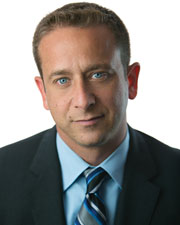
2017 Year in Review: Mark Bahiri, Emerald Creek Capital
December 19, 2017
What was your most notable project, deal, transaction or professional achievement in 2017?
This year we funded our 250th loan transaction since inception. The vast majority of our loans are brought to us by
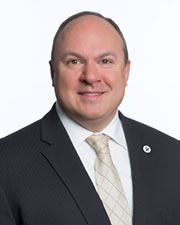
2017 Year in Review: Richard Muskus, Jr., Patriot Bank
December 19, 2017
Who or what contributed to your success in 2017 and why?
Community bankers on a local level have the capability to significantly support the resurgence of neighborhoods. 2017 has seen continued…
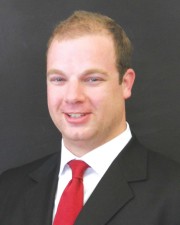
2017 Year in Review: Lee Silpe, Berko & Associates
December 19, 2017
Who or what contributed to your success in 2017 and why?
The team at Berko & Associates has been the biggest factor in our success. We have a diverse group of talented professionals who all add value to our office and provide a superior quality of service to our clients. As we head into a bit of the unknown, it’s the…

2017 Year in Review: Gerard Longo, Mettle Property Group
December 19, 2017
What was the best decision you made in 2017 and why?
The best decision this year was the challenging decision to reposition our Long Island City hotel/hospitality project to a
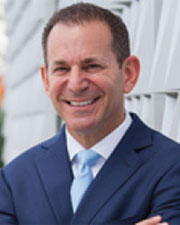
2017 Year in Review: Ron Koenigsberg, American Investment Properties
December 19, 2017
What was your most notable project, deal, transaction or professional achievement in 2017?
Most notable transaction was the three buildings we sold in Franklin Square, NY, containing multiple retail stores, apartments, and offices. The challenge in this deal was finding an investor interested in a management intensive property due to its…
2017 Year in Review: Joseph Fingerman, Signature Bank
December 19, 2017
Who or what contributed to your success in 2017 and why?
Signature Bank Commercial Real Estate had another banner year in 2017. This is because of our loyal base of clients and brokers who continue to value our role as…
2017 Year in Review: Mike Kerwin, Rosewood Realty Group
December 19, 2017
Who or what contributed to your success in 2017 and why?
The biggest contribution to my success in 2017 was to revamp my daily routine allowing me to have the most efficient and productive live-work balance possible. Time management and a strong work ethic I believe are major keys to…
2017 Year in Review: Komal Bhargava, Zinkovetsky Law Firm
December 19, 2017
What was your most notable project, deal, transaction or professional achievement in 2017?
Working with a non-profit organization to help them acquire real estate in NYC. Not only was it wonderful to help further their purpose, it was heartwarming to witness…

2017 Year in Review: Howard Stern, Law Office of Howard Stern
December 19, 2017
What was your most notable project, deal, transaction or professional achievement in 2017?
I am currently completing a $14 million sale of a multiple dwelling property on the Upper West Side of Manhattan, and, have closed on multiple…

2017 Year in Review: Lee Wasserman, LEW Corporation
December 19, 2017
What was your most notable project, transaction or professional achievement in 2017?
Pennrose lead abatement window replacement; closing on a new office; and becoming a Legion NAA Environmental Committee founding member…

2017 Year in Review: Shamir Seidman, Meridian Capital Group
December 19, 2017
What was your most notable project, deal, transaction or professional achievement in 2017?
My most notable transaction was financing a package of buildings on the Upper West Side, which included a townhome that was paying a six figure monthly rent…

2017 Year in Review: Inbar Mitzman, Daniel Gale Sotheby’s International Realty
December 19, 2017
What was your most notable project, deal, transaction or professional achievement in 2017?
A 50 years land lease of the East Hampton Motel in East Hampton with a $5 million purchase price option. This was a complicated transaction because the seller wanted…

2017 Year in Review: Jennifer Merritt, Merritt Engineering Consultants, P.C.
December 19, 2017
Who or what contributed to your success in 2017 and why?
Merritt Engineering expanded its services to include mechanical, electrical, plumbing (MEP) engineering services to provide a one-stop-shop to its clients. Headed by Merritt’s VP, Mario Cirigliano and Ken Sullivan, P.E., the MEP division is currently assisting clients with…
2017 Year in Review: Joshua Spitalnik, The Law Office of Joshua Spitalnik, P.C.
December 19, 2017
What was your most notable project, deal, transaction or professional achievement in 2017?
Over the course of 2017, I was proud to have several articles published and to be interviewed multiple times for various publications (including my favorite New York Real Estate Journal), while also being recognized as…
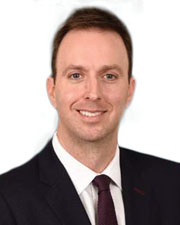
2017 Year in Review: John Krueger, Marcus & Millichap
December 19, 2017
What was your most notable project, deal, transaction or professional achievement in 2017?
With the New York investment sales market down about 44% year to date our local business is actually going to close about the same amount of transactions as we did in…
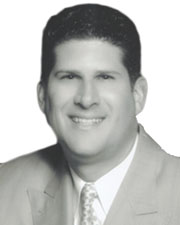
2017 Year in Review: Michael Zere, Zere Real Estate Services
December 19, 2017
Who or what contributed to your success in 2017 and why?
There is no substitute for knowing your product and catering to the needs of your customers in a timely efficient way…
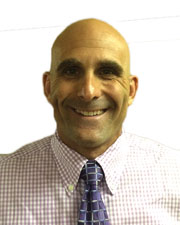
2017 Year in Review: Christopher Nicholson, Genesis Real Estate Advisors, Inc.
December 19, 2017
What was your most notable project, deal, transaction or professional achievement in 2017?
Genesis has been very busy on many fronts. We sold a bowling alley, leased up new construction in Farmingdale, sold an abandoned property on Veterans Hwy. to become a fitness center and…

2017 Year in Review: Jaclyn Peranteau, Prime Engineering, PC
December 19, 2017
What was your most notable project, deal, transaction or professional achievement in 2017?
I would like to say my involvement in the Stony Brook University Indoor Practice Facility Project. It is a $9.5 million project and will serve the campus community…