



News:
Brokerage
Posted: July 29, 2013
Rising rate implications that the markets are ignoring
Despite the Federal Reserve's best efforts to hold them down, interest rates continue to climb. The cat has officially left the bag, and unfortunately it appears that rising rates are here to stay.
Much has been said about how these rising interest rates will impact the residential and commercial real estate markets, as well as the economy as a whole. However, the ways in which it affects distressed CMBS debt amounts to a ticking time bomb.
Per Trepp, LLC, there are 1,650 CMBS loans (representing a principal balance of $13.2 billion) maturing within 36 months - with interest rates less than 6% - that are not covering their debt service payments, but which the owners are keeping current out of pocket. As interest rates rise, so does the amount of money that the borrowers will be required to pay at maturity to pay off the loan.
Inevitably, however, these borrowers will be forced to reexamine their practice of pocket-digging every month, just to dig even deeper within 36 months. The more rates rise, the greater the possibility. Hence, the ticking time bomb.
While the cash flow shortfall and distress of CMBS loans during its term has received some publicity, a key underlying issue that has gone largely unnoticed is the projected inability of these loans to be refinanced at maturity. Supposing (hypothetically) that rates had not been at record lows for the past year or so, how many more loans would have realized a maturity default? Surely a study will be conducted on this at some point, the answers to which we should all look forward to.
With interest rates rising (and no sign of slowing down anytime soon) the real concern becomes how many loans will likely suffer from the inability to refinance their full balances upon maturity. The only hope to date has been either a sudden increase in income, or interest rates remaining in the four percent range - which is usually lower than the 5.65% of 2007 financing. Chances are that we will see not only additional maturity defaults, but classic monetary defaults as well.
Here are a couple of facts about commercial real estate loans:
* The higher the mortgage rate, the lower the proceeds. In numbers, $100,000 can service $1.66 million if rates are at 6%. Should rates drop to 5%, however, that same $100,000 can "service" a loan amount of $2 million (mortgage payment ÷ interest rate = loan proceeds).
Lenders require that a new borrower shows enough property cash flow in excess of the amounts needed to service the mortgage. Usually this number is 125%, or a 1.25 multiple. This is also known as a 1.25x Debt Service Coverage Ratio (DSCR).
Now, imagine that you owned an office building with a cash flow of $700,000 and a mortgage of $14 million at 5.25% interest only (IO). In this case, your annual shortfall would only be $35,000, as the annual mortgage payment would be $735,000. Supposing market rates for mortgages were 4% IO, you could refinance the full amount even at a 1.25x DSCR. But raise rates to 6% and your annual shortfall of $35,000 automatically turns into a maturity shortfall of $4.66 million. For further illustration, refer to the chart.
In retrospect, even the minor monthly shortfall of $3,000 ($35,000 annual) a month is throwing good money after bad.
Shlomo Chopp is a managing partner at Case Property Services, New York, N.Y.
Tags:
Brokerage
MORE FROM Brokerage
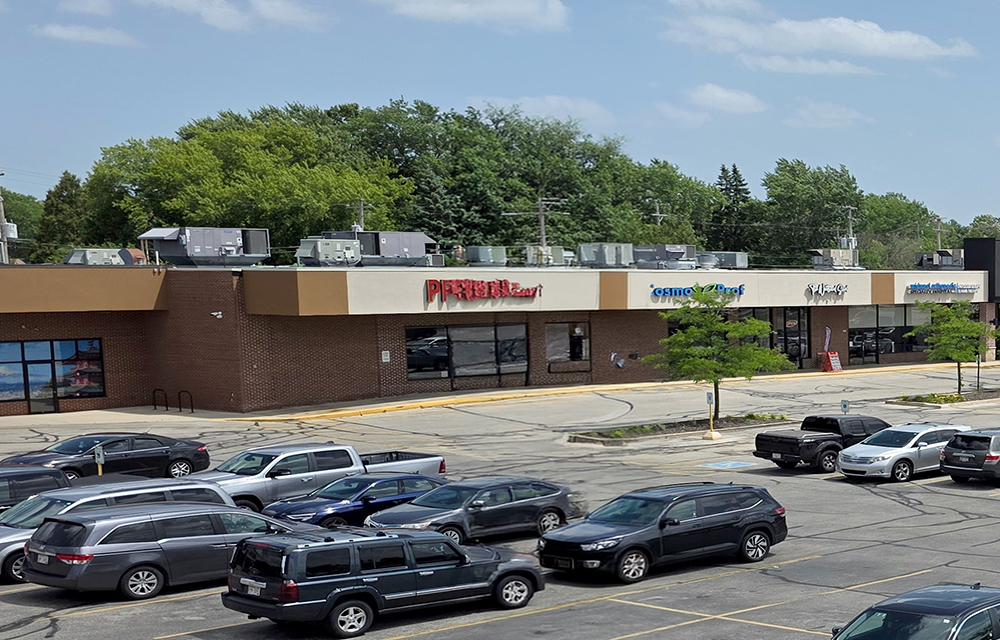
United Properties Corp. expands Wisconsin and Illinois retail presence adding 200,000 s/f
West Allis, WI United Properties Corp. completed two retail acquisitions totaling $27.4 million across Illinois and Wisconsin, adding 205,000 s/f of shopping center space to its portfolio





Columns and Thought Leadership

Positive forecast for New York’s pro-housing push? - by Philip Butler
New York’s housing crisis remains a hot button topic despite growing consensus that varied and affordable housing is desperately needed statewide. Governor Hochul has recently introduced several initiatives to overcome N.Y.’s anti-housing

A guide to finding the right NYC property management company - by Sanjay Gandhi
Being a small to midsize landlord in NYC is an increasingly demanding endeavor. From navigating complex regulations, increased compliance demands to dealing with tenant issues and remediating violations. It is wise to enlist the assistance of a partner, a professional

Hunt commercial real estate question and answer: Fortune 500 wisdom - by David Hunt
Yes, there are lessons to be learned from the largest companies in America when comes to managing your real estate. But the decision to buy or lease real estate may not be one of

New York’s streets are full again, and the retail numbers prove it - by Noam Aziz
Walk down any New York block this year and you can feel it. The sidewalks are crowded, the storefronts are lit, and the energy that defines this city is back at full volume.
.gif)