



News:
Brokerage
Posted: August 13, 2024
Regional Plan Association recognizes Google’s St. John’s Terminal
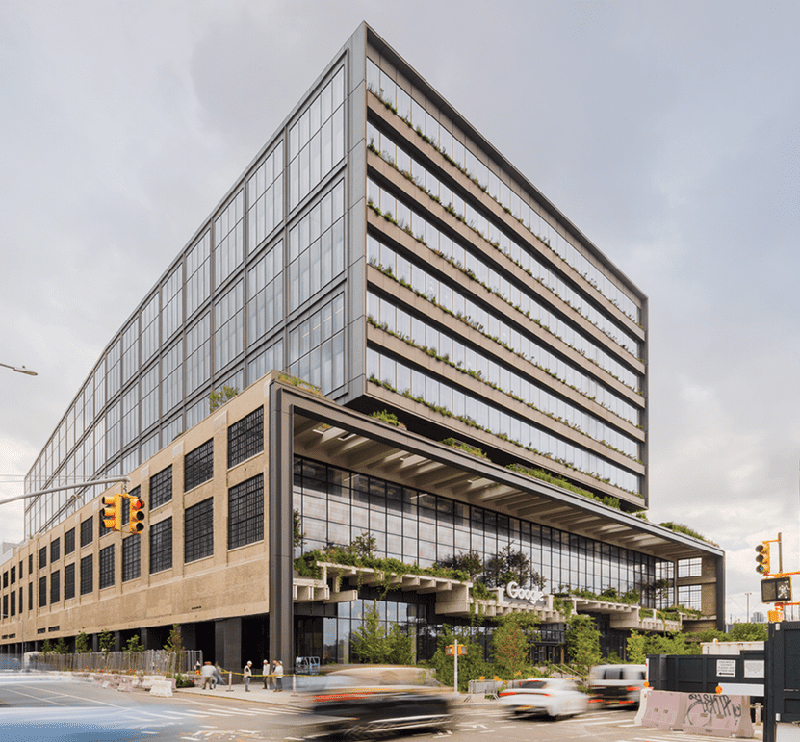
Manhattan, NY Each fall Regional Plan Association (RPA) hosts the “Celebrate the Tri-State” benefit, bringing together civic, business, public and elected leaders to recognize three outstanding contributors to the region’s public realm and support RPA’s work. The Project of the Year is bestowed upon transformative projects that aligns with RPA’s mission and re-imagines our future and built environment. This year’s recipient is Google’s St. John’s Terminal project, which embodies Google’s on-going commitment to strengthening the region’s tech sector, revitalizing iconic architecture to build vibrant communities and investing in New York.
To hear more about Google St. John’s Terminal as RPA’s Project of the Year, please join us at our gala, Celebrating the Tri-State on October 17th, 2024. Tickets and as well as more information can be found at https://rpa.org/events/benefit/2024
Honoring Google
Project of the Year honorees represent a diversity of projects that embody the reimagination and revitalization of our communities. In celebrating Google’s St John’s Terminal, RPA is showcasing the company’s more than twenty-year investment in New York City which has restored dynamism and vibrancy to industrial neighborhoods and set the standard for forward-thinking, adaptive redevelopment. Google’s commitment to economic opportunity and community engagement, sustainability, and the highest standards for workplace design have resulted in projects where iconic office space retail development, and public and community spaces are inextricably woven together to create resilient destinations.
Sustainable Design for the Modern Workplace
Google’s New York offices enhance the communities where they operate by adapting historic buildings, such as 111 8th Avenue, Pier 57 and Chelsea Market. The original St. John’s terminal structure, which served as the terminus of the High Line, was dramatically reimagined to open up the neighborhood connection to the waterfront by removing the overpass over Houston street and by adding a new alleyway connector and crosswalk. By adapting the existing structure and foundation, Google saved approximately 78,400 metric tons of carbon dioxide equivalent emissions when compared to creating a new structural foundation. That’s comparable to removing roughly 17,000 cars from the road for a year.
The building also created 1.5 acres of native vegetation at street level, in rail bed gardens, and on terraces, redefining what “green space” means for commercial real estate in New York. This not only enhances the experience for occupants but also benefits the local ecology. Over 95% of the exterior plants at St. John’s Terminal are native to New York State, reknitting the building into the local ecology and providing a habitat for migratory birds. The building also incorporates solar panels, rainwater retention and wood that was reclaimed from the Coney Island boardwalk after Hurricane Sandy.
The building is Google’s North American headquarters for its global business operations, housing more than rough over 3,000 workers. Google has called New York City home for more than 20 years, growing to over 14,000 full-time employees during that time.
Past recipients of the RPA Project of the Year award include:
• Infrastructure Investment and Jobs Act (IIJA), accepted by USDOT deputy secretary Polly Trottenberg
• One Vanderbilt, accepted by SL Green CEO Marc Holliday, conferred by NYC City Planning chair Dan Garodnick
• The Port Authority of New York and New Jersey’s Centennial, accepted by PANYNJ chair Kevin O’Toole and executive director Rick Cotton, conferred by governors Kathy Hochul and Phil Murphy
• Moynihan Train Hall, accepted by governor Andrew Cuomo
• World Trade Center Master Plan, accepted by David Earls and Larry Silverstein
• Domino Park, accepted by Two Trees CEO Jed Walentas, conferred by former NYC deputy mayor Bob Steel.
Tags:
Brokerage
MORE FROM Brokerage
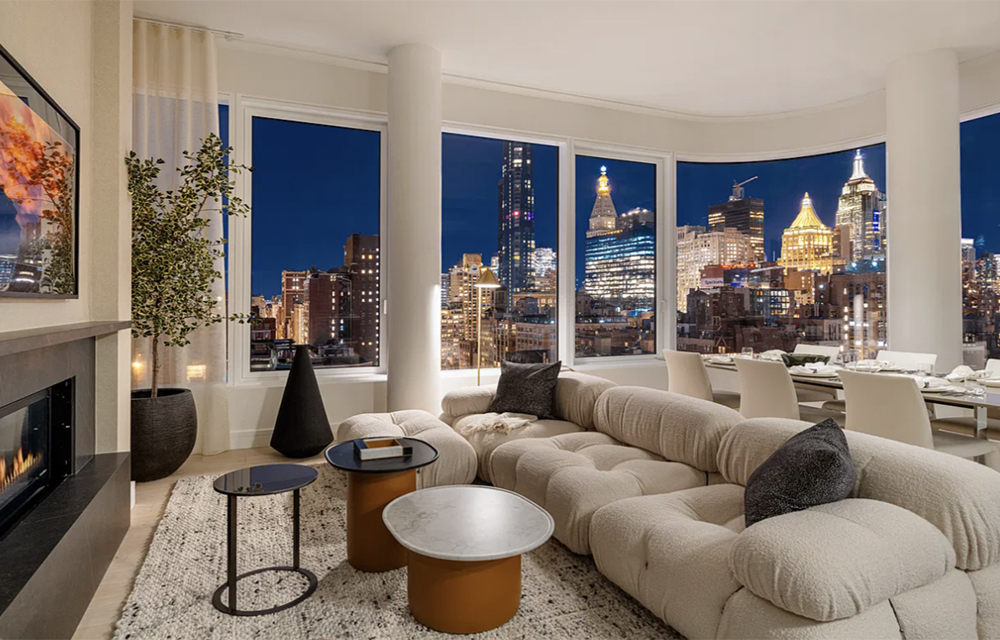
200E20TH sells out in Gramercy, penthouse A closes out sales at the CetraRuddy-designed condominium residences
Manhattan, NY 200E20TH, the CetraRuddy-designed architectural masterwork that brought a curved, contemporary sensibility to Gramercy’s Beaux-Arts streetscape, has





Quick Hits
 (2).gif)

Columns and Thought Leadership

Hunt commercial real estate question and answer: Fortune 500 wisdom - by David Hunt
Yes, there are lessons to be learned from the largest companies in America when comes to managing your real estate. But the decision to buy or lease real estate may not be one of

Hunt CRE question and answer: Choosing a real estate agent - by David Hunt
First, we will only work with one agent exclusively. The primary reason is that we want that agent to legally represent our client’s interests. In New York State, a real estate agent has a fiduciary

The art of investing in real estate - by Thomas Donovan
Real estate investing is as much an art as it is a skill. No one can time the market, or the factors that drive it, perfectly. Location, zoning, size, transportation, and neighborhood density give you a baseline for

New York’s streets are full again, and the retail numbers prove it - by Noam Aziz
Walk down any New York block this year and you can feel it. The sidewalks are crowded, the storefronts are lit, and the energy that defines this city is back at full volume.
.gif)