



News:
Brokerage
Posted: November 25, 2015
Puopolo and Gross of Douglas Elliman Commercial broker 2,000 s/f lease for firm in Park Slope
New York, NY Douglas Elliman Real Estate is relocating and growing their top-producing Park Slope office, continuing to expand the company’s presence in the strong Brooklyn real estate market. Located at 187 Seventh Ave., the new Douglas Elliman Park Slope office will provide three times more space and house 50-60 talented agents. The company has leased the 2,000 s/f space from Sugar Hill Group, owner and developer of the building. Douglas Elliman has officially taken over sales and will relaunch later this fall. The new Douglas Elliman Park Slope office is situated on a prime corner location with window frontage directly across from PS 321. Slated to open in Spring/Summer 2016, the office is on the street level of a mixed-use building developed by Sugar Hill Group, a fast-growing investment, asset management, and property management firm with projects across Manhattan and Brooklyn. “Park Slope has always been a huge focus for our Brooklyn real estate team. We are eager to continue to build out our practice by moving into a larger and more dynamic space in the center of the neighborhood,” said Sarah Burke, senior regional executive manager of sales for Brooklyn. “With such a large demand for properties in Park Slope, we believe increasing our presence will best allow us to continue to provide the highest quality of service possible.” “187 Seventh Ave. is in the heart of Park Slope and we’re sure this prime location will be ideal for Douglas Elliman’s new office,” said Jeremy Salzberg, partner at Sugar Hill Capital Partners. “We’re delighted to have the company as our retail tenant.” Douglas Elliman was represented in the transaction in-house by Louis Puopolo and Peter Gross of Douglas Elliman Commercial, while Joshua Gettler and Matthew Gorman of New Street Realty Advisors represented Sugar Hill Properties. Asking rents were $200 per s/f.
Tags:
Brokerage
MORE FROM Brokerage
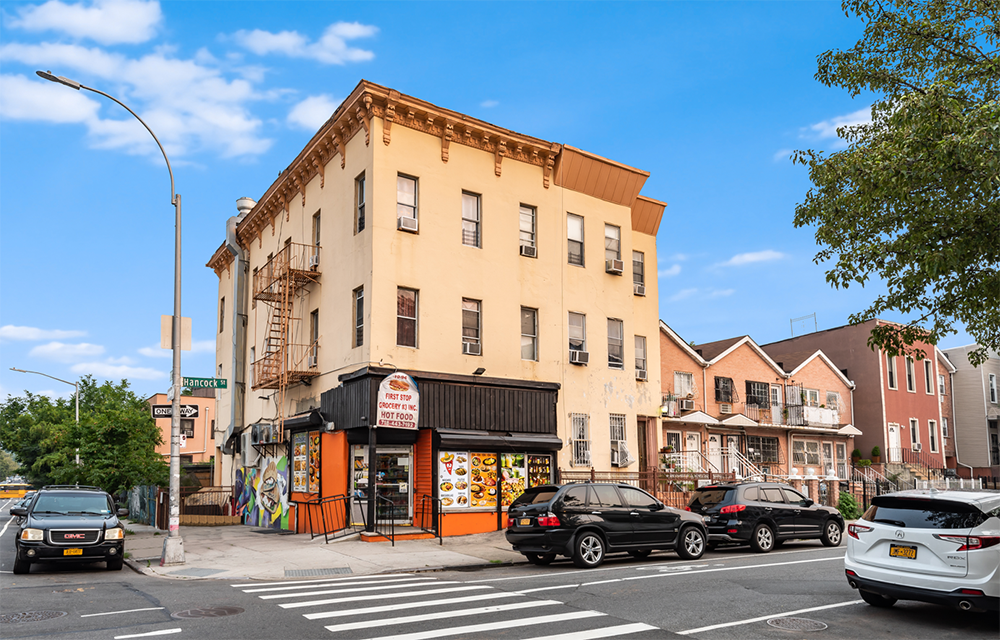
Investment Property Realty Group closes $1.75 million sale of 1094 Hancock Street in Brooklyn
Brooklyn, NY Investment Property Realty Group (IPRG), a New York-based commercial investment firm, has closed the sale of 1094 Hancock St., a mixed-use building in the Bushwick section, for $1.75 million.


Quick Hits

Columns and Thought Leadership

New York’s streets are full again, and the retail numbers prove it - by Noam Aziz
Walk down any New York block this year and you can feel it. The sidewalks are crowded, the storefronts are lit, and the energy that defines this city is back at full volume.

A guide to finding the right NYC property management company - by Sanjay Gandhi
Being a small to midsize landlord in NYC is an increasingly demanding endeavor. From navigating complex regulations, increased compliance demands to dealing with tenant issues and remediating violations. It is wise to enlist the assistance of a partner, a professional

Hunt commercial real estate question and answer: Fortune 500 wisdom - by David Hunt
Yes, there are lessons to be learned from the largest companies in America when comes to managing your real estate. But the decision to buy or lease real estate may not be one of

Hunt CRE question and answer: Choosing a real estate agent - by David Hunt
First, we will only work with one agent exclusively. The primary reason is that we want that agent to legally represent our client’s interests. In New York State, a real estate agent has a fiduciary
.gif)