



News:
Brokerage
Posted: August 6, 2019
POLSINELLI names Levinson shareholder in Commercial Litigation practice
 New York, NY According to POLSINELLI, Gabriel Levinson has joined the firm as a shareholder in the firm’s Commercial Litigation practice.
Levinson litigates complex and general commercial business disputes in state and federal jurisdictions across the U.S. He has successfully challenged and defeated adversaries, as well as secured jury and non-jury verdicts, in the areas of corporate, entertainment, real estate, contractual, insurance recovery, and business tort claims.
Levinson has represented national and international companies, global retailers, boards and majority shareholders of corporations, co-op and condominium boards, world-renowned vineyards, as well as commercial and residential real estate owners, operators, and developers. Among his client experience includes asset management firms ranging from $500 million to $16 billion under management, and other financial companies, in matters with institutional lenders and in actions concerning the enforceability of financial and commercial real estate documents.
Dan Flanigan, managing partner of POLSINELLI’s New York Office, said, “We are happy to welcome Gabriel to Polsinelli. His strategic litigation skills across a broad spectrum of complex legal matters will be a great asset.”
“I am very pleased to join Polsinelli’s highly regarded Commercial Litigation practice,” said Levinson. “I look forward to utilizing my depth and range of litigation experience to continue to get the great results my clients have come to expect, and to further strengthen the firm’s capabilities in support of its national and international clients.”
Levinson earned his bachelor’s degree from Vassar College and his J.D. from the Benjamin Cardozo School of Law.
Tags:
Brokerage
MORE FROM Brokerage
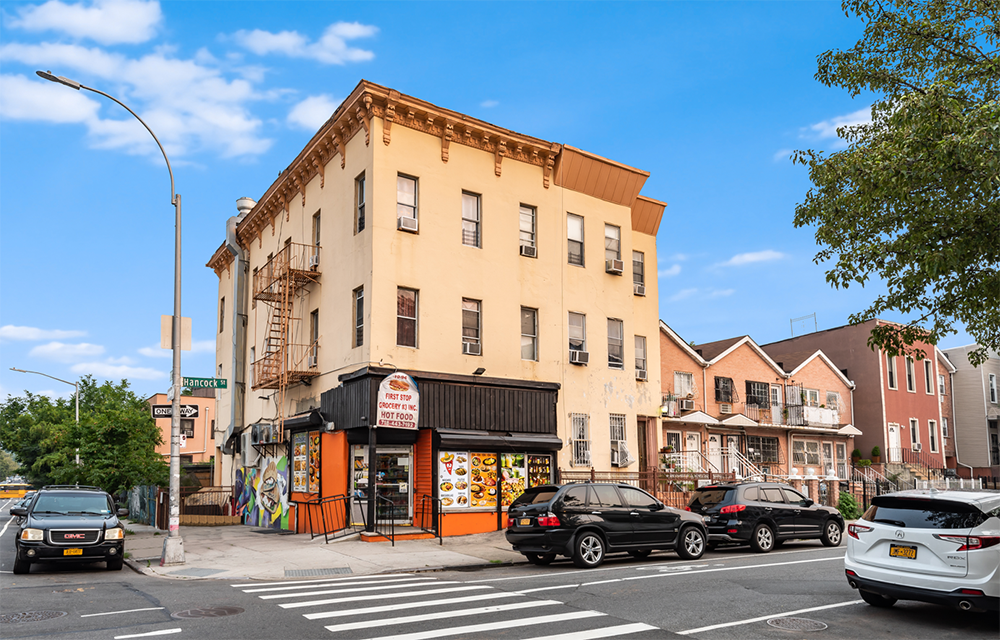
Investment Property Realty Group closes $1.75 million sale of 1094 Hancock Street in Brooklyn
Brooklyn, NY Investment Property Realty Group (IPRG), a New York-based commercial investment firm, has closed the sale of 1094 Hancock St., a mixed-use building in the Bushwick section, for $1.75 million.




Quick Hits
 (2).gif)

Columns and Thought Leadership

A guide to finding the right NYC property management company - by Sanjay Gandhi
Being a small to midsize landlord in NYC is an increasingly demanding endeavor. From navigating complex regulations, increased compliance demands to dealing with tenant issues and remediating violations. It is wise to enlist the assistance of a partner, a professional

Hunt CRE question and answer: Choosing a real estate agent - by David Hunt
First, we will only work with one agent exclusively. The primary reason is that we want that agent to legally represent our client’s interests. In New York State, a real estate agent has a fiduciary

New York’s streets are full again, and the retail numbers prove it - by Noam Aziz
Walk down any New York block this year and you can feel it. The sidewalks are crowded, the storefronts are lit, and the energy that defines this city is back at full volume.

Hunt commercial real estate question and answer: Fortune 500 wisdom - by David Hunt
Yes, there are lessons to be learned from the largest companies in America when comes to managing your real estate. But the decision to buy or lease real estate may not be one of
.gif)