



News:
Construction Design & Engineering
Posted: January 10, 2011
New technology considerations for corporate relocations in 2011
In 2011, many business owners are expected to take a look at new space due to commercial rates that remain at value levels. Businesses that relocate will be assigning move coordination responsibilities to one or more parties within their organizations. Someone on the team will have the opportunity to evaluate technologies that meet critical business requirements - and some that address functional and security requirements of the new office space.
Voice, Data, and Video
While mostly hidden from sight, a structured cabling system is the foundation that supports a company's voice, data, and video technologies for several years. A cabling plan has to be designed in a manner that considers present needs and potential for growth. It must be implemented by a technology partner that is qualified to install, test, and certify the required cabling solution.
The advent of unified communications and the convergence of voice, data, and video on the IP network have expanded possibilities for the remote and office worker. Enterprise mobility solutions like BlackBerry Mobile Voice System and instant video communications with Cisco's Unified Personal Communicator make it possible to reach critical business applications and be reached by customers and coworkers from virtually any location. Mobile devices and business applications for teleworkers allow business owners to optimize office space layouts by creating shared locations where mobile workers can log into desk phones when they are in the office.
Standalone Applications Hit the Converged Network
Many technologies that have traditionally operated on their own now integrate into the IP network. Making use of the network for security, access, and building control systems can reduce cabling costs by consolidating several applications over the network infrastructure. They also offer greater access and control capabilities from remote locations via an Internet connection.
IP Surveillance
Many business owners have found the switch from conventional CCTV to IP surveillance systems both simple and productive. IP surveillance systems offer the cost benefits of running over an installed network infrastructure and quality benefits. Digital IP surveillance cameras can record video that complies with the Society of Motion Picture and Television Engineers HDTV standards in resolution, color representation and frame rate. Digital zoom and auto focus facilitate clear viewing of objects as small as personal identification in areas where great image detail is required. DVR systems that can be scaled to store as much footage as needed eliminate the need to manually change and store VCR tapes. There is no chance of image degradation due to re-recording over tapes. Viewing and control have been simplified - both can be accomplished from any location with an Internet connection. Web-based technology allows an end user to securely log in and choose views, pan, tilt, or zoom (PTZ) cameras, or configure the CCTV system.
Access Control
Physical access control systems utilize IP technology to create another layer that works with the converged network. IP-based access control systems can integrate with a surveillance system and an IP phone system such as Cisco's to create a richer and safer end user experience.
For the building visitor, the process to gain entry into the residence is unchanged. He or she presses the button on a door call box to initiate voice communication with the tenant while the event is captured on video. On the tenant end, integration of the physical access control system with the Unified Communications Manager provides an enhanced and more user-friendly experience. Rather than streaming video to just one centrally located terminal, access control can be handled at any IP phone throughout the office or residence.
Boardroom and Building Control Systems
Touch panel control systems give end users one simple interface to manage boardroom and conference technologies such as audio visual equipment, lighting, shades, and video conferencing systems. Now running over the IP network, control systems can streamline control of building applications throughout the facility. Manufacturers like New Jersey based Crestron Electronics offer control systems that manage lighting and thermostats that can even automatically control environmental conditions through sensor systems. Crestron also offers systems that can be remotely controlled via PDA devices.
Choosing technology solutions for a corporate relocation project can involve several vendors and intense coordination of effort. Partnering with an IT vendor that is qualified in multiple technologies that integrate into the converged network can help consolidate efforts by providing a single resource for business and building critical applications.
Layne Frank is director of
sales for BBH Solutions, Inc., New York, N.Y.
MORE FROM Construction Design & Engineering
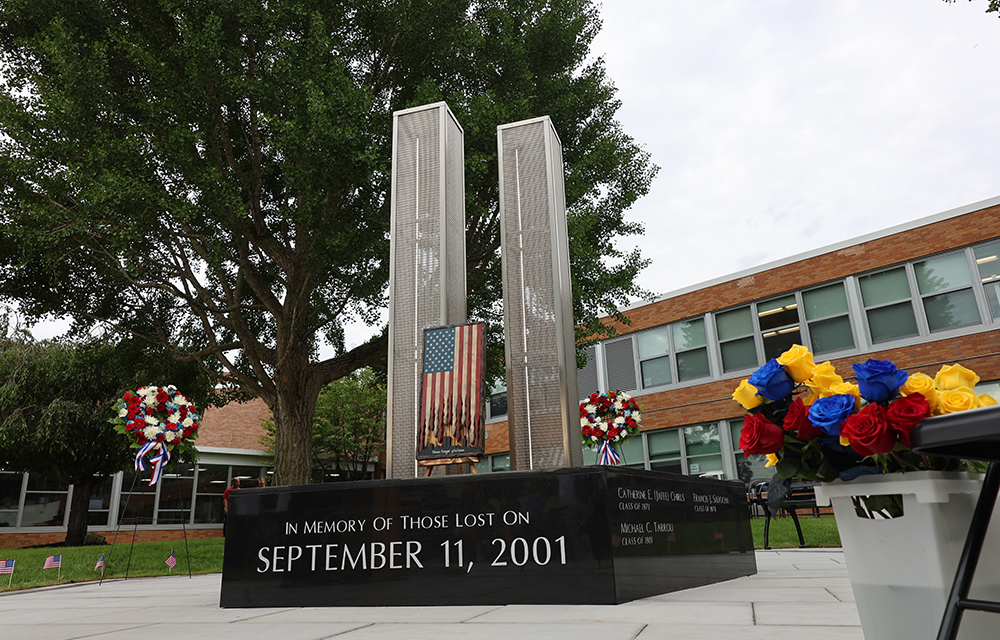
MDS Architecture designs memorial to pay tribute to those lost on September 11
Wantagh, NY A new 9/11 memorial designed as a lasting place of reflection, remembrance and resilience was formally dedicated on September 11, 2026 at Wantagh High School, honoring those who lost their lives in the 9/11 terrorist attacks and ensuring their memory will be carried forward for generations.




Quick Hits


Columns and Thought Leadership

We support green construction. Just not this kind - by Tammy Smith
Most people think of St. Patrick’s Day as a fun footnote on the calendar. In construction logistics, however, it’s a full-scale operational variable — especially if your work touches major metro areas with major parades and, let’s call it what it is, enthusiastic celebrants.

Premium experiences, proven returns: The New revenue playbook for sports venues - by Terry McIntyre
Investing in the Fan Experience as a Revenue Strategy The sports and entertainment venues that bet on premium experiences years ago are now seeing those investments pay off in packed seats, increased revenue, and industry recognition.
