



News:
Brokerage
Posted: August 25, 2008
Mid-market buildings in New York City are proving resilient in today's economic marketplace
Recent headlines have been selling a good portion of gloom and doom regarding the United States real estate market, but it's important to note that a large portion of these articles refer specifically to two sectors:
1. The housing crisis across the nation, much of which resulted from sub-prime lending and predatory lending.
2. Class A office buildings, which most often involve mezzanine financing and complex debt structures consisting of short term variable debt and heightened exposure to interest rate fluctuations.
It is undeniable that these two sectors are slowing, as is the nation's economy. Most financial professionals are predicting the sluggish economy will continue throughout the remainder of 2008. Despite this bad news, it's important to note there is one asset class, specifically in New York City, that has proven resilient to overriding market forces. Mid-market buildings ($1 million to $100 million price range in Manhattan), often do not make headlines but have quietly showed resilience during these unsteady economic times. A large share of this asset class is made up of mixed-use/retail buildings and multifamily properties, both of which are giving investors a reason for optimism.
Mixed-use and retail properties are holding value due to a strong retail sector. Many local and foreign retailers are actively looking for a presence in New York City. This foreign and local expansion is a sign of the overall health of the retail sector. Among many other examples, Topshop, Mango, Abercrombie Kids, Hollister, and J.C. Penney have all recently opened their first Manhattan stores.
Multifamily properties remain strong investments in a large part due to their vacancy rates of less than 1%, artificially low rents due to rent regulation, relatively inexpensive prices per square foot and strong population growth predictions for Manhattan. According to the New York City Dept. of City Planning, the population of Manhattan is projected to increase 18.8% between 2000 and 2030 reaching 1.827 million residents. These factors make this an attractive asset class that is seen as a safe and smart investment. The low downside risk in rents and significant growth potential often lead multifamily properties to trade at capitalization rates below the U.S. Treasury rates.
As a result of the credit crisis, lending institutions have rightfully become more conservative in their underwriting practices. Lenders had become very aggressive in the last few years. Many would offer a 1.0 debt service coverage ratio (in essence, no debt service coverage) and an 80% loan to value became the standard (with some lenders even lending 85% LTV). Lender requirements for both debt service coverage and loan to value have both significantly changed as lenders return to a more conservative and more justifiable model. Today, a 75% loan to value and a 1.2 debt service coverage have become the norm. This return to conservative lending practices will cause difficulty for leverage-reliant buyers in the near term, but this conservatism is essential for the long- term health of the real estate market. The good news is that banks are in the business of loaning money, and the recent reductions in the Fed interest rate have further incentivised banks to actively pursue mortgage lending. Banks of all sizes have created funds specialized in making loans to purchasers of mid-market properties.
While the Wall Street money (and most notably the commercial mortgage backed securities market) that finances $100+ million dollar deals has all but dried up, mortgages for mid-market properties are still available and are priced competitively. Just recently, a fixed mortgage rate of 5.35% was locked in for ten years on a multifamily building on Manhattan's Upper East Side. In the short term, two types of buyers will have a notable advantage over the leverage-reliant buyer: buyers with ample cash reserves and 1031 exchange buyers.
These two types of buyers will have an advantage in the market place as lending practices are tightened because they will have the financial capability to buy the best deals, despite a difficult credit market. These buyers will also have less competition in the near term since other potential buyers will simply not have access to the funds needed to consummate a transaction. Additionally, the weak U.S. dollar creates an increase in the relative wealth of foreign buyers. This relative wealth increase does not improve returns for foreign investors, as returns are in the same currency. The increased relative wealth does, however, allow foreigners to compete for U.S. assets that otherwise they would not be able to afford. These increases, coupled with the inherent benefits of the asset class, are proving to further stabilize the market.
Although much of the U.S. real estate market may be in decline due to various influences, mid-market building sales in NYC are still strong. This asset class generally has solid fundamentals, is able to be financed, is safe and presents the opportunity for substantial returns. Despite their absence in the headlines, it is the mid-market building class that continues to thrive in uncertain times.
Guthrie Garvin is a broker covering a portion of the Upper East Side for Massey Knakal Realty Services, Manhattan, N.Y.
Tags:
Brokerage
MORE FROM Brokerage
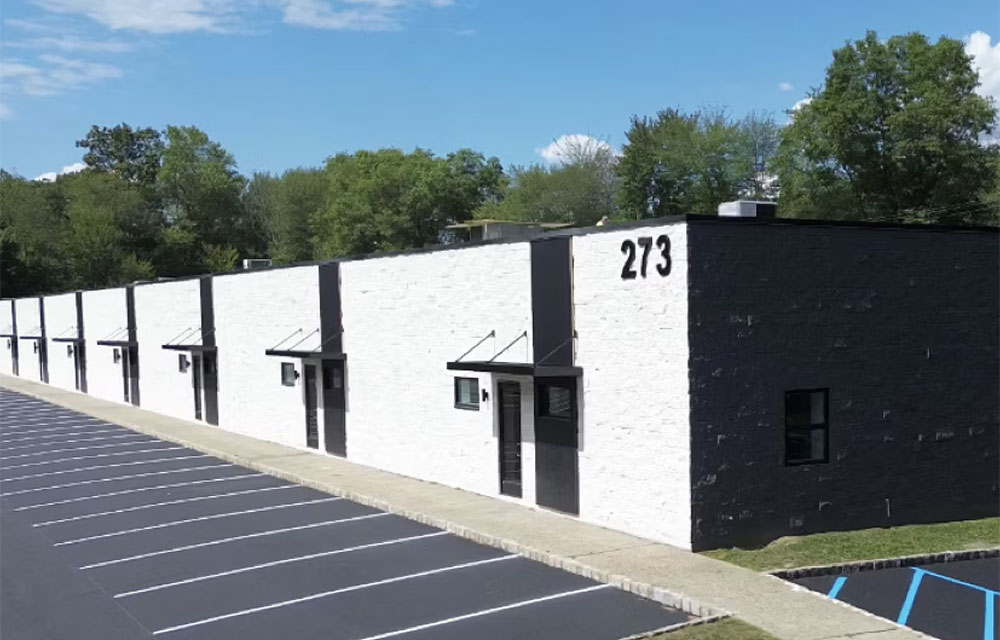
Resource Realty of Northern NJ delivers complete lease-up of 235 Franklin Rd. for Commerce Park Investors
Randolph, NJ Resource Realty of Northern New Jersey (RRNNJ) has completed the lease-up of a 10-unit small-bay industrial property at 273 Franklin Rd., marking the culmination of an investment strategy that began




Columns and Thought Leadership

Hunt commercial real estate question and answer: Fortune 500 wisdom - by David Hunt
Yes, there are lessons to be learned from the largest companies in America when comes to managing your real estate. But the decision to buy or lease real estate may not be one of

Positive forecast for New York’s pro-housing push? - by Philip Butler
New York’s housing crisis remains a hot button topic despite growing consensus that varied and affordable housing is desperately needed statewide. Governor Hochul has recently introduced several initiatives to overcome N.Y.’s anti-housing

New York’s streets are full again, and the retail numbers prove it - by Noam Aziz
Walk down any New York block this year and you can feel it. The sidewalks are crowded, the storefronts are lit, and the energy that defines this city is back at full volume.

A guide to finding the right NYC property management company - by Sanjay Gandhi
Being a small to midsize landlord in NYC is an increasingly demanding endeavor. From navigating complex regulations, increased compliance demands to dealing with tenant issues and remediating violations. It is wise to enlist the assistance of a partner, a professional
.gif)