



News:
Brokerage
Posted: April 26, 2022
Marsh joins Eastman Cooke as newest project engineer

New York, NY June Marsh, a recent graduate of the Professional Construction Trades certification program at LaGuardia Community College, has joined Eastman Cooke & Associates (ECA), a Manhattan- and Long Island-based general contracting firm, as its newest project engineer.
Eastman Cooke & Associates, which helped develop the career pathway program in 2019 and, more recently, launched a companion online hiring platform, met Marsh at the school’s most recent Job Fair, held virtually on January 25th.
“I view this as a full-circle moment because a program we helped create is providing a career stepping-stone for a woman in the construction trades, while adding a valuable new member to our team,” says April Intrabartola, vice president, Eastman Cooke. “This is a job that will enable her develop strengths in the field and expand her project management skills.”
Marsh’s background includes building positions in building services organizations. Prior to joining Eastman Cooke, she was an office manager for a construction firm. Before that, she served as an administrative assistant for a property management firm and was an executive assistant for an architect. In addition to a Certificate in Construction Skills, Safety and Sustainability from the program, she holds a Bachelor of Science in Business Administration from Drexel University.
Peter Morandi, CEO, LEED, AP, Eastman Cooke said, “We welcome June in her new position and know she’ll do well. Over the past decade, the construction industry has changed dramatically and is attracting a better educated, more diverse workforce.”
Now in its third year, the Professional Construction Trades program at LaGuardia Community College has produced 125 permanent positions for graduates in such trades as electrical, site safety, and plumbing. In addition to Eastman Cooke & Associates’ sponsorship and participation in the January Job Fair, such companies as Macarone Plumbing, Inc., Consigli Construction, Advanced Plumbing and Sprinkler, Facilities Solutions Group, and Apollo Electric met with students and recent graduates of the program that day.
Tags:
Brokerage
MORE FROM Brokerage
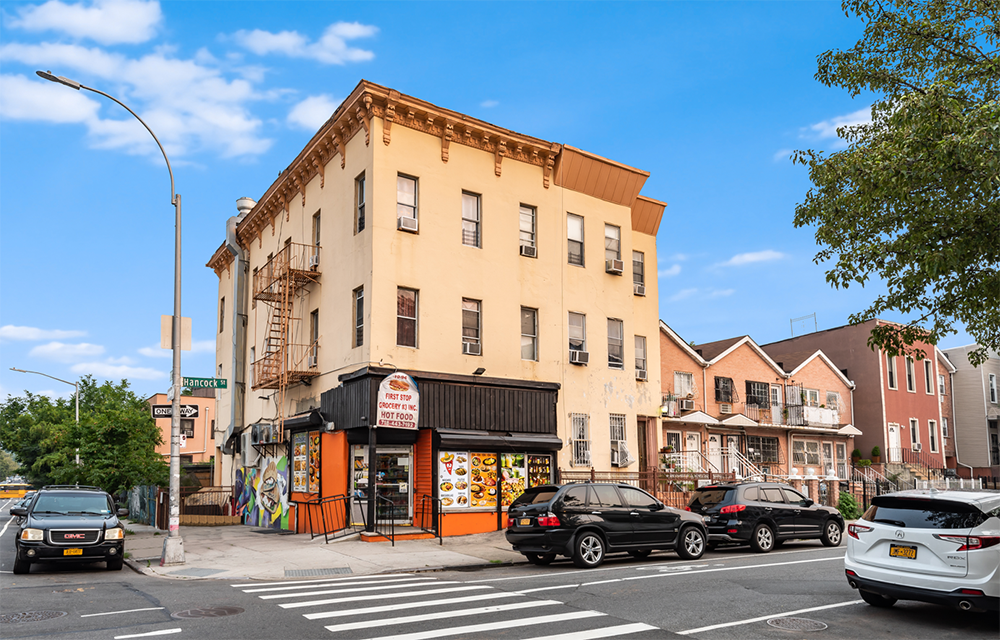
Investment Property Realty Group closes $1.75 million sale of 1094 Hancock Street in Brooklyn
Brooklyn, NY Investment Property Realty Group (IPRG), a New York-based commercial investment firm, has closed the sale of 1094 Hancock St., a mixed-use building in the Bushwick section, for $1.75 million.



Quick Hits

Columns and Thought Leadership

Hunt CRE question and answer: Choosing a real estate agent - by David Hunt
First, we will only work with one agent exclusively. The primary reason is that we want that agent to legally represent our client’s interests. In New York State, a real estate agent has a fiduciary

A guide to finding the right NYC property management company - by Sanjay Gandhi
Being a small to midsize landlord in NYC is an increasingly demanding endeavor. From navigating complex regulations, increased compliance demands to dealing with tenant issues and remediating violations. It is wise to enlist the assistance of a partner, a professional

Hunt commercial real estate question and answer: Fortune 500 wisdom - by David Hunt
Yes, there are lessons to be learned from the largest companies in America when comes to managing your real estate. But the decision to buy or lease real estate may not be one of

New York’s streets are full again, and the retail numbers prove it - by Noam Aziz
Walk down any New York block this year and you can feel it. The sidewalks are crowded, the storefronts are lit, and the energy that defines this city is back at full volume.
.gif)