





News: Brokerage

Marcus & Millichap completes two deals totaling $9.36 million

Marco Lala,
Marcus & Millichap


John Stewart,
Marcus & Millichap


James O’Leary,
Marcus & Millichap


Nicholas Biedron,
Marcus & Millichap


Michael Sadowsky,
Marcus & Millichap


Dylan Torey,
Marcus & Millichap


Alan Stenson,
Marcus & Millichap


Bronx, NY Marcus & Millichap has completed the following two sales, totaling $9.36 million:

• 2886 Briggs Ave.: A 31-unit apartment property sold for $4.96 million. Marco Lala, Jack Lala and David Raciti of Marcus & Millichap’s Manhattan office, had the exclusive listing to market the property on behalf of the seller, a private trust and then procured the buyer, a limited liability company. The team achieved nearly $2 million profit in sale since the property was purchased less than two years prior to listing with the firm.

“Although encumbered with rent stabilized units, buildings with low rents are still very desirable in anticipation of increasing demands,” said Lala. “At almost thirteen times the rent roll, we achieved a top of the market price for this mid-block, six story walkup in the Bedford Park area of the Bronx.”

This professionally managed property is situated on the east side of Briggs Ave., south of East 199th St. “Even though the South Bronx is getting all the press… the North Bronx is as strong as ever! The Bronx Market is at an all-time high,” said Lala.
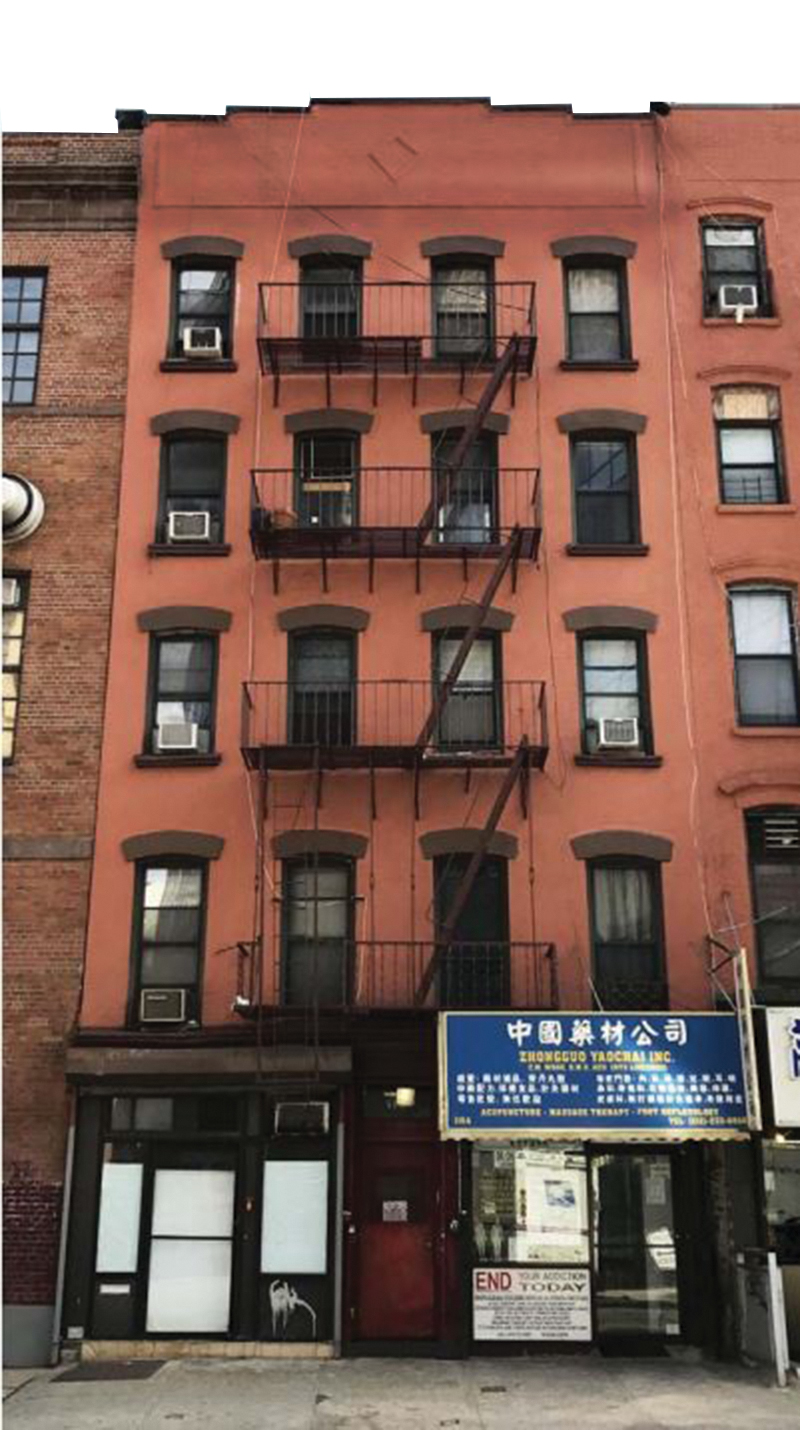
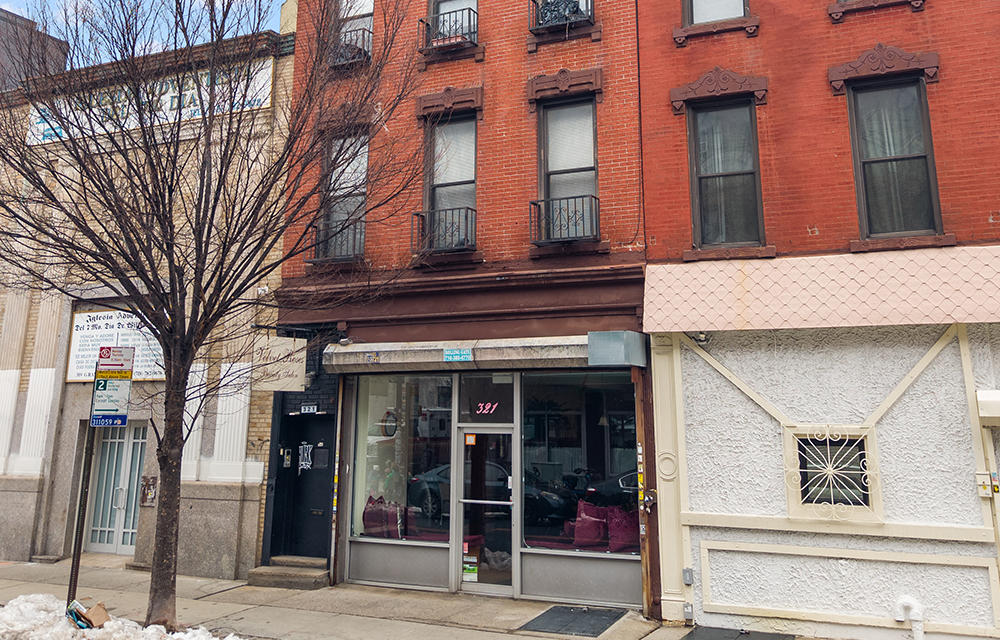
115 Division Street -
Manhattan, NY

• 115 Division St., Manhattan: A 10-unit apartment property sold for $4.4 million. John Stewart, James O’Leary, Dylan Torey, Nicholas Biedron, Michael Sadowsky and Alan Stenson from Marcus & Millichap’s Manhattan office, represented the seller, a private investor, and procured the buyer, a limited liability company. The subject comprises eight residential and two commercial units. Of the residential units, seven are one-bedroom and rent stabilized and one unit is a market-rate three-bedroom, two-bath unit.

“This neighborhood is quickly gentrifying and investors are finding they can purchase properties for lower price per s/f than more core Manhattan neighborhoods,” said O’Leary. “This part of the Lower East Side remains attractive to investors who can still find a decent deal even at this point in the market cycle.  Store and apartment rents have continued to move up, and buildings are still a relatively good value compared to other downtown neighborhoods.”


READ ON THE GO
DIGITAL EDITIONS
Subscribe
Columns and Thought Leadership
A fresh start - by Shallini Mehra and Amit Doshi

A fresh start - by Shallini Mehra and Amit Doshi

For the past several years, the New York City multifamily housing market has been defined by disruption. The combined impact of the HSTPA rent laws and a sharply higher interest rate environment has fundamentally reduced
Tri-state capital  migrates nationally amid  regulation pressure - by Reese Weaver

Tri-state capital migrates nationally amid regulation pressure - by Reese Weaver

New York tri-state multifamily investors are increasingly reallocating capital to less-regulated markets across the U.S. as rent control and legislative risk erode returns at home. With over 60% of New York City’s rental housing stock classified as rent-stabilized, the traditional value-add model — buying under-performing buildings,

The anticipated effect of Basel III and ISO 20022 implementation on commercial real estate - by Michael Zysman

The anticipated effect of Basel III and ISO 20022 implementation on commercial real estate - by Michael Zysman

July 1, 2025 is the deadline for US banks to begin to adopt Basel III banking standards and July 14, 2025 is the deadline for U.S. banks to adopt ISO 20022 messaging standards. Both will have a significant effect on the banking and commercial real estate (CRE) finance sectors.
The death of the generic offering memorandum: What buyers expect in 2025 - by Kimberly Zar Bloorian

The death of the generic offering memorandum: What buyers expect in 2025 - by Kimberly Zar Bloorian

There was a time when an offering memorandum (OM) was pretty bare bones, some photos, a few bullet points on income, and a rent roll thrown in at the back. That used to get the job done. Not anymore. In 2025, buyers are sharper, faster, and more selective. They’re looking