



News:
Brokerage
Posted: August 25, 2014
Lower Manhattan's retail market stands ahead of the rest of Manhattan according to Cushman & Wakefield
A Cushman & Wakefield comparison of the vibrancy of retail real estate in ten Manhattan neighborhoods shows that Lower Manhattan stands head and shoulders above the rest. In a year-to-year tracking of second-quarter asking rents, Lower Manhattan witnessed an increase of 37.8%, surpassing the second-ranking neighborhood, Times Square, by an astonishing 274%.
Times Sq. asking rents increased by 13.8%, followed by a 12.4% rise on Madison Ave. and an increase of 10.7% in the Flatiron District.
Retail vacancies tell a similar tale, with Lower Manhattan again at the top of the heap. The area's vacancy rate declined by 2.7%. Coming in second was Lower Fifth Avenue, where vacancies charted 1.6% lower, followed by unchanged levels in Times Square and an increase of .4% on Third Avenue.
"Asking rents were on the rise in eight of ten Manhattan neighborhoods, with Lower Manhattan leading the pack," said Cushman & Wakefield vice chairman Joanne Podell. "We expect Downtown to keep attracting retail as office employment rises. In addition, retail rents along the Fifth Avenue corridor have been increasing steadily, underscoring that market's long-term strength."
Cushman & Wakefield's second-quarter retail statistical packet, available upon request, includes availability rate and average ground floor asking rents going back over varying periods of time for each of the ten markets, along with detailed market "snapshots" for each area.
Tags:
Brokerage
MORE FROM Brokerage
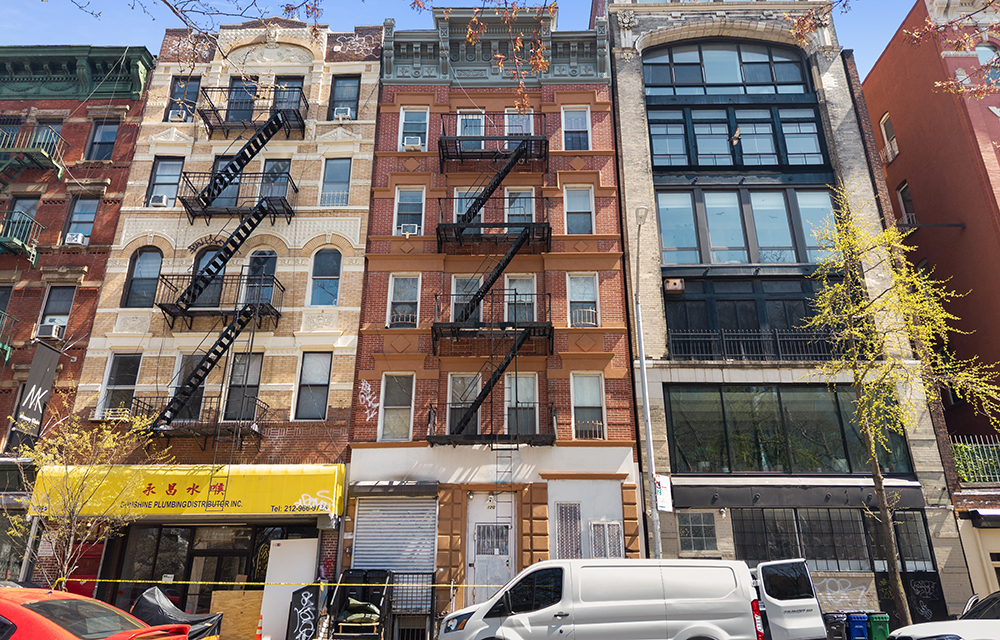
Investment Property Realty Group sells 120 Forsyth St. for $1.35 million
Manhattan, NY Investment Property Realty Group (IPRG) closed the sale of 120 Forsyth St., a mixed-use building located in the Lower East Side section of the city, for $1.35 million.



Quick Hits

Columns and Thought Leadership

Positive forecast for New York’s pro-housing push? - by Philip Butler
New York’s housing crisis remains a hot button topic despite growing consensus that varied and affordable housing is desperately needed statewide. Governor Hochul has recently introduced several initiatives to overcome N.Y.’s anti-housing

Hunt commercial real estate question and answer: Fortune 500 wisdom - by David Hunt
Yes, there are lessons to be learned from the largest companies in America when comes to managing your real estate. But the decision to buy or lease real estate may not be one of

A guide to finding the right NYC property management company - by Sanjay Gandhi
Being a small to midsize landlord in NYC is an increasingly demanding endeavor. From navigating complex regulations, increased compliance demands to dealing with tenant issues and remediating violations. It is wise to enlist the assistance of a partner, a professional

New York’s streets are full again, and the retail numbers prove it - by Noam Aziz
Walk down any New York block this year and you can feel it. The sidewalks are crowded, the storefronts are lit, and the energy that defines this city is back at full volume.
.gif)