



News:
Brokerage
Posted: August 25, 2014
HK Organization purchases 275 Park Avenue for $68 million
In partnership with Brickman, a real estate private equity firm, HK Organization in affiliation with Jo-Ann Obergfell, has purchased 275 Park Avenue located in Clinton Hill. The purchase price was $68 million.
The iconic property, otherwise known as "The Chocolate Factory," consists of seven contiguous buildings and features 123 loft apartments, ground-floor retail and parking. Amenities include a doorman and roof deck with breathtaking views of Brooklyn and the Manhattan skyline.
Converted in 2002, this building offers many different floor plans of versatile lofts. Additionally, the property serves vital neighborhood needs, with more than 25,000 s/f of retail along Park, Washington, and Waverly Aves., including the neighborhood's only organic market, and a luxury spa.
The original Romanesque Revival building was designed by the Parfitt Brothers in the late 19th century. It was built for the Von Glahn Brothers, a wholesale grocer that received produce from Wallabout Market. It was soon thereafter purchased by Rockwood & Company Chocolate, which for decades was one of the largest candy makers in the country. After World War II, Rockwood closed, and Sweets Corporation of America purchased the factory until closing permanently in 1967.
HK Organization has been active in the neighborhood for many years and was attracted by the opportunity to acquire a unique asset in a choice location within the burgeoning Brooklyn Tech Triangle.
Local HK developments include Empire Stores, the conversion of the historic coffee warehouses into office, retail, and restaurant space on the DUMBO waterfront, and 99 Gold St., the conversion of a toy factory into luxury rental apartments in Vinegar Hill. To date, HK Organization now has in excess of one million s/f in the Brooklyn Tech Triangle and Downtown Brooklyn Waterfront.
HK Organization, a Brooklyn-based real estate development firm, was founded by Harry Kotowitz and Howard Klaus. Each have more than 25 years of experience in the industry and have created several million s/f of residential, commercial, and industrial space. The principals' insight has enabled them to be pioneers in emerging neighborhoods ahead of the market curve. HK has continually adapted to changing markets, consistently finding innovative projects that create real value.
Tags:
Brokerage
MORE FROM Brokerage
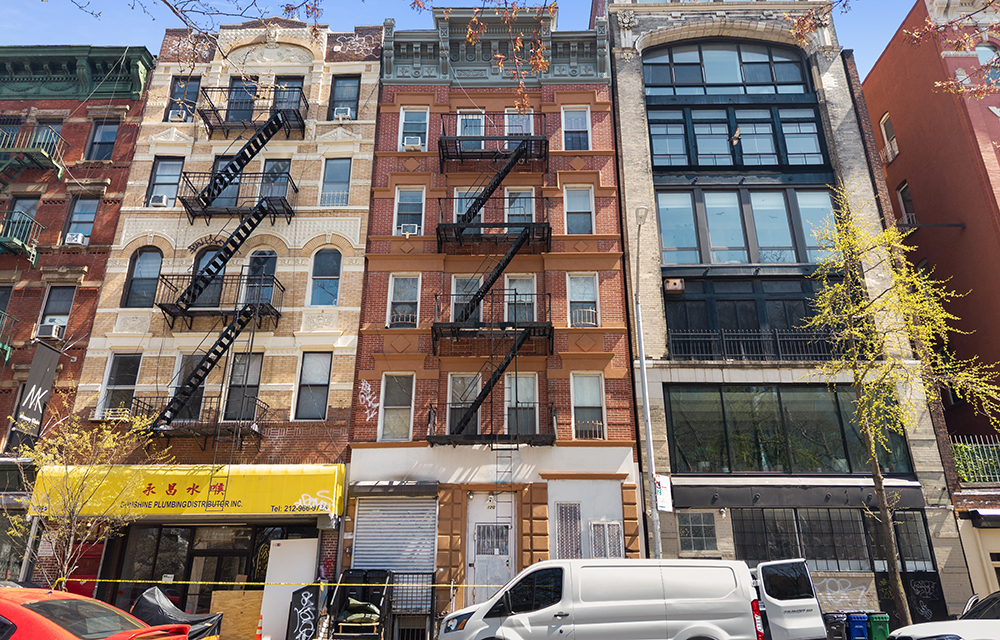
Investment Property Realty Group sells 120 Forsyth St. for $1.35 million
Manhattan, NY Investment Property Realty Group (IPRG) closed the sale of 120 Forsyth St., a mixed-use building located in the Lower East Side section of the city, for $1.35 million.



Quick Hits

Columns and Thought Leadership

A guide to finding the right NYC property management company - by Sanjay Gandhi
Being a small to midsize landlord in NYC is an increasingly demanding endeavor. From navigating complex regulations, increased compliance demands to dealing with tenant issues and remediating violations. It is wise to enlist the assistance of a partner, a professional

Positive forecast for New York’s pro-housing push? - by Philip Butler
New York’s housing crisis remains a hot button topic despite growing consensus that varied and affordable housing is desperately needed statewide. Governor Hochul has recently introduced several initiatives to overcome N.Y.’s anti-housing

Hunt commercial real estate question and answer: Fortune 500 wisdom - by David Hunt
Yes, there are lessons to be learned from the largest companies in America when comes to managing your real estate. But the decision to buy or lease real estate may not be one of

New York’s streets are full again, and the retail numbers prove it - by Noam Aziz
Walk down any New York block this year and you can feel it. The sidewalks are crowded, the storefronts are lit, and the energy that defines this city is back at full volume.
.gif)