



News:
Brokerage
Posted: March 7, 2017
Landlords still at risk for hosts’ illegal Airbnb rentals by Condon and Graifman
 Brian Graifman, Borah, Goldstein, Altschuler Nahins & Goidel, P.C.
For decades it has been illegal to rent a unit in a building with three or more residential units (class A multiple dwelling unit) for transient occupancy (i.e., less than 30 days without the permanent tenant present). The prohibition seeks to keep rental apartments available for permanent tenants, and alleviate security and safety concerns.
New legislation makes it illegal to advertise those unlawful short-term rentals. The law is aimed not at the advertising platform (e.g., Airbnb) but the advertising host (the individual/entity advertising). Understandably then, when Arirbnb recently sued, New York State and New York City settled, immunizing it from the legislation.
But there has been, and continues to be, a mismatch between the laws’ enforcement and the responsible party. Violations and fines are typically issued against the building owner even where the tenant, unbeknownst by the owner, made the illegal rental. In one case (currently pending and in which the authors here submitted a friend-of-the-court brief on behalf of the property owner consortium the Community Housing Improvement Program, Inc.) the city had fined the building owner more than $50,000 for two tenants making illegal rentals of which it was unaware.
While under the NYC Administrative Code tenants can be deemed responsible for creating prohibited conditions, the Code’s enforcement provisions appear to allow a notice of violation (NOV) to be directed only to an owner or agent. The new legislation–trumpeted as targeting the advertising host–left this discrepancy uncorrected.
Innocent or not, owners will continue to be considered easy targets for transient occupancy violations and fines. There are possible defenses, however, some untested considering the novelty of apartment sharing platforms and increased enforcement against illegal transient occupancies.
For instance, violations are often based on the theory that the illegal use of a single apartment transforms the building from residential to a hotel (with more demanding fire and building code requirements). But should an apartment being used for fleeting and unapproved transient occupancy in a multi-unit building actually change the building’s use? The duration of the violating conditions might be challenged too. The period properly commences only the day after the NOV’s issuance.
One might also challenge the daily penalty period under the theory that the city ought not penalize a party for complying with the city’s own law, which prohibits an owner from unilaterally terminating a tenancy absent court proceeding.
Additional daily penalties meant to deter illegal conversions are considered punitive in nature. Punitive penalties under New York policy should not be imposed vicariously absent the party charged having authorized, participated in, consented to, or ratified the subject conduct, or having deliberately retained the wrongdoer, or the wrong being in pursuit of a recognized business system of the party charged. An owner charged with enhanced penalties but having been unaware of the underlying violations has grounds for an innocent owner defense.
Violations are often charged in more than one NOV with the violations split and not cross-referenced. Each NOV arguably should stand on its own – undermining a charge in one NOV being combined with another to apply towards an enhanced violation and penalty.
Also, if the fine amount is enhanced based on multiple violations–such as two units in a building being used for illegal transient rentals–any daily charge arguably should not be enhanced to the extent the two underlying violations were not occurring simultaneously. If the two units’ illegality overlapped on one day only, the enhanced daily penalty should be so limited.
These defenses can be raised not just as a matter of New York policy, but under federal and state constitutional law. While administrative agencies have no power to adjudicate constitutional challenges, a court may, and so these arguments could be raised in a court challenge to an administrative determination as a second line of defense. And while the agency’s factual and statutory determinations might be given deference, for constitutional issues a court should afford no deference to the administrative agency’s substantive determination.
Both the state and federal constitutions prohibit the use of excessive fines, which should preclude imposing a punitive fine on an innocent owner. The NYC Administrative Code provision directing NOVs to owners in all situations rather than the primary wrongdoers may be unconstitutional, as a violation of due process and equal protection.
These are possible defenses for an innocent owner charged as a result of a tenant’s illegal short-term rental. As a final resort, an owner can proceed civilly against the malfeasant tenant who caused the owner economic injury.
Joseph Condon is general counsel to the Community Housing Improvement Program, Inc. (CHIP), New York, N.Y. and Brian Graifman is counsel at Borah, Goldstein, Altschuler Nahins & Goidel, P.C., New York, N.Y.
Tags:
Brokerage
MORE FROM Brokerage
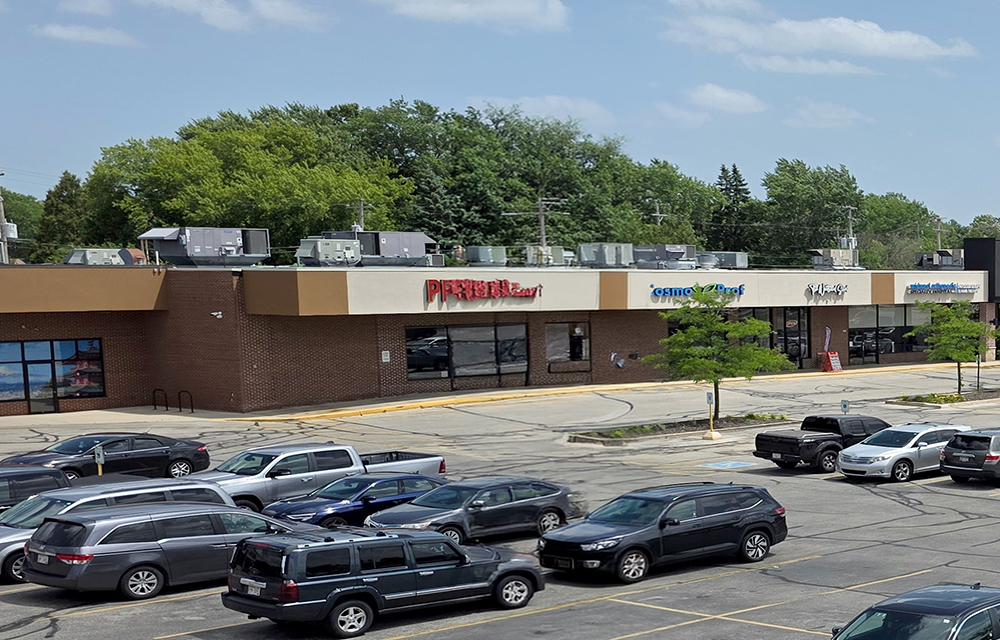
United Properties Corp. expands Wisconsin and Illinois retail presence adding 200,000 s/f
West Allis, WI United Properties Corp. completed two retail acquisitions totaling $27.4 million across Illinois and Wisconsin, adding 205,000 s/f of shopping center space to its portfolio




Quick Hits
 (2).gif)

Columns and Thought Leadership

New York’s streets are full again, and the retail numbers prove it - by Noam Aziz
Walk down any New York block this year and you can feel it. The sidewalks are crowded, the storefronts are lit, and the energy that defines this city is back at full volume.

A guide to finding the right NYC property management company - by Sanjay Gandhi
Being a small to midsize landlord in NYC is an increasingly demanding endeavor. From navigating complex regulations, increased compliance demands to dealing with tenant issues and remediating violations. It is wise to enlist the assistance of a partner, a professional

Positive forecast for New York’s pro-housing push? - by Philip Butler
New York’s housing crisis remains a hot button topic despite growing consensus that varied and affordable housing is desperately needed statewide. Governor Hochul has recently introduced several initiatives to overcome N.Y.’s anti-housing

Hunt commercial real estate question and answer: Fortune 500 wisdom - by David Hunt
Yes, there are lessons to be learned from the largest companies in America when comes to managing your real estate. But the decision to buy or lease real estate may not be one of
.gif)