



News:
Brokerage
Posted: October 27, 2015
Knakal and Olsen of Cushman & Wakefield broker $300 million development sale
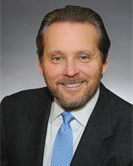
Bob Knakal, Cushman & Wakfield

Clint Olsen, Cushman & Wakfield
 Rendering of the development
site at 143-161 East 60th Street - Manhattan, NY
Manhattan, NY A development site at 143-161 East 60th St., between Lexington and Third Aves. bordering Midtown’s Plaza District and the Upper East Side, was sold in an all-cash transaction valued at $300 million. The assemblage, consisting of six contiguous low-rise buildings that sit on 19,685 s/f of land, features 200 ft. of street frontage across from the Bloomingdale’s flagship store and contains 282,925 buildable s/f above grade. Zoning allows for a base FAR of 10 on a residential or commercial basis with an additional 2 FAR of residential rights permitted through the Inclusionary Housing Program, which have already been transferred to the site and were included in the sale. The sale price equates to $1,060 per buildable s/f.
The seller of 143-161 East 60th St. is developer, The World Wide Group, which completed the property assemblage in 2014. Kaufu Properties, a Chinese developer, purchased the assemblage.
Adjacent to Billionaire’s Row, the site provides the opportunity to construct a global icon that will attract elite residential purchasers and draw top retail and commercial tenants from around the globe. Flexible zoning offers a first-class residential and commercial development opportunity. Due to the unlimited height potential, expansive lot size, and desirable location, development of this property will alter the skyline and become one of the city’s tallest structures that will offer panoramic views of Central Park, Manhattan, and beyond.
“World Wide did an amazing job of assembling this site over a ten year period which created tremendous value in the property. And they were great folks to work with,” said Cushman & Wakefield’s Bob Knakal, chairman, New York investment sales, who exclusively handled this transaction with Clint Olsen. “Kuafu was also an extreme pleasure to deal with. I have rarely seen a foreign buyer move so swiftly, yet carefully, to acquire such a major site. They were totally professional every step of the way.”
The seller was represented by Laurie Grasso, Esq. and Douglas Hoffmann, Esq. of Hunton & Williams LLP. The buyer was represented by Daniel Dwyer, Esq. of Dai & Associates, PC.
The successful merger of Cushman & Wakefield and DTZ closed September 1, 2015. The firm now operates under the iconic Cushman & Wakefield brand and has a new visual identity and logo that position the firm for the future and reflect its trusted global legacy and wider history. The new Cushman & Wakefield is led by Chairman & Chief Executive Officer Brett White and Global President Tod Lickerman. The company is majority owned by an investor group led by TPG, PAG, and OTPP.
Tags:
Brokerage
MORE FROM Brokerage
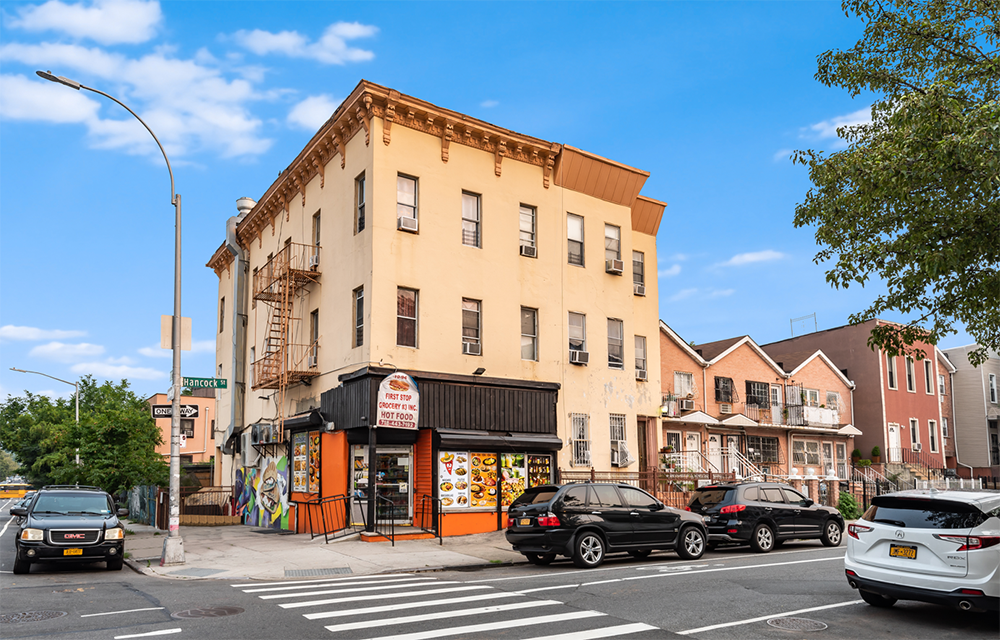
Investment Property Realty Group closes $1.75 million sale of 1094 Hancock Street in Brooklyn
Brooklyn, NY Investment Property Realty Group (IPRG), a New York-based commercial investment firm, has closed the sale of 1094 Hancock St., a mixed-use building in the Bushwick section, for $1.75 million.



Quick Hits
 (2).gif)

Columns and Thought Leadership

Hunt commercial real estate question and answer: Fortune 500 wisdom - by David Hunt
Yes, there are lessons to be learned from the largest companies in America when comes to managing your real estate. But the decision to buy or lease real estate may not be one of

Hunt CRE question and answer: Choosing a real estate agent - by David Hunt
First, we will only work with one agent exclusively. The primary reason is that we want that agent to legally represent our client’s interests. In New York State, a real estate agent has a fiduciary

A guide to finding the right NYC property management company - by Sanjay Gandhi
Being a small to midsize landlord in NYC is an increasingly demanding endeavor. From navigating complex regulations, increased compliance demands to dealing with tenant issues and remediating violations. It is wise to enlist the assistance of a partner, a professional

New York’s streets are full again, and the retail numbers prove it - by Noam Aziz
Walk down any New York block this year and you can feel it. The sidewalks are crowded, the storefronts are lit, and the energy that defines this city is back at full volume.
.gif)