



News:
Brokerage
Posted: May 27, 2026
ICSC Las Vegas 2026: The retail real estate industry rewrites the playbook - by Joe Aquino

Another ICSC Las Vegas has come and gone, and one thing became crystal clear walking the halls, restaurants, hotel suites and convention floor this year: retail real estate is no longer in survival mode — it is back in expansion mode.
For decades, ICSC has been the Super Bowl of retail real estate. It remains the one place where landlords, retailers, restaurateurs, developers, investors, lenders, brokers, architects, and technology companies all collide under one roof. But ICSC Las Vegas 2026 carried a noticeably different tone than recent years.
The conversations were no longer centered around “Can retail survive?”
The new discussion became “Where is the next opportunity?”
After years of interest rate shocks, inflation concerns, e-commerce fears, and the post-pandemic reshuffling of consumer habits, the industry appears to have regained confidence. Retail vacancy in many prime markets remains historically tight, new construction is still limited, and landlords with well-located assets suddenly find themselves back in a position of strength.
One of the major themes emerging from ICSC Las Vegas 2026 was the continued dominance of necessity-based retail. Grocery-anchored shopping centers, restaurants, entertainment concepts, fitness operators, and discount retailers continue to outperform many traditional categories.
At the same time, luxury retail remains resilient despite broader economic uncertainty. That contradiction fascinated many attendees. Consumers may complain about inflation and the economy, but they still appear willing to spend money on experiences, dining, travel, and aspirational brands.
In many ways, this reflects the emotional side of modern retailing. Shopping is no longer simply transactional. Consumers increasingly want experiences, entertainment, and environments that make them feel connected.
This was evident throughout the convention. Conversations repeatedly centered around “experiential retail,” mixed-use environments, hospitality-driven projects, and entertainment concepts replacing older traditional tenants. Trampoline parks, food halls, medical users, luxury fitness concepts, and immersive entertainment brands are now becoming major traffic drivers for shopping centers across America.
Another major topic dominating ICSC Las Vegas 2026 was artificial intelligence (AI) and property technology (Proptech).
ICSC Las Vegas 2026 placed enormous emphasis on data analytics, AI-driven site selection, predictive leasing models, mobility tracking, and technology platforms that help retailers and landlords make faster decisions.
The addition of the new ICSC+PROPTECH pavilion signaled just how serious the industry has become about technology integration.
For many longtime veterans of the business, the changes are remarkable. Years ago, retail leasing was heavily relationship-driven and instinctive. Brokers relied on gut feelings, street knowledge, and old-fashioned canvassing. Today, algorithms, demographic modeling, consumer mobility patterns, and predictive analytics are becoming part of the leasing process.
Yet despite all the new technology, one thing still hasn’t changed: this remains a relationship business.
That may have been the most important takeaway from ICSC Las Vegas 2026.
In a world increasingly dominated by Zoom calls, artificial intelligence, remote work, and digital communication, the value of face-to-face interaction appears to be rising again. Thousands of people still traveled to ICSC Las Vegas 2026 because deals get done faster when people sit across the table from one another.
The restaurant meetings, cocktail conversations, suite presentations, and late-night networking sessions remain just as important as the official conference itself. In many cases, some of the largest deals and future partnerships begin casually over dinner rather than inside a formal boardroom.
The convention also highlighted a growing divide within retail real estate itself. Prime locations continue to thrive, while weaker secondary assets still face challenges. Grocery-anchored centers and dominant lifestyle projects remain highly desirable, while older malls and weaker downtown retail corridors continue searching for reinvention strategies.
From a broader perspective, ICSC Las Vegas 2026 reflected an industry that has become smarter, leaner, and more adaptive. Retailers are operating smaller footprints, landlords are becoming more creative with tenant mixes, and developers are increasingly focused on community-oriented environments rather than traditional shopping formats.
Perhaps the biggest lesson from ICSC Las Vegas 2026 this year is that physical retail is far from dead.
In fact, many industry leaders now believe that as the world becomes more digital, physical spaces may actually become more valuable. Consumers still crave social interaction, entertainment, dining, discovery, and real-world experiences that online shopping alone cannot replicate.
ICSC Las Vegas 2026 proved that retail real estate continues to evolve — and those who evolve with it may discover that the next great chapter of the business is only beginning.
Joseph Aquino is president of JAACRES, Manhattan, N.Y.
MORE FROM Brokerage
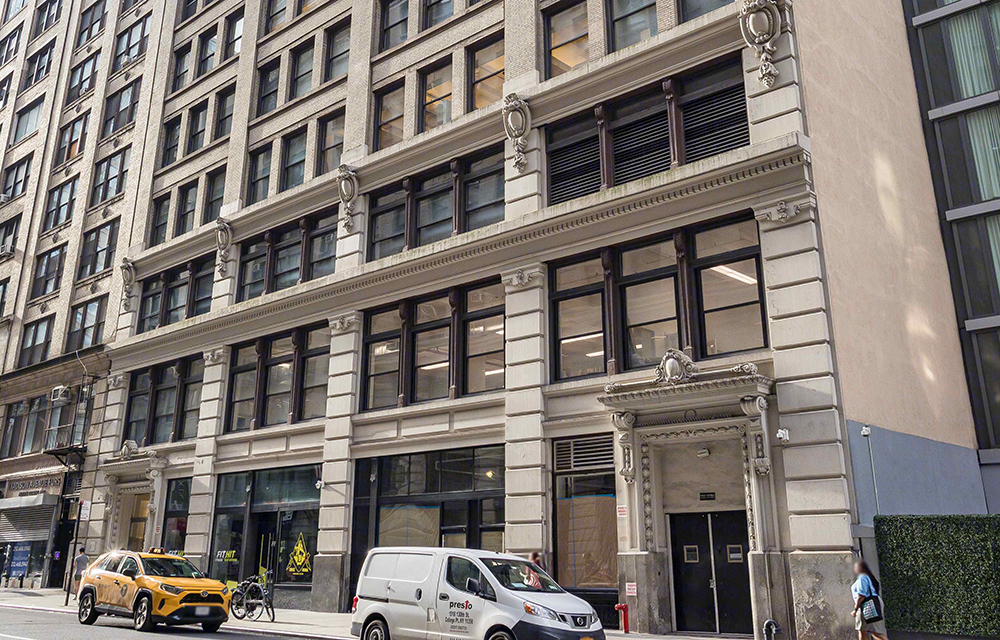
Koeppel Rosen inks 16-year 33,783 s/f lease for coworking firm Nomadworks at 122 West 27th St.
Manhattan, NY According to Koeppel Rosen LLC, leasing and management agent for the Rosen family portfolio, Nomadworks has signed a new 16-year, two-month lease totaling 33,783 s/f at 122 West



Quick Hits

Columns and Thought Leadership

Hunt CRE question and answer: Choosing a real estate agent - by David Hunt
First, we will only work with one agent exclusively. The primary reason is that we want that agent to legally represent our client’s interests. In New York State, a real estate agent has a fiduciary

Hunt commercial real estate question and answer: Fortune 500 wisdom - by David Hunt
Yes, there are lessons to be learned from the largest companies in America when comes to managing your real estate. But the decision to buy or lease real estate may not be one of

New York’s streets are full again, and the retail numbers prove it - by Noam Aziz
Walk down any New York block this year and you can feel it. The sidewalks are crowded, the storefronts are lit, and the energy that defines this city is back at full volume.

The art of investing in real estate - by Thomas Donovan
Real estate investing is as much an art as it is a skill. No one can time the market, or the factors that drive it, perfectly. Location, zoning, size, transportation, and neighborhood density give you a baseline for
.gif)