



News:
Brokerage
Posted: June 10, 2025
GFP Real Estate sign two leases totaling 9,834 s/f
Manhattan, NY GFP Real Estate, LLC has signed two leases totaling 9,834 s/f at 505 Eighth Ave.
In the first transaction, In Record Time, Inc., a single source production agency focused on high-quality branded merchandising, signed a 10-year lease extension for its 5,202 s/f on the sixth floor. The company, which uses the space for its general and executive offices, first moved into the building in 2016.
Allen Gurevich of GFP Real Estate represented the landlord, GFP Real Estate, in the transaction; Cory Borg and Chris Mongeluzo of Newmark represented the tenant.
In the second transaction, BlackHawk Data LLC, a women-owned data analytics and IT consulting firm that provides data-driven solutions to businesses, signed a three-year lease for 4,632 square feet on the third floor, doubling its space within the building. The company, which first moved into 505 Eighth Ave. in 2021, will relocate from within the building, where it currently occupies 2,250 square feet on the 13th floor. BlackHawk Data’s new space was previously occupied by the nonprofit Jumpstart for Young Children.
Allen Gurevich of GFP Real Estate represented the landlord, GFP Real Estate, and the tenant in this direct transaction.
“We’re thrilled to accommodate the continued growth of both In Record Time and BlackHawk Data at 505 Eighth Ave.,” said Gurevich. “Tenants love this building for its prime location, great light, air, and views, as well as its easy access to transportation. Keeping these companies in the building and providing them with the space they need to expand is exactly what we strive for.”
505 Eighth Ave., originally known as the Hoover Building, was built in 1926 by the architect Chester James Storm. The 25-story, 275,000-square-foot building features a modernized, 24/7 attended lobby and offers keycard access for convenient and secure access.
Situated on the Northwest corner of Eighth Ave. and 35th St., 505 Eighth Ave. is located one block away from Penn Station, with links to the A, C, E, 1, 2, and 3 subway lines, NJ Transit Trains, LIRR and Amtrak. Additionally, only a few blocks away are links to the B, D, F, M, N, Q, R, W subway lines.
Tags:
Brokerage
MORE FROM Brokerage
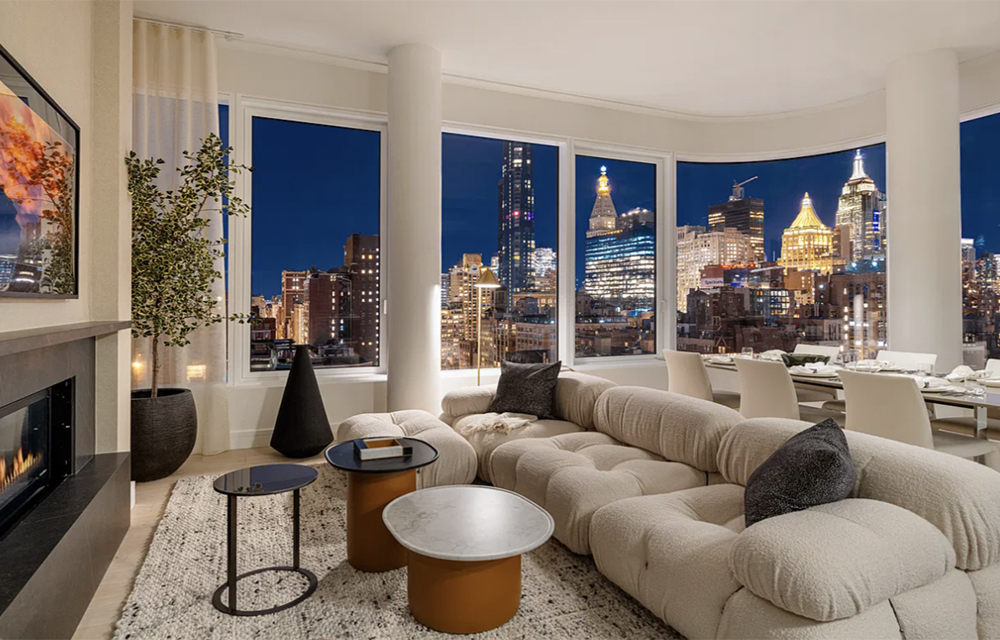
200E20TH sells out in Gramercy, penthouse A closes out sales at the CetraRuddy-designed condominium residences
Manhattan, NY 200E20TH, the CetraRuddy-designed architectural masterwork that brought a curved, contemporary sensibility to Gramercy’s Beaux-Arts streetscape, has




 (2).gif)

Columns and Thought Leadership

New York’s streets are full again, and the retail numbers prove it - by Noam Aziz
Walk down any New York block this year and you can feel it. The sidewalks are crowded, the storefronts are lit, and the energy that defines this city is back at full volume.

The art of investing in real estate - by Thomas Donovan
Real estate investing is as much an art as it is a skill. No one can time the market, or the factors that drive it, perfectly. Location, zoning, size, transportation, and neighborhood density give you a baseline for

Hunt CRE question and answer: Choosing a real estate agent - by David Hunt
First, we will only work with one agent exclusively. The primary reason is that we want that agent to legally represent our client’s interests. In New York State, a real estate agent has a fiduciary

Hunt commercial real estate question and answer: Fortune 500 wisdom - by David Hunt
Yes, there are lessons to be learned from the largest companies in America when comes to managing your real estate. But the decision to buy or lease real estate may not be one of
.gif)