



News:
Brokerage
Posted: April 21, 2014
Forest Hills and Rego Park in Queens: Commercial real estate transactions report
Forest Hills and Rego Park; two bordering neighborhoods in Queens with rich histories and some of the most sought after real estate in the borough.
According to the 2012 U.S. Census Bureau, Forest Hills has roughly 69,745 inhabitants with 35,524 total housing units. Rego Park showed a population of 42,484 residents with 20,268 housing units.
46% of the residents in Forest Hills are foreign born and 47% of the residents are renters. In Rego Park, 55% of the inhabitants are foreign born and 56.5% are renters. This is always a good sign for multifamily owners and vacancy rates; which sit at or near zero percent for this area.
These sister neighborhoods are very mature, commercial/investment building sales markets with historically, extremely low building turnover rates.
From the years 2005-2013, the commercial real estate building sales turnover rates for both areas combined were 2.53%, 2.92%, 3.4%, 1.52%, 1.27%, 0.63%, 1.9%, 2.02% and 2.8% respectively. The total gross consideration for the years 2005-2013 were $90.5 million, $163.2 million, $133.4 million, $127.6 million, $23.1 million, $17.8 million, $33.8 million, $70.4 million and $195.1 million respectively.
The average transaction price for 2013 was a record $10.841 million transaction. The last time the two areas came close to this number was in 2008 when the average was $10.6 million. In 2011, just three years ago, the average transaction was only $2.25 million and in 2012 that number was $4.4 million. We are definitely seeing an uptick of transaction volume along with growth in value.
To illustrate the point in increased value, I will briefly discuss the most recent multifamily sale in the area: 111-32 76th Ave. in Forest Hills (between Queens Blvd. and Austin St.) sold in June of 2006 for $16.22 million. In March of this year, the property, a seven-story, 75,455 s/f, 74-unit elevator pre-war apartment building traded for $21.65 million; a 25% increase in eight years (or 3.125% increase in value per year.) The average price per unit it traded for, $292,558 per unit, is a number we have not seen in Forest Hills or Rego Park in that multifamily market; a strong way to start off 2014.
Last year, there were a total of 18 transactions in the Forest Hills and Rego Park market, representing a 2.8% turnover rate. The total gross consideration for these transactions was $195.144 million; a huge increase from 2012's total gross sales of $70.5 million, and the highest number we have seen in recent years for this area.
Forest Hills accounted for 11 of the 18 sales with a gross consideration of $38.42 million and Rego Park had seven of the sales for a total of $156.7 million.
The largest sale for 2013 in Forest Hills was the sale of 108-22 Queens Blvd., (the Midway theater building) for a gross sales price of $20.5 million. The property is a 48,417 s/f theater and office building and traded for a 4.8% capitalization rate.
The largest transaction for Rego Park last year was the sale of 62-60 99th St., "Saxon Hall," a 417-unit, 16-story, 500,000 s/f, apartment building. The property traded at $85.25 million after selling for $74 million in 2008.
There are also new and exciting developments sprouting up and planned for the area:
* At 65-38 Austin St. in Rego Park, an application has been filed to construct a 55,630 s/f, seven-story building with 59 apartments.
* A long-term land lease was just signed at 92-77 Queens Blvd. in Rego Park by Atlas Projects, Inc. The former site of a car wash and gentlemen's club will be developed into a 105,000 s/f, 15-story, mixed-use tower with ground floor retail.
* The owners of the Rego Park II Shopping center at 61-01 Junction Blvd. in Rego Park, are planning to build a 24-story, 300,000 s/f, 314-unit luxury apartment tower above its retail space, which currently has over 600,000 s/f of retail with tenants such as Costco and Century 21.
* At 108-11 Queens Blvd., Cord Meyer is building a magnificent new 17-story luxury residential building with CVS as the new anchoring tenant. The 147,800 s/f art deco building will boast 100 residential units, as well as a full garage. Construction looks like it is nearing completion.
* In Rego Park on 66th Ave., between 99th St. and 102nd St., there is a new seven-story, 35,194 s/f, elevator apartment building with 38 apartments and 6,423 s/f of community facility space.
Values across the board continue to rise in Forest Hills and Rego Park. With 99-100% residential occupancy rates and attention-grabbing new developments, the area continues to be one of the most sought after places to live, work and invest.
Rubin Isak is the CEO/co-founder of Falco & Isak Realty Services, Queens, N.Y.
Tags:
Brokerage
MORE FROM Brokerage
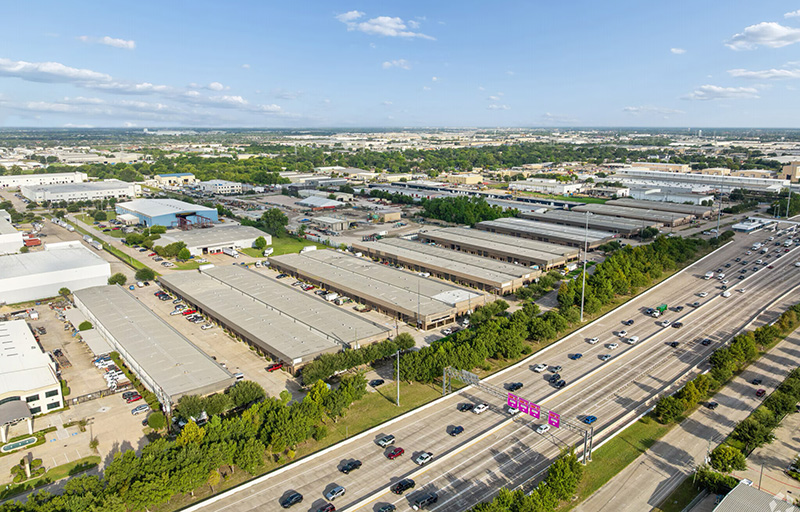
Simi Capital enters Texas with acquisition of 359,000 s/f small-bay industrial portfolio in Northwest Houston
Houston, TX Simi Capital acquired a three-property, 359,000 s/f small-bay industrial portfolio. The transaction, completed in a joint venture with Decker Capital, marks Simi


Quick Hits

Columns and Thought Leadership

Hunt commercial real estate question and answer: Fortune 500 wisdom - by David Hunt
Yes, there are lessons to be learned from the largest companies in America when comes to managing your real estate. But the decision to buy or lease real estate may not be one of

New York’s streets are full again, and the retail numbers prove it - by Noam Aziz
Walk down any New York block this year and you can feel it. The sidewalks are crowded, the storefronts are lit, and the energy that defines this city is back at full volume.

A guide to finding the right NYC property management company - by Sanjay Gandhi
Being a small to midsize landlord in NYC is an increasingly demanding endeavor. From navigating complex regulations, increased compliance demands to dealing with tenant issues and remediating violations. It is wise to enlist the assistance of a partner, a professional

Hunt CRE question and answer: Choosing a real estate agent - by David Hunt
First, we will only work with one agent exclusively. The primary reason is that we want that agent to legally represent our client’s interests. In New York State, a real estate agent has a fiduciary
.gif)