



News:
Brokerage
Posted: April 21, 2014
Washington Heights reaching new heights: Differentiating itself from other area neighborhoods
Ask real estate investors and developers why they're buying properties in Washington Heights and they will probably answer: higher yield, reasonable land prices, an influx of new residents, and the residential demand stemming from local institutions such as Columbia-Presbyterian and Yeshiva University.
Adam Sabella, the managing director of Enterprise Asset Management, said a search for higher yield initially led him to invest in multifamily buildings throughout Washington Heights.
"The neighborhood offered an abundance of properties that contained two layers of upside," said Sabella, who purchased a property at 500 Fort Washington Ave. in 2013 that our firm marketed. "First, because of the combination of long-term ownership and rent stabilization, in-place rents are often substantially below current market levels. Second, Washington Heights is becoming a more widely accepted residential location, and, as such, current market rents are growing rapidly. So, the opportunity to buy an attractive starting yield with a clear ability to grow cash flow was appealing."
Sabella said in addition to the presence of the N.Y.-Presbyterian Hospital/Columbia University Medical Center and local universities, Washington Heights is attractive to investors because many new residents are moving to the neighborhood in search of larger apartments at more reasonable rents than they can get downtown.
"We see a lot of our tenants coming from downtown, because they can get an apartment for $30 per s/f compared to $80 per s/f and live in a space that is three times the size," Sabella said. He went on to point out that the area's mass transit systems and multiple parks including the 67-acre Fort Tyron Park, are other drivers behind the rental demand.
Due to Washington Heights' large inventory of multifamily properties, it has historically been one of the most transactional neighborhoods in N.Y.C. Last year was no exception, and the community saw 34 multifamily transactions, more than any other neighborhood citywide except for Central Harlem, which had 36 transactions. According to Ariel Property Advisors' Multifamily Year in Review 2013, Washington Heights' multifamily transactions consisted of 61 buildings containing 2,602 units for $391.5 million in gross consideration.
As we've seen throughout the rest of the city, average prices are on the rise. Washington Heights' multifamily properties saw the average price per s/f rise 26% from $146 in 2012 to $184 in 2013. The average price per unit increased 20% from $126,631 to $152,558 during the same period.
While the majority of the neighborhood's housing stock consists of pre-war multifamily residential buildings, developers have begun taking notice of attractive land pricing and the area has seen an influx of new, ground up condominium, residential rental, office, and even hotel projects.
Eran Polack, CEO of HAP Investment Developers who we have closed several Washington Heights' development transactions with, said his firm is developing both new condos and rental buildings throughout Washington Heights because it's a very family-oriented neighborhood that is attracting young people who have been priced out of other areas of Manhattan.
"Our target market is young professionals looking to start families along with doctors and nurses from Columbia/New York-Presbyterian Hospital and Yeshiva University students," he said.
Yeshiva University, which serves nearly 7,000 students citywide, has an uptown campus at 500 West 185th St.
Polack added that land prices are less than in other parts of the city, which makes both condominium and rental development feasible. Though based off a small sample size, our firm's research shows that in 2013 the average dollar per buildable s/f for vacant lots in Washington Heights was below $80, but we expect this to rise significantly in the near term. In fact, we already have several sites in contract north of the $100 per buildable s/f mark.
"We like the Columbia-Presbyterian Hospital neighborhood very much and we have a great project there on 167th St.," Polack said. "We also like the area of 180-200 between Amsterdam and Broadway." Polack went on to note he has ongoing developments at 187th St. between Wadsworth and Broadway and a widely publicized development at 4452 Broadway.
The Columbia University Medical Center at 630 West 168th St., which shares its 20-acre campus with major teaching hospital affiliates N.Y.-Presbyterian Hospital and the NYS Psychiatric Institute, also is serving as a driver for local hotel and office development. Last year, Columbia University broke ground on a 100,000 s/f, 14-story Medical and Graduate Education Building at 104 Haven Ave. between 171st and 172nd Sts. The tower is expected to open in 2016 and will house high tech classrooms, learning centers, and a 300-seat auditorium.
Other significant neighborhood developments include:
* The Audubon Hotel, a new 52-room, eight-story hotel opening at 507 West 181st St. that includes four floors of medical office space.
* A 54-room hotel under construction at 514 West 168th St., which will also include 15,000 s/f of medical office space.
* The Stack, a seven-story residential rental with 28 units at 4857 Broadway, is being constructed with prefabricated modular construction and assembled on-site.
* The High Bridge restoration over the Harlem River, which when completed later this year will link Highbridge Park with the Highbridge section of the Bronx and provide recreational space for pedestrians and cyclists.
In a market seemingly flush with capital, Washington Heights is differentiating itself from other Manhattan neighborhoods by offering comparatively higher yields and significant value-add opportunities. When coupled with the developments in progress and the future opportunities offered by the area's remaining vacant parcels, Washington Heights will continue to be one of the more dynamic and transactional neighborhoods in the city.
For research reports about the multifamily market and other investment property sales in Washington Heights, please see http://arielpa.com/research/reports/. For other information, please call 212-544-9500.
Ariel Property Advisors is a New York City investment property sales firm with an expertise in the multifamily market and development sites. The firm also produces a number of research reports including the Multifamily Month in Review: New York City; Multifamily Quarter in Review: New York City; Multifamily Year in Review: New York City; Brooklyn Mid-Year and Year-End Sales Reports; Northern Manhattan Mid-Year and Year-End Sales Reports; and the Bronx Mid-Year and Year-End Sales Reports. More information is available at arielpa.com.
Victor Sozio is the vice president of Ariel Property Advisors, New York, N.Y.
Tags:
Brokerage
MORE FROM Brokerage
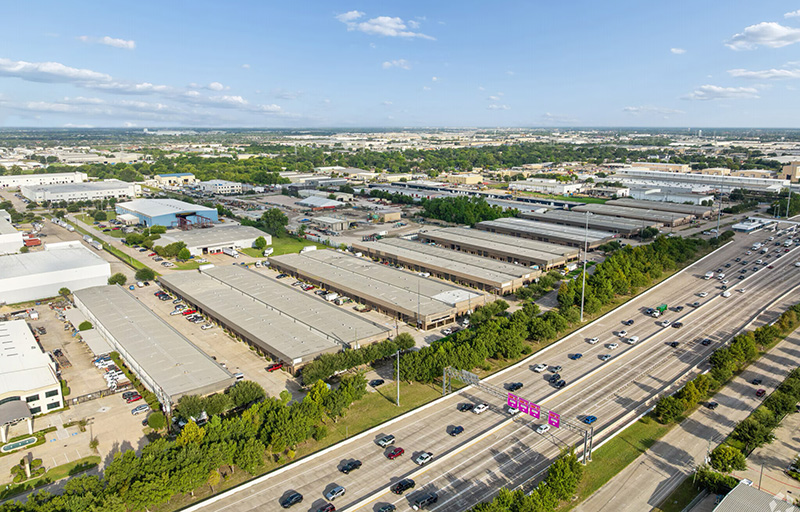
Simi Capital enters Texas with acquisition of 359,000 s/f small-bay industrial portfolio in Northwest Houston
Houston, TX Simi Capital acquired a three-property, 359,000 s/f small-bay industrial portfolio. The transaction, completed in a joint venture with Decker Capital, marks Simi


Quick Hits
 (2).gif)

Columns and Thought Leadership

Hunt commercial real estate question and answer: Fortune 500 wisdom - by David Hunt
Yes, there are lessons to be learned from the largest companies in America when comes to managing your real estate. But the decision to buy or lease real estate may not be one of

A guide to finding the right NYC property management company - by Sanjay Gandhi
Being a small to midsize landlord in NYC is an increasingly demanding endeavor. From navigating complex regulations, increased compliance demands to dealing with tenant issues and remediating violations. It is wise to enlist the assistance of a partner, a professional

Hunt CRE question and answer: Choosing a real estate agent - by David Hunt
First, we will only work with one agent exclusively. The primary reason is that we want that agent to legally represent our client’s interests. In New York State, a real estate agent has a fiduciary

New York’s streets are full again, and the retail numbers prove it - by Noam Aziz
Walk down any New York block this year and you can feel it. The sidewalks are crowded, the storefronts are lit, and the energy that defines this city is back at full volume.
.gif)