



News:
Brokerage
Posted: April 21, 2014
The Brooklyn market continues to sizzle, and lenders are adding more fuel to the fire
The market continues to sizzle, and lenders are adding more fuel to the proverbial fire. Commercial banks have increased their mortgage originations, resulting in closed loans of up to $280 billion in 2013, with commercial real estate being the driving force behind this increased loan growth. As this flood of capital continues to pour in, investors are bullishly seizing the opportunity to bolster their portfolios. They have re-focused their attention to office buildings, retail complexes, industrial buildings and multifamily properties - and Brooklyn is the central market in this resurgence. Neighborhoods like Clinton Hill are on the cusp of transforming into bustling centers that offer various housing, commercial and cultural amenities.
Since the sale of the 882 Fulton St. development site, landlords are looking to reap similarly strong numbers. Recall that a four-story 9,200 s/f multifamily, consisting of eight apartments on 167 Waverly Ave., traded for $2.25 million, garnering a total of $243 per s/f. Three blocks west at 197 Aldelphi St., a three-story mixed-use 4,300 s/f corner property, consisting of four residential units and one store, sold for $2.85 million, rounding in a multiplier of 13 times the rent. The Church of St. Luke and St. Matthew has also decided to test the waters of the rebounding market by putting their 40,000 s/f site on the market.
With the Commerce Department reporting consumer spending up 40% in January (a 10% increase from December), job growth slowly but steadily is conveying that the economy is rallying - and the rental market is rapidly responding. Currently, Brooklyn offers nearly 500,000 private sector jobs to the work force, and increasingly more people are commuting from Manhattan to work in Brooklyn. However, some are beginning to eschew the Manhattan-to-Brooklyn commute, and instead are looking for luxurious apartments to rent right in the borough.
In 2012, there were 2.566 million people living in Brooklyn. Towards the end of 2013, the city's population had grown by 0.9%, which translates to nearly 250,000 additional residents. As developers witness this remarkable population boom, they are feverishly trying to meet the demand for new housing in the borough. Real estate giant Lightstone Group is slated to construct a 12-story, 700-unit mixed-use rental complex in Gowanus (which would offer both market-rate and affordable housing) in an attempt to meet growing housing needs. Once completed in 2015, the complex will span a 249,571 s/f area, including over 3,500 s/f of commercial space, underground parking, a children's recreational center, fitness facilities, and a pool. Another notable development site in the works, 177 Front St. in Vinegar Hill, traded for $30.6 million (at $204 per s/f) and will become a 12-story, 105-unit rental property. Megalith Capital Partners and Urban Realty Partners collaborated on the 150,000 s/f project which is slated for completion in 2016.
Despite the initial resistance from the DeBlasio administration, Two Trees Management is planning the $1.5 billion Domino Sugar plant redevelopment: a 2,300 rental apartment project in Williamsburg that will include multiple towers of up to 55 stories each. The complex will include 1,600 market-rate units, and 700 affordable units which will constitute 26% of the development's available housing. The plans also include retail space, a new school and an open waterfront. When Two Trees first announced its plans for the defunct factory, they proposed that 660 of 2,300 units would be slated for affordable housing. The De Blasio administration rebuffed the proposal and insisted that Two Trees set aside more affordable housing units, and an accord was eventually reached that bumped the number up to 700.
As the rental market flourishes, retail giants are encroaching on the borough to maximize profits. Companies like Uniqlo, Sephora and Whole Foods have all opened stores in Brooklyn. With their arrival, retail rents in the area have also risen rapidly, going from the mid-$50s to $200 per s/f, an increase of over 300% in some neighborhoods. And investors are seizing the opportunity to snap up retail properties to add to their portfolios. Thor Equities purchased a mixed-use development in Atlantic Gardens consisting of 24 rental units and nine retail shops along Atlantic Ave.. The $23 million purchase of 69,000 s/f nets $333 per s/f.
More deals will continue to proliferate in the trendy borough as banks are poised to lend record amounts of capital in 2014, some analysts predict. The market will continue to gain strength and momentum as the wave of transactions shows no sign of slowing down. Brooklyn is at the forefront of New York City's real estate revitalization, and as neighborhoods continue to support new growth and expansion, investors will place more trust in the borough's potential to live up to its hype.
Dennis Gelin is a senior associate at Azad Property Group, New York, N.Y.
Tags:
Brokerage
MORE FROM Brokerage
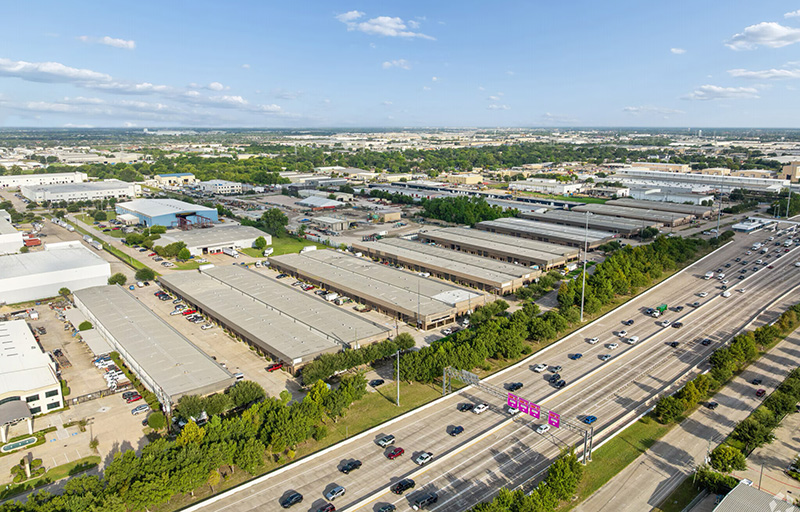
Simi Capital enters Texas with acquisition of 359,000 s/f small-bay industrial portfolio in Northwest Houston
Houston, TX Simi Capital acquired a three-property, 359,000 s/f small-bay industrial portfolio. The transaction, completed in a joint venture with Decker Capital, marks Simi


Quick Hits
 (2).gif)

Columns and Thought Leadership

A guide to finding the right NYC property management company - by Sanjay Gandhi
Being a small to midsize landlord in NYC is an increasingly demanding endeavor. From navigating complex regulations, increased compliance demands to dealing with tenant issues and remediating violations. It is wise to enlist the assistance of a partner, a professional

Hunt commercial real estate question and answer: Fortune 500 wisdom - by David Hunt
Yes, there are lessons to be learned from the largest companies in America when comes to managing your real estate. But the decision to buy or lease real estate may not be one of

New York’s streets are full again, and the retail numbers prove it - by Noam Aziz
Walk down any New York block this year and you can feel it. The sidewalks are crowded, the storefronts are lit, and the energy that defines this city is back at full volume.

Hunt CRE question and answer: Choosing a real estate agent - by David Hunt
First, we will only work with one agent exclusively. The primary reason is that we want that agent to legally represent our client’s interests. In New York State, a real estate agent has a fiduciary
.gif)