



News:
Brokerage
Posted: August 2, 2016
Executive of the Month: Exploring the flow of global capital into US real estate with Steven Littman of Rhodes Associates
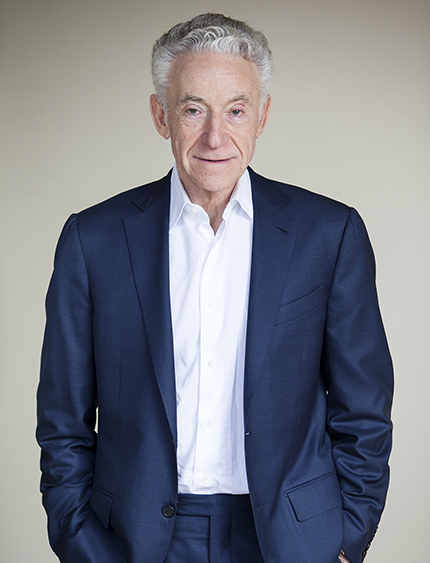 Steven Littman, Rhodes Associates
New York, NY Steven Littman, president and managing partner at Rhodes Associates, an executive search/consulting firm which has specialized in the real estate industry for more than 35 years, recently sat down with the New York Real Estate Journal for a Q&A session.
Q. The U.S. real estate market, particularly New York, is currently attracting billions of dollars of global capital. Is this investment cycle different than in the 1980’s when a large portion of real estate investment capital was also from overseas sources with the Japanese playing a major role?
A. Yes. In the 1980’s (and prior cycles), many of those individuals managing the investment of capital in the U.S. were not as savvy/experienced as the deal professionals they were investing with or buying from. In many cases, individuals/firms responsible for investing capital in the 1980’s were incentivized to invest capital and were rewarded through payment of fees – which had no relationship to the ultimate profitability of those investments. Specifically, Japanese banks, overseas financial institutions and other foreign overseas investors lost billions because those individuals/firms responsible for investing were paid based on origination, not ROI. This was a critical misalignment of interests, skills and talent.
Q. In recent years, including 2016 and projected for 2017, there is also another major flow of global capital coming into U.S. real estate: Are the circumstances different than in prior cycles?
A. Yes, the overseas capital sources have gotten smarter. They have hired better investment professionals to invest for them and aligned interests so that incentives for these professionals are tied to ROI. An example is an assignment we recently managed for Stars Investments (Chilean-based) who went out of their way to recruit a smart and experienced U.S. real estate executive with the experience and transactional skill to go toe-to-toe with any major developer in assessing and negotiating transactions in the U.S. Another example is when Mitsui Fudosan appointed John Westerfield to oversee their U.S. investment activities. Westerfield has more than 30 years of experience as both a real estate banker and investor. If Westerfield is doing a deal with a developer, it is definitely a level playing field. Those are just two of many similar examples.
Q. Considering current prices of real estate assets in New York are at a high level and cap rates are accordingly at a low level, is overseas capital taking a higher risk in order to achieve its target returns? Alternatively, are the returns being adjusted in order to protect equity and avoid higher risk investments?
A. Certain overseas investors are clearly investing in higher risk development and acquisition transactions in order to achieve more opportunistic returns (above 15%). A significant number of properties acquired or developments planned have either been put on hold or delayed based on current market conditions. It is not clear if many high-profile projects will produce returns that are in line with current risks.
We see a shift of capital to investments which are more core/core-plus and where the investment time frame has gone from “closed-end” (three to seven years) to “open-ended” (seven to ten years, plus). Many overseas investors are willing to accept lower returns that go along with less risk and protection of equity. An example of this is in the slow down within high-end condo development and the expansion of investment in rental residential real estate within the boroughs.
 Littman and Jane Lyons during a visit to Istanbul
Q. What are some of the attributes common to savvy deal professionals who can protect an overseas investor’s interests in the U.S. (and/or in other global markets)?
A. 1. Sophisticated/successful experience on the buy side or equivalent sell side experience.
2. Highly creative experience regarding deal structure and analytics.
3. The ability to think like a principal and to choose partners, brokers or consultants in a careful manner based on realistic due diligence.
4. The ability to think outside the lines – to be a creative thinker.
These are among the attributes we seek when we conduct our searches for our clients, both domestic and overseas – however, it is especially critical if the capital being invested is from outside the U.S. Any significant compromise to the quality of the investment professionals hired has historically produced a lower rate of ROI or perhaps resulted in a significant loss of equity.
Q. Is there still a learning curve for the global capital investing in the U.S.?
A. Absolutely – overseas investors need to acknowledge that U.S. compensation structures/practices differ from other global structures. Understanding these differences is highly critical when they are looking to hire accomplished, talented, U.S. deal professionals. When Rhodes is managing a search/consulting assignment for an overseas capital source, that assignment has to be completed within the compensation guidelines provided by that client – for example, an overseas pension fund that may be struggling to hire the best professionals because their policies/practices do not allow for profit participation. Some overseas investors create/structure a separate U.S. investment subsidiary so they are able to incorporate some form of long-term profit/equity participation.
Examples of firms who have made an outstanding adjustment to hiring the best professionals are Investcorp and Kuafu Properties. Investcorp’s parent, based in Bahrain, primarily raises Middle East capital for investment in the U.S. Kuafu Properties, a U.S. company based in New York, raises Chinese capital for investment in the U.S.
Q. You are recommending that regardless of an overseas investor’s existing compensation structure, they may have to make exceptions when investing in the U.S. Is that right?
A. Yes, whatever needs to be changed to allow for the best talent and a high level of candidate retention must be done. The mathematics make no sense if the investing organization fails to do this, because the reduction in ROI or losses they may suffer are significantly greater than the increase in compensation required to hire candidates with the appropriate investment skills.
At Rhodes, we have a singular mission – the success of our clients and maximizing their return on investment in human capital. Founded in 1969, we specialize in representing firms in most major sectors and disciplines within the global real estate industry. Throughout our 40+ years of experience in executive search, organizational and strategic consulting, we have consistently demonstrated our skill at building high performance teams for some of the world’s leading real estate companies. Together, our partners have more than 100 years of real estate and executive search experience and are involved in all aspects of the search/consulting process. Our client-centered focus and attention to return on investment, leads to industry leading assignment completion and retention rates.
During his more than 30-year career in executive search and organizational consulting, Littman has led more than 1,000 search and consulting assignments, specializing in the real estate industry, globally. Littman was also a founding partner of two significant real estate businesses, which were responsible for more than $1 billion in real estate transactions – Rockwood Real Estate, an advisory and investment firm, and Rohman Realty (now Rhodie Group), a developer/owner of more than 3,000 multifamily units in the southeastern U.S. Prior to founding Rhodes, Littman worked in human resources for two major corporations, the latter being Federated Department Stores. He is a member of the Urban Land Institute.
Tags:
Brokerage
MORE FROM Brokerage

Marcus & Millichap releases fourth-quarter 2026 NYC industrial market report
Manhattan, NY Marcus & Millichap has published its fourth-quarter 2026 New York City Industrial Market Report. “New York City’s industrial market is showing a clear





Quick Hits
 (2).gif)

Columns and Thought Leadership

Hunt commercial real estate question and answer: Fortune 500 wisdom - by David Hunt
Yes, there are lessons to be learned from the largest companies in America when comes to managing your real estate. But the decision to buy or lease real estate may not be one of

Hunt CRE question and answer: Choosing a real estate agent - by David Hunt
First, we will only work with one agent exclusively. The primary reason is that we want that agent to legally represent our client’s interests. In New York State, a real estate agent has a fiduciary

New York’s streets are full again, and the retail numbers prove it - by Noam Aziz
Walk down any New York block this year and you can feel it. The sidewalks are crowded, the storefronts are lit, and the energy that defines this city is back at full volume.

The art of investing in real estate - by Thomas Donovan
Real estate investing is as much an art as it is a skill. No one can time the market, or the factors that drive it, perfectly. Location, zoning, size, transportation, and neighborhood density give you a baseline for
.gif)