


News:
Owners Developers & Managers
Posted: January 12, 2009
Eleven fascinating facts about lighting upgrades
The new year offers a great opportunity to significantly reduce your facility's energy consumption and costs and benefit the environment by investing in an energy-efficient lighting upgrade. For instance, did you know....?
* According to the EPA, lighting accounts for as much as 30-40% of the electricity used in the typical commercial building.
* The nation's 4-5 million commercial, industrial, and institutional buildings spend over $35 billion a year in electricity bills to operate their lighting systems alone.
* Nearly 90% of the total cost to run a fluorescent lamp over its lifetime is accounted for by the electricity to operate it (product and maintenance costs amount to less than 15%).
* A recent Energy Cost Savings Council analysis of lighting upgrade projects conducted nationwide found that the 1,000 lighting upgrades studied routinely paid themselves back within 2-3 years, delivering 30-50% returns on investment.
* Research shows that upgrades involving a comprehensive range of technologies - including lighting, HVAC, etc. - can save facilities up to $1 per s/f in energy costs.
* Experts estimate that up to a third of the nation's electricity requirements could be met through "demand-side management" measures - activities that reduce energy consumption or modify patterns of usage (such as the installation of energy-efficient lighting products).
* As part of their efforts to promote energy conservation, utilities often encourage the use of energy-efficient lighting products by offering end users rebates on the purchase of these items. Check with your local utility to find out about cash incentives that may be available on the purchase of energy-efficient lamps, ballasts, and/or lighting controls.
* Studies show that improvements in the average office lighting system can make employees over 1 hour more productive per week - resulting in 3-5% gains in employee productivity.
* A recent national survey of chief financial officers found that the majority was either "satisfied" or "very satisfied" with the results of lighting upgrades they had managed or overseen in their facilities. The upgrades they witnessed had overwhelmingly delivered the energy and cost savings promised.
* The 3,000 - 4,000 organizations which are part of the EPA's voluntary Energy Star Buildings Program have cumulatively saved over $3 billion in energy bills and prevented more than 50 billion pounds of carbon dioxide from being released into the atmosphere as a result of the upgrades (largely lighting-related) they have undertaken. In ecological terms, this is equivalent to the removal of over 2 million cars from U.S. roads or the planting of 2-3 million trees annually.
* There are several hundred energy service providers (ESCOs) nationwide who can perform a low-cost or no-cost facility audit and manage an energy-efficient lighting upgrade. Many can assist with project financing or will agree to be paid out of the guaranteed cost savings. Contact your local utility to be connected with a skilled technician within the utility or to get assistance in locating the nearest ESCO.
Start off the new year by capitalizing on the tremendous financial, environmental, and aesthetic benefits that an energy-efficient lighting upgrade can offer your facility....and be aware that your upgrade could further qualify for tax deduction opportunities that were recently extended through 2013 as part of the Energy Policy Act of 2005! For a free upgrade guide, contact Susan Bloom at [email protected].
Susan Bloom is director of corporate communications for Philips Lighting & Philips Lighting Electronics.
MORE FROM Owners Developers & Managers
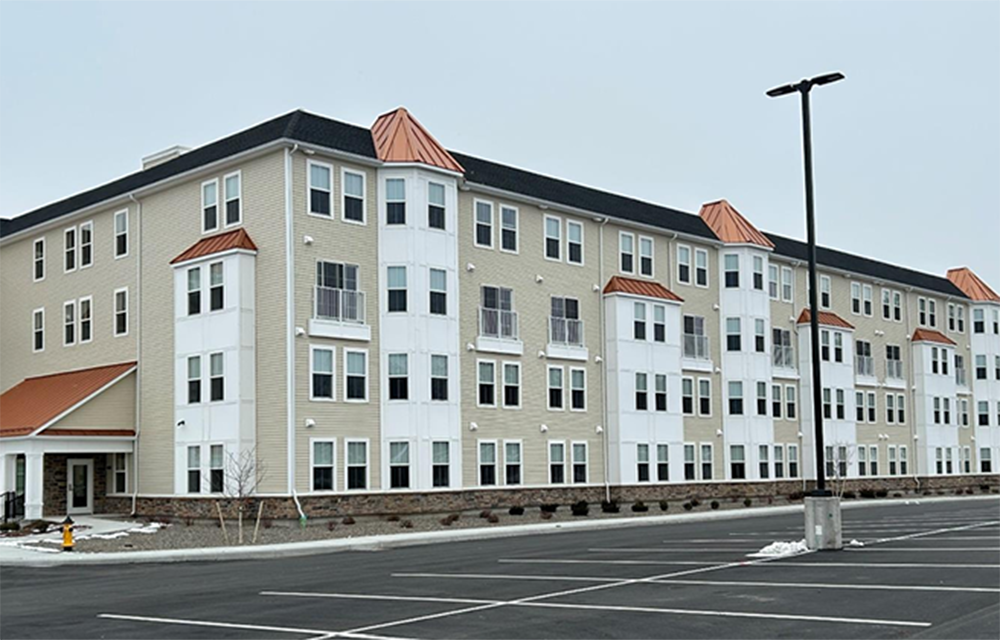
New York State Homes and Community Renewal finish $32 million affordable development
Union, NY New York State Homes and Community Renewal commissioner RuthAnne Visnauskas have completed the Homesteads on Grand, a $32 million, 72-unit mixed-use affordable and supportive development in Johnson City, Broome County.


Quick Hits


Columns and Thought Leadership

New York City’s historic rent freeze now rests with the courts - by Ron Cohen
New York City’s first-ever two-year rent freeze is now in the hands of a state Supreme Court judge, and the decision could reset income for owners of roughly one million rent-stabilized apartments housing some 2.4 million residents.
NYC's Community Opportunity to Purchase Act is back - and multifamily owners should pay attention - by Ron Cohen
New York City’s Community Opportunity to Purchase Act (COPA) is back, and this latest version could have a much better chance of becoming law. The proposal would give qualified nonprofit organizations

Hunt Commercial Real Estate Q&A: Location, location, location? - by David Hunt
In working with our clients, we break down our search objectives into two categories. The first category involves the specific needs of your business such as warehouse height, amount of office space and number of loading

Don’t leave severance damages behind - by Sebastian Jablonski
When the government takes a portion of a landowner’s property, most assume just compensation stops at the value of the land taken. However, in partial takings, that is only half of the equation.