







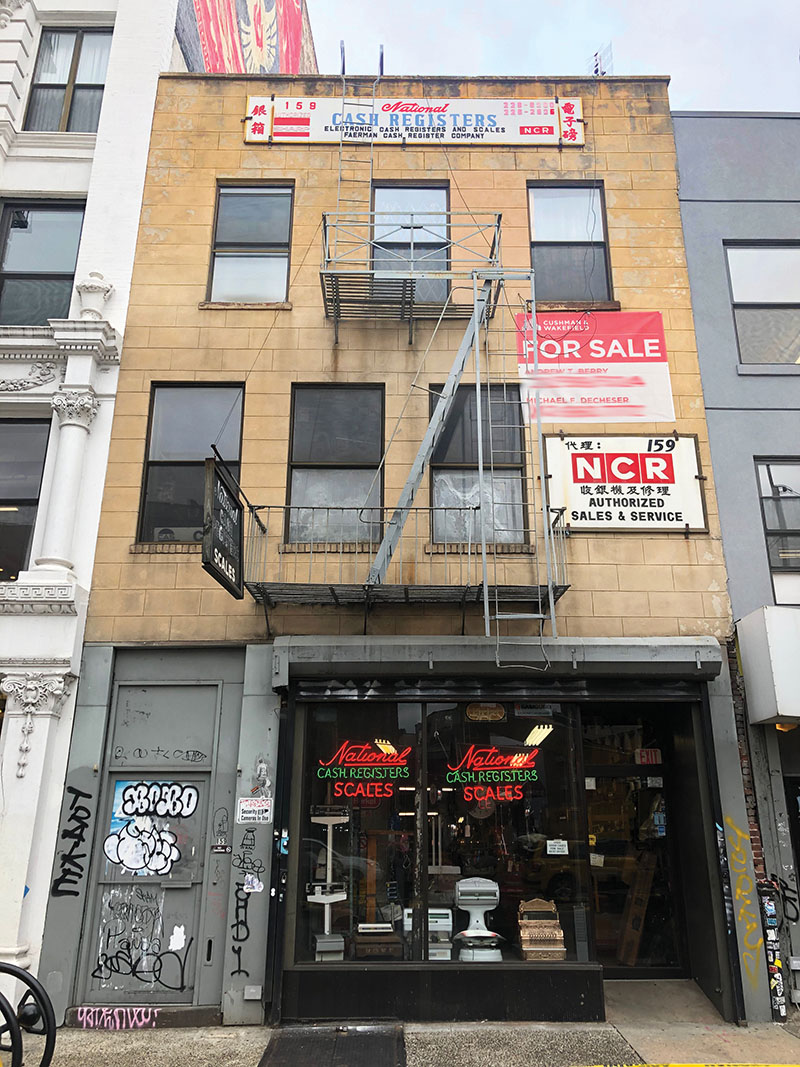
 Manhattan, NY Cushman & Wakefield arranged for the sale of 159 Bowery, a 4,252 s/f mixed-use property in the Lower East Side. The final sale price was $5 million.
A Cushman & Wakefield team of Andrew Berry, Michael DeCheser, Bryan Hurley and Charlie Gravina represented the seller, Brian Faerman.
“This was the first sale of the property in over 50 years,” said Berry. “The building sold for more than $1,175 per s/f or $479 per buildable s/f, proving the strength of the Lower Manhattan submarket, even in unprecedented times like we’re in today.”
“I was very pleased with the professionalism and hard work that Andrew and the team at Cushman & Wakefield provided,” said Faerman. “Even with the lockdown in NYC due to COVID-19, the process went smoothly and it was a pleasure working with them.”
159 Bowery is a vacant three-story mixed-use property located in one of the borough’s most-evolving corridors in the Bowery. The building, which has retail space on floors one and two and a large loft apartment on floor three. The building also has over 10,400 buildable s/f, giving the buyer the flexibility to either reposition the existing asset or tear down and build a brand new building.
Prior to the sale, the property was owner-occupied by Faerman Cash Registers, which has been operating its business in the Lower East Side since 1910.
The property is located on the east side of Bowery between Delancey St. and Broome St. and has C6-1G zoning. The Bowery has evolved into a 24/7, 365 destination for living, working, shopping and playing, with a multitude of restaurants, retailers, hotels, galleries and offices surrounding the property. The site is steps from various modes of transportation, including the B, D, J and Z trains.








.gif)