



News:
Brokerage
Posted: February 23, 2015
Could drones help to expedite your insurance claims process in the future?
If you've ever had to file an insurance claim, you should be fairly familiar with the process. An insurance adjuster will come to visit and assess the damage. In just a few years, however, it could be possible that an adjuster may not even need to pay a visit to your property. Instead, a drone could be deployed to evaluate the damage. Furthermore, that drone could be flying over your property within just a few hours of the incident occurring.
The Future Is Here
While this might sound somewhat futuristic, the reality is that real estate agents and insurance companies are already looking into the potential offered by drones. Should drones be implemented in the insurance industry, it could be possible for claims to be closed at a much faster rate, as adjusters would be able to handle a far higher volume.
Along with providing the ability to handle more claims in a shorter timeframe, drones could also provide a number of other important benefits. For instance, drones could provide aerial surveys of damage that has occurred to rooftops. With a drone, it is possible to see everything without the need to even go up on the roof.
The Status of Drone Testing
in the United States
At the moment, drones are only used in the United States for supporting agriculture, enhancing public safety, evaluating disasters, monitoring the climate, and helping the environment. One significant factor holding back further use of drones across more industries, including the real estate and insurance industries, is regulations imposed by the Federal Aviation Administration. In order for more industries to tap into the potential offered by drones, the FAA would first need to free up airspace.
Currently, the FAA operates multiple testing sites where drones can be operated with approval for training or development purposes. Over the course of the last several months, there has been tremendous discussion regarding the potential for drone use. Even so, the FAA has been quick to point out that real estate agents who operate drones for the purposes of photographing listings do so illegally. According to the FAA website, approval is needed to fly model aircraft over 400 ft. The website goes on to point out that model aircraft are not considered for business purposes.
Recently, the FAA did provide approval for the first real estate agent to use a drone specifically for the purpose of capturing listing photographs, which could offer a glimmer of hope that drone usage may gain more widespread approval in the future. While it's not likely that a drone will be handling the photographs of insurance claims in the next year, it could be coming sooner than many think.
Do you need to make sure your business is covered in the event of a catastrophe or other damage? Evergreen Insurance & Risk Management provides a variety of insurance programs. Contact one of our representatives today to learn more about our available insurance options.
Izzy Green is president and CEO of Evergreen Insurance & Risk Management, Monsey, N.Y.
Tags:
Brokerage
MORE FROM Brokerage
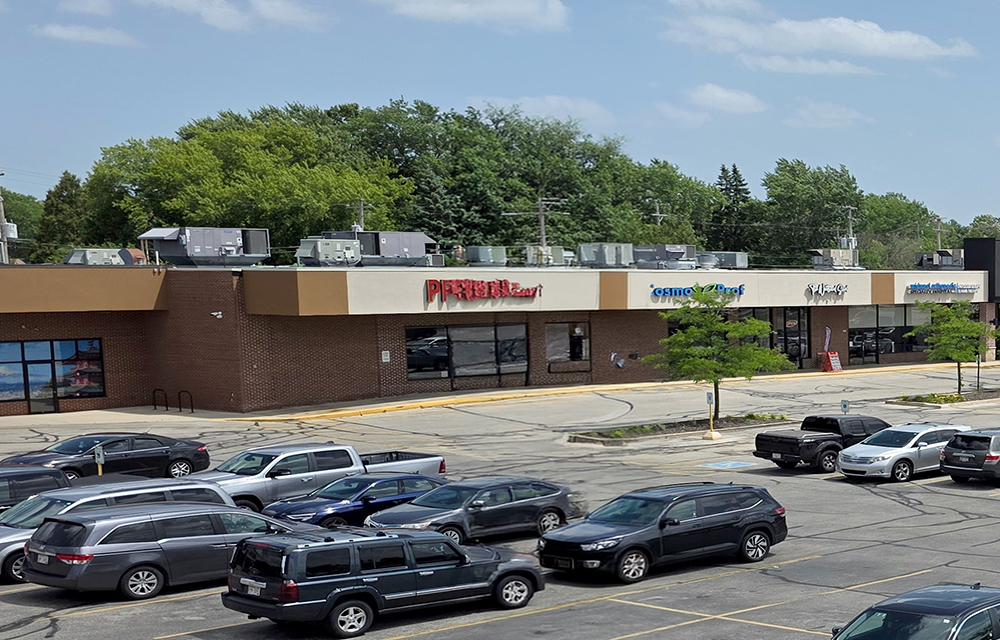
United Properties Corp. expands Wisconsin and Illinois retail presence adding 200,000 s/f
West Allis, WI United Properties Corp. completed two retail acquisitions totaling $27.4 million across Illinois and Wisconsin, adding 205,000 s/f of shopping center space to its portfolio




Quick Hits

Columns and Thought Leadership

Hunt commercial real estate question and answer: Fortune 500 wisdom - by David Hunt
Yes, there are lessons to be learned from the largest companies in America when comes to managing your real estate. But the decision to buy or lease real estate may not be one of

A guide to finding the right NYC property management company - by Sanjay Gandhi
Being a small to midsize landlord in NYC is an increasingly demanding endeavor. From navigating complex regulations, increased compliance demands to dealing with tenant issues and remediating violations. It is wise to enlist the assistance of a partner, a professional

New York’s streets are full again, and the retail numbers prove it - by Noam Aziz
Walk down any New York block this year and you can feel it. The sidewalks are crowded, the storefronts are lit, and the energy that defines this city is back at full volume.

Positive forecast for New York’s pro-housing push? - by Philip Butler
New York’s housing crisis remains a hot button topic despite growing consensus that varied and affordable housing is desperately needed statewide. Governor Hochul has recently introduced several initiatives to overcome N.Y.’s anti-housing
.gif)