



News:
Brokerage
Posted: February 29, 2008
Cokin of NAI Friedland coordinates $3.5 million Bronx development site
NAI Friedland recently completed the $3.5 million sale of a 4,300 s/f property with a two-story building at 310 East 149th St. The deal was coordinated by Friedland executive vice president Peter Cokin and is adjacent to two properties previously assembled and sold by Cokin in 2007.
Plans for the development site include demolition of the buildings at 300, 308 and 310 East 149th St. to make way for a new, large, multi-use facility that will include affordable housing, retail, and possibly office space. Should the new facility warrant a larger building, additional adjacent space may be obtained by the developer.
Cokin previously handled the $4.1 million sale of the 4,300 s/f property at 300 East 149th St., sold by E&N Refrigeration and Paul Gagliardi, as well as the $4 million sale by Hector Marquez of a 12,900 s/f, three-floor retail and office building and a 7,800 s/f adjoining lot at 308 East 149th St.
"310 East 149th St. is the sixth deal that I've completed for Atlantic Development. It was particularly satisfying because all partners were extremely happy with the sale in the end," says Cokin. Â "Our vision and expertise set the stage for a life-changing experience for the sellers."
NAI Friedland Realty Inc., founded in 1970, is a full service commercial real estate firm in metropolitan New York, including Westchester, the five boroughs, Long Island, Connecticut, and New Jersey. Â Headquartered in Yonkers, New York, Friedland also maintains a satellite office in Manhattan. Friedland sales staff members strive to provide guidance and information that enables clients to make the best lease or purchase decisions. Brokers in Friedland's four divisions -- Retail, Industrial, Office, and Residential/Development - understand their markets and are supported by a sophisticated computer database of available properties and potential tenants. Â Friedland is a member of NAI, the only managed network of commercial real estate firms in the world.
Tags:
Brokerage
MORE FROM Brokerage
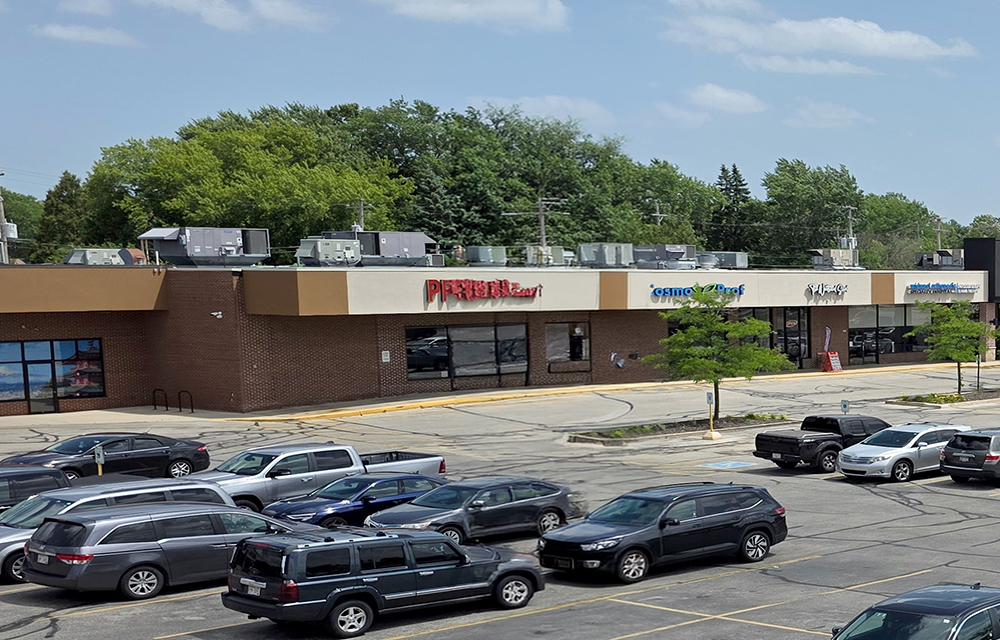
United Properties Corp. expands Wisconsin and Illinois retail presence adding 200,000 s/f
West Allis, WI United Properties Corp. completed two retail acquisitions totaling $27.4 million across Illinois and Wisconsin, adding 205,000 s/f of shopping center space to its portfolio





Quick Hits

Columns and Thought Leadership

Hunt commercial real estate question and answer: Fortune 500 wisdom - by David Hunt
Yes, there are lessons to be learned from the largest companies in America when comes to managing your real estate. But the decision to buy or lease real estate may not be one of

Positive forecast for New York’s pro-housing push? - by Philip Butler
New York’s housing crisis remains a hot button topic despite growing consensus that varied and affordable housing is desperately needed statewide. Governor Hochul has recently introduced several initiatives to overcome N.Y.’s anti-housing

New York’s streets are full again, and the retail numbers prove it - by Noam Aziz
Walk down any New York block this year and you can feel it. The sidewalks are crowded, the storefronts are lit, and the energy that defines this city is back at full volume.

A guide to finding the right NYC property management company - by Sanjay Gandhi
Being a small to midsize landlord in NYC is an increasingly demanding endeavor. From navigating complex regulations, increased compliance demands to dealing with tenant issues and remediating violations. It is wise to enlist the assistance of a partner, a professional
.gif)