



News:
Brokerage
Posted: November 15, 2016
Airbnb files suit claiming federal/state violations by Bernie Kennedy
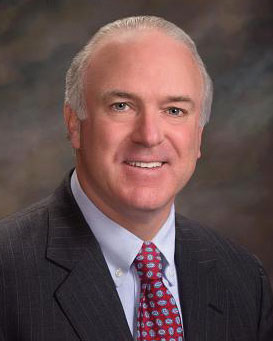 Bernie Kennedy, Bond, Schoeneck & King
Last week governor Cuomo signed into law a bill making it “unlawful to advertise the occupancy or use” of “class A dwellings” (i.e. apartments) for less than 30 days, arguably striking a major blow against use of the home sharing website Airbnb in New York City.
But Airbnb immediately fought back, filing a lawsuit in the Federal Court in the Southern District of New York, naming attorney general Eric Schneiderman, New York City mayor Bill di Blasio and the city of New York as defendants, claiming multiple violations of Federal and New York State constitutional law.
In its suit, Airbnb seeks an injunction from the court against enforcement of the newly enacted law, claiming it is in conflict with, and therefore preempted by, a Federal statute enacted in 1996 known as the Communications Decency Act. Airbnb claims that under the Federal law, Airbnb, by definition, is a “provider of an interactive computer service” and thus is protected against enforcement of the New York law by language in the Federal statute stating that “no provider or user of an interactive computer service shall be treated as the publisher or speaker of any information provided by another information content provider.”
As the argument goes, because enforcement of the New York law against Airbnb would treat Airbnb as “the publisher or speaker of information provided by another information content provider” (i.e. the Airbnb host), the New York law is in direct violation of the existing Federal statute and, therefore, should be preempted under long-standing constitutional principles.
This is not the first time Airbnb has resorted to the courts to challenge local laws aimed at curbing its use. In June, Airbnb sued the city of San Francisco after it enacted a law barring home-sharing platforms from collecting fees from hosts who hadn’t registered with that city.
The San Francisco law requiring hosts to register followed a proliferation of landlords in that city evicting tenants to pursue more profitable short-term rentals. And though the city loosened its ban on converting residential units for short-term use at the time it required hosts to register, some 80% of hosts still failed to register, prompting the city to impose a fine of $1,000 a day on rental platforms such as Airbnb for every unregistered host. While the city subsequently lessened the penalty so that a fine would only be imposed when a stay was actually booked in a unit that had not been registered, Airbnb persisted with its suit, making the same preemption claim in that case that it subsequently made in the New York case. A hearing on Airbnb’s motion for an injunction was recently held in the San Francisco case, and a decision on the motion is pending.
Underlying the newly enacted law in New York, is an argument that home sharing platforms exacerbate an already growing housing crisis. In its statement of justification for enacting the law, the New York state assembly stated in part:
“While it is already illegal to occupy a class A multiple dwelling for less than 30 days, this legislation would clarify that it is also illegal to advertise units for occupancy that would violate New York law. However, online home sharing platforms still contain advertisement for use of units that would violate New York law. It rests with the city and state to protect communities and existing affordable housing stock by prohibiting advertisements that violate the law…”
Indeed, in its complaint Airbnb quotes New York state assembly member Linda Rosenthal, who sponsored the bill in the assembly, as stating publicly that “the bill would stop Airbnb from providing the “platform that enables its hosts to break the laws of New York state that are in place to protect tenants and affordable housing.”
For its part, Airbnb disputes the claim that its home sharing platform exacerbates affordable housing shortages, stating in its complaint that the restrictions and penalties of the new law “will make it more difficult for city residents to use home-sharing to help pay their rent or mortgage, making the city less affordable for city residents, contrary to the laws purported justifications of addressing affordable housing issues…”
For those interested in numbers, Airbnb states in its complaint that there are approximately 46,000 hosts in New York who post listings on Airbnb, and that the typical New York host earns about $5,300 in income. Based upon those numbers, home-sharing hosts in New York are generating at least $244 million in revenue annually from these short-term rentals.
Airbnb is purportedly the world’s fourth most valuable startup and was valued recently at $30 billion.
Bernie Kennedy is a co-managing member (partner) at Bond, Schoeneck & King, Garden City, N.Y.
Tags:
Brokerage
MORE FROM Brokerage
Marcus & Millichap releases fourth-quarter 2026 NYC industrial market report
Manhattan, NY Marcus & Millichap has published its fourth-quarter 2026 New York City Industrial Market Report. “New York City’s industrial market is showing a clear





 (2).gif)

Columns and Thought Leadership

Hunt CRE question and answer: Choosing a real estate agent - by David Hunt
First, we will only work with one agent exclusively. The primary reason is that we want that agent to legally represent our client’s interests. In New York State, a real estate agent has a fiduciary

Hunt commercial real estate question and answer: Fortune 500 wisdom - by David Hunt
Yes, there are lessons to be learned from the largest companies in America when comes to managing your real estate. But the decision to buy or lease real estate may not be one of

The art of investing in real estate - by Thomas Donovan
Real estate investing is as much an art as it is a skill. No one can time the market, or the factors that drive it, perfectly. Location, zoning, size, transportation, and neighborhood density give you a baseline for

New York’s streets are full again, and the retail numbers prove it - by Noam Aziz
Walk down any New York block this year and you can feel it. The sidewalks are crowded, the storefronts are lit, and the energy that defines this city is back at full volume.
.gif)