



News:
Movers & Milestones
Posted: December 9, 2025
Urbahn Architects principal Donald Henry, Jr., AIA moderates 2025 American Correctional Association’s Evolving Spaces Symposium
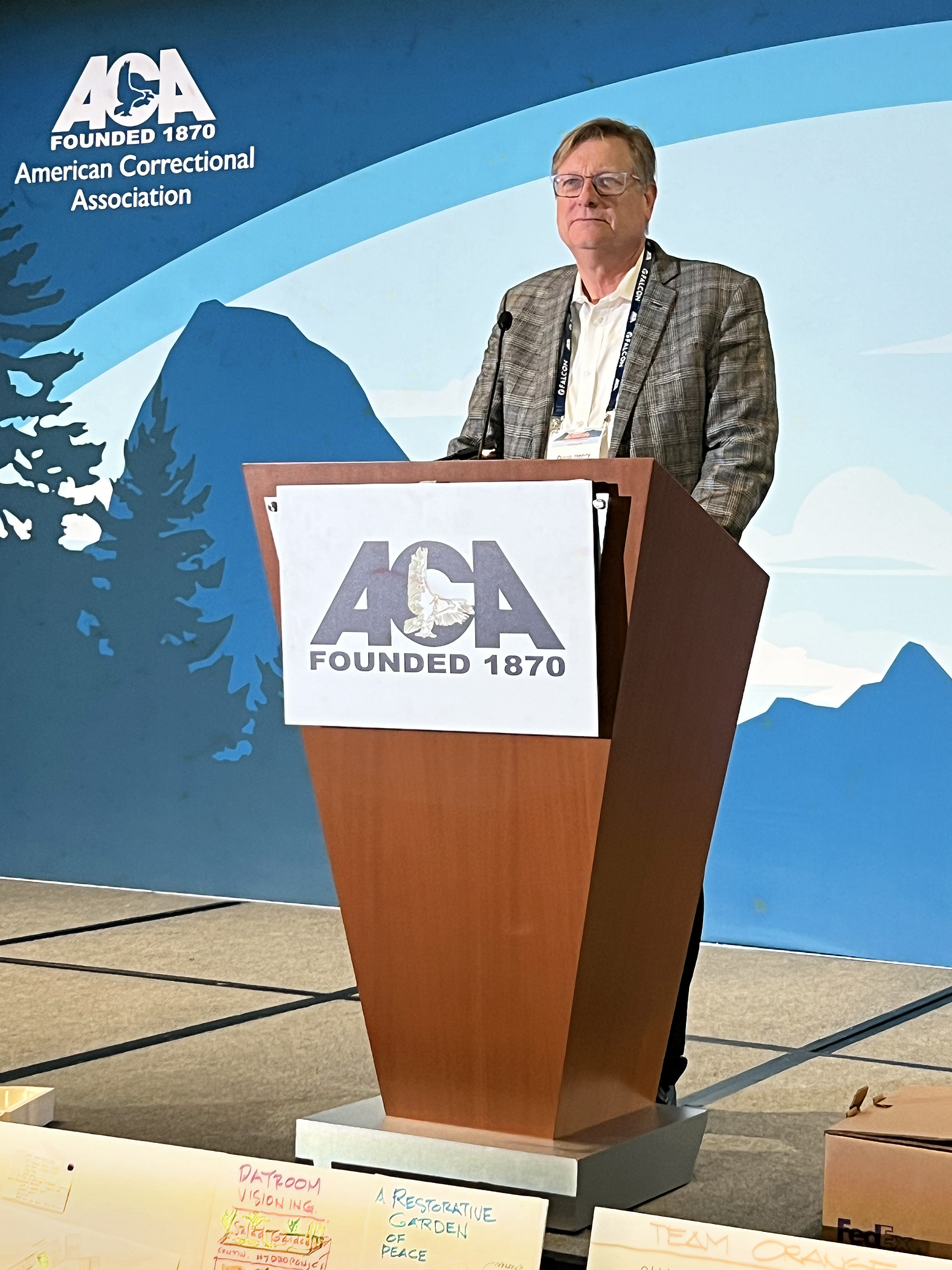
Photo courtesy of Urbahn Architects
Denver, CO Urbahn Architects principal Donald Henry, Jr., AIA, LEED AP, CPHC, vice-chair of the American Correctional Association (ACA) Planning, Design and Preventive Maintenance Committee, moderated the 2025 Evolving Spaces Symposium, part of the 155th ACA Congress of Correction. Tony Shaffer, ACA FDC chair and Construction, Activation, Maintenance & Sustainability Bureau chief at the Ohio Department of Rehabilitation and Correction, co-moderated the conference with Donn Henry.
ACA champions the cause of corrections and correctional effectiveness. Founded in 1870 as the National Prison Association, ACA is the oldest association developed specifically for practitioners in the correctional profession. During the first organizational meeting in Cincinnati, Ohio, the assembly elected then-Ohio governor and future President Rutherford B. Hayes as the first Ppresident of the Association. The Congress of Corrections is ACA’s largest annual event, bringing together corrections professionals for workshops, meetings, and networking opportunities.
According to Henry, “The symposium’s presentations, panel discussions and workshops centered on reimagining the possibilities for improving aging correctional infrastructure, innovative solutions for pursuing and leveraging funding opportunities, utilizing space and tackling maintenance needs.”
This year’s Evolving Spaces focused on developing low-cost/no-cost solutions for existing facilities to address the critical need for providing a more humane, safer and dignified environment to both inmates and staff through design and organizational solutions.
As part of the event, Henry led the ACA Dayroom Workshop titled “Day Room Simulation: What Can Be Done with What You Have.”
Building Design & Construction magazine currently ranks Urbahn as the 16th largest justice and public safety designer in the United States. “As a leading designer of correctional and public safety facilities in the nation, Urbahn has developed physical, design, operational and social initiatives that significantly improve the dayroom setting,” said Henry. “The workshop encouraged designers and operators to creatively provide environmental improvements within limited budgets, based on the experience of leading experts and best of class practices,” he added.
Each team developed their list and illustrated improvements with the provided dayroom kit, then presented their solutions and rationale for improvement. The symposium jury reviewed all entries and selected the team of Stephen Carter of CGL, Gina Clark from the Pennsylvania Department of Corrections and Doug Beichley of J.E. Dunn. Both the winning team and other participants presented numerous design ideas to improve dayrooms, including acoustical fabric murals; refitting outdoor recreation spaces as a welcoming “front porches;” adding comfortable seating, BBQ grills and fireplaces to outdoor living spaces; installing calming fish tanks and adding video monitors for gaming; and installing food prep areas with mini fridges for self-prepared meals.
Examples of potential initiatives included change in interior design; biophilic design and graphics; entertainment options; improved lighting and daylighting; revamped HVAC, plumbing, laundry and sanitary systems; food delivery; personal hygiene improvements; and performance incentive programs.
Shaffer explained why focus on low- and no-cost improvements can make significant impact on the environment and conditions for both personnel and persons in custody. "Due to continuous underfunding across the US prison systems, staff can at times become used to, or ‘normalize’ inefficiencies and shortcomings of the facilities. It is very helpful to involve all stakeholders in frequent reviews of opportunities to improve the facilities, from repairs to better design, improved lighting and engagement, leading to reduced violence and more humane conditions,” he said.
Shaffer suggested organizing space committees comprised of leadership, security and maintenance personnel to recognize deficiencies, such as leaks or poor lighting, and take action to improve rather than accept. The next step would be implementing incremental organizational and low-cost design improvements, which may add up to a significant enhancement in quality of life inside prisons. The committees can also identified underutilized spaces and suggest more efficient use.
In addition to biofilic elements and improved lighting, the design solutions suggested by Shaffer also included restructuring furniture layouts, providing more access to natural light and engaging persons in custody in the efforts, for example by creating murals.
According to Shaffer, “Studies have shown a direct correlation between green space and reduction in violence and stress. Live plants may be safely incorporated in either small, soft pots, hanged outside of reach or planted in heavy, unmovable planters, adding to other improvements that create an environment closer to normal, more positive living conditions.”
He also recommended making suicide watch cells more therapeutic and calming by including wall murals, adjusting lighting intensity for comfort, allowing more natural light and streaming white noise or calm music, if infrastructure permits to do that.
MORE FROM Movers & Milestones

Gillis joins The Clinical Group as a principal, New York City team
Manhattan, NY The Clinical Group, has appointed Chris Gillis as a principal of its New York City team. Gillis brings more than a decade of investment sales experience and over $600 million in closed



Quick Hits
 (2).gif)
