



News:
Brokerage
Posted: September 27, 2022
400 Capital Management LLC signs 25,572 s/f lease at Brookfield Properties' at 660 Fifth Ave.
New York, NY According to Brookfield Properties, 400 Capital Management LLC, an alternative credit asset manager specializing in structured credit with over $5.8 billion of assets under management, has signed a lease at 660 Fifth Avenue. The firm will occupy 25,572 s/f on the 27th floor beginning August 2024. In relocating from its current office, 400 Capital Management will more than double the size of its office footprint at 660 Fifth Ave.
“Brookfield Properties’ investment to modernize 660 Fifth Ave. has created a world-class, reimagined commercial building in the heart of Midtown Manhattan, providing an unmatched opportunity for tenants when it comes to workplace experience and location,” said Duncan McCuaig, executive vice president, Leasing, Brookfield Properties. “We are thrilled to welcome 400 Capital Management to 660 Fifth Ave., a building designed to foster and support the firm’s innovative culture and desire to grow.”
“400 Capital is excited to relocate to new office space which will achieve LEED certification and benefit from Brookfield’s expansive interior and exterior renovations,” said Bill Sanders, partner, president and COO of 400 Capital Management. “Fundamental workplace needs have shifted dramatically in recent years, and as a firm with plans to continue to grow we recognize the value that accessible, modernized, high-quality space provides for collaboration, business development, recruitment and so much more.”
Brookfield Properties nears completion of a $400 million redevelopment of the building. The redesigned tower features a brand-new lobby, elevators, mechanical systems, upgraded infrastructure, and a new façade reclad in 11x19 foot single-pane glass units. In May 2022, financial service firm Macquarie Group signed a lease as the building’s anchor tenant for 221,754 s/f across six floors of the tower.
660 Fifth Ave. was originally built in 1957 and Brookfield Properties acquired the building in 2018 and commenced redevelopment in 2019 under the design of architecture firm Kohn Pedersen Fox.
David Hollander, vice chairman and Brad Auerbach, senior vice president of CBRE brokered the deal on behalf of 400 Capital.
Brookfield Properties was represented in-house by Duncan McCuaig, Dave Caperna, and PJ Massey, as well as Bruce Mosler, Josh Kuriloff, Ethan Silverstein, John Santora, Matthias Li, Nicholas Dysenchuk, and Howard Cross of Cushman & Wakefield.
Tags:
Brokerage
MORE FROM Brokerage
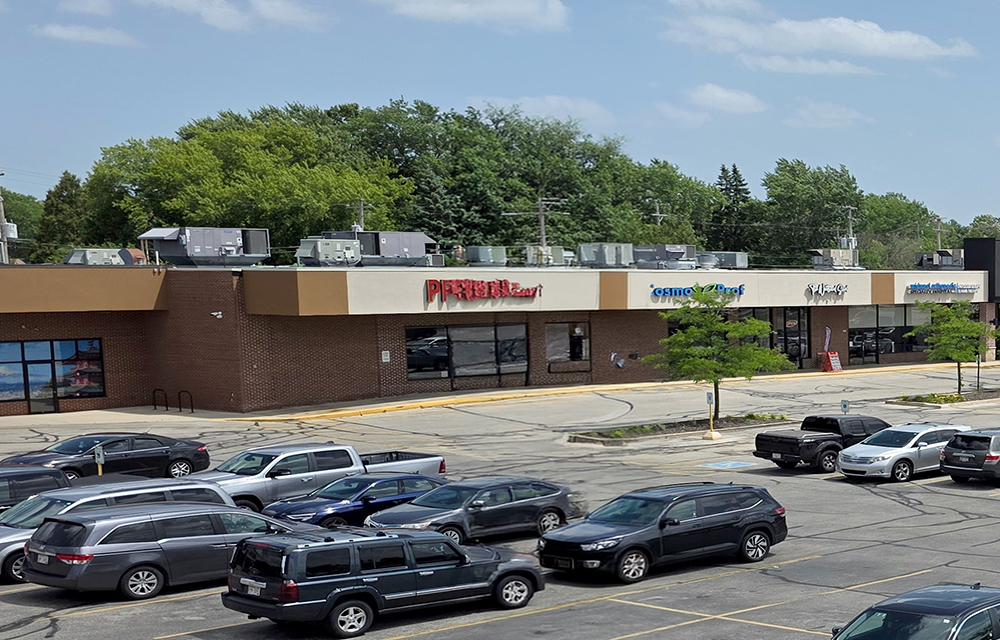
United Properties Corp. expands Wisconsin and Illinois retail presence adding 200,000 s/f
West Allis, WI United Properties Corp. completed two retail acquisitions totaling $27.4 million across Illinois and Wisconsin, adding 205,000 s/f of shopping center space to its portfolio



Quick Hits
 (2).gif)

Columns and Thought Leadership

Positive forecast for New York’s pro-housing push? - by Philip Butler
New York’s housing crisis remains a hot button topic despite growing consensus that varied and affordable housing is desperately needed statewide. Governor Hochul has recently introduced several initiatives to overcome N.Y.’s anti-housing

New York’s streets are full again, and the retail numbers prove it - by Noam Aziz
Walk down any New York block this year and you can feel it. The sidewalks are crowded, the storefronts are lit, and the energy that defines this city is back at full volume.

Hunt commercial real estate question and answer: Fortune 500 wisdom - by David Hunt
Yes, there are lessons to be learned from the largest companies in America when comes to managing your real estate. But the decision to buy or lease real estate may not be one of

A guide to finding the right NYC property management company - by Sanjay Gandhi
Being a small to midsize landlord in NYC is an increasingly demanding endeavor. From navigating complex regulations, increased compliance demands to dealing with tenant issues and remediating violations. It is wise to enlist the assistance of a partner, a professional
.gif)