



News:
Brokerage
Posted: December 29, 2008
Profiles in lighting upgrades
Without a doubt, lighting upgrades involving energy-efficient lamps, ballasts, controls, etc. stand as some of the most attractive investments around. The final installment in this special 2008 series offers examples of how real-life commercial, institutional, and industrial properties nationwide have successfully pursued and benefited from lighting upgrades.
A lighter, brighter, more energy-efficient future was in store for the Vancouver Island Health Authority (VIHA) when it recently undertook a lighting upgrade within three of its Central and North Island hospitals. Possessing an outdated lighting system consisting primarily of inefficient T12 fluorescent lamps driven by magnetic ballasts, VIHA Energy Manager Nancy Gunn's main objective was "to conserve energy and help sustain the environment without compromising lighting levels or quality of light."
The solution came in the form of over 13,000 highly efficient 25 Watt low-mercury T8 fluorescent lamps driven by electronic ballasts, an optimized system which delivered outstanding light output at minimal energy cost without risk of interference to any electronic equipment.
As a function of the upgrade, energy consumption within the three facilities has been reduced by more than 1 million kWh annually, light levels have improved significantly, and, says VIHA's Gunn, "the staff members within the facilities have been very happy and appreciative of the change, which has definitely enhanced the work environment for both themselves and their patients." Concludes Gunn, "the lighting upgrade project was a tremendous success, allowing us to increase our lighting levels, achieve projected energy saving targets, and help support the purification of our environment."
Susan Bloom is director of corporate communications for Philips Lighting & Advance, Somerset, N.J.
Tags:
Brokerage
MORE FROM Brokerage

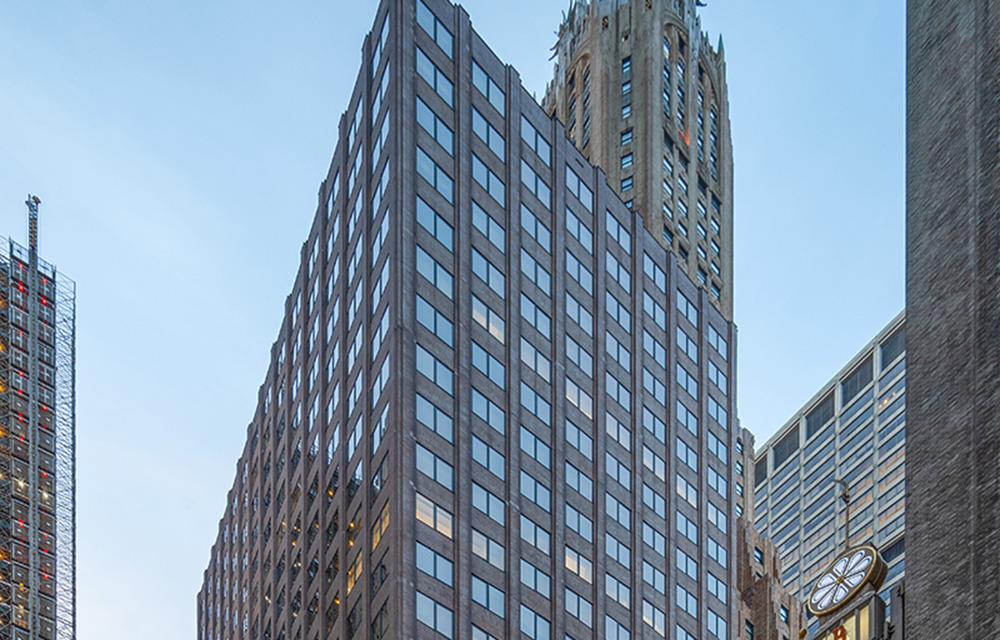
AmTrustRE secures 5,754 s/f lease with GKV Architects at 360 Lexington Avenue
Manhattan, NY AmTrustRE has executed a 5,754 s/f lease at its premier boutique Midtown East office tower, 360 Lexington Ave., with longtime partner GKV Architects. The award-winning firm will occupy a portion of the 14th floor. >“GKV Architects has been a trusted partner to AmTrustRE for over two decades, playing an integral role in shaping and elevating several




Quick Hits

Columns and Thought Leadership

The death of the generic offering memorandum: What buyers expect in 2025 - by Kimberly Zar Bloorian
There was a time when an offering memorandum (OM) was pretty bare bones, some photos, a few bullet points on income, and a rent roll thrown in at the back. That used to get the job done. Not anymore. In 2025, buyers are sharper, faster, and more selective. They’re looking

A fresh start - by Shallini Mehra and Amit Doshi
For the past several years, the New York City multifamily housing market has been defined by disruption. The combined impact of the HSTPA rent laws and a sharply higher interest rate environment has fundamentally reduced

The anticipated effect of Basel III and ISO 20022 implementation on commercial real estate - by Michael Zysman
July 1, 2025 is the deadline for US banks to begin to adopt Basel III banking standards and July 14, 2025 is the deadline for U.S. banks to adopt ISO 20022 messaging standards. Both will have a significant effect on the banking and commercial real estate (CRE) finance sectors.

Tri-state capital migrates nationally amid regulation pressure - by Reese Weaver
New York tri-state multifamily investors are increasingly reallocating capital to less-regulated markets across the U.S. as rent control and legislative risk erode returns at home. With over 60% of New York City’s rental housing stock classified as rent-stabilized, the traditional value-add model — buying under-performing buildings,
