



News:
Brokerage
Posted: November 21, 2008
Long Island subdivisions
The sale and development of real property on Long Island present many unique challenges that do not exist in other parts of the country or N.Y. state. Nowhere is this inimitable experience more evident than in the land subdivision process.
What makes Long Island unique is the myriad of overlapping jurisdictions in land subdivisions. There exists an unusually complex web of regulations, which can vary dramatically from county to town to village, and in any given subdivision scenario, any or all of these jurisdictions may be involved.
While subdivision decisions are generally made on the local level, "local" means different things depending on where your property is located. In Nassau County, the jurisdictional body is the County Planning Commission if you are in an unincorporated area in one of the three towns. If the property is situated in one of the county's 64 incorporated villages, or two cities, the village or city planning board will be making the decision. In addition, state law gives additional full jurisdiction to nearby municipalities under certain circumstances.
Subdivision decisions in Suffolk County are made by the planning boards at the town level, and the County Dept. of Health weighs in heavily on issues relating to sewer availability and capacity. Both must sign off before the subdivision map can be filed in the county clerk's office. While the "filing of the map" may sound like a ministerial act, it includes multiple approvals.
It is essential that experienced Long Island zoning counsel be consulted on all land deals and development matters to navigate the regulations and practices, and avoid potential obstacles causing extensive delays or even terminate a deal.
Kathleen Deegan Dickson is a partner in the law firm of Forchelli Curto Crowe Deegan Schwartz Mineo and Cohen, Mineola, N.Y.
Tags:
Brokerage
MORE FROM Brokerage

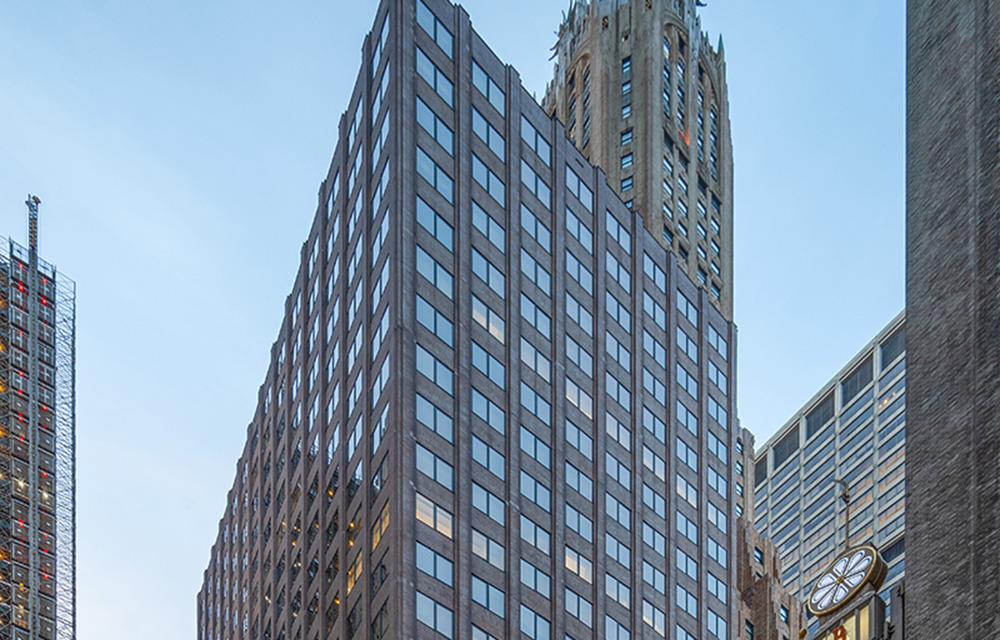
AmTrustRE secures 5,754 s/f lease with GKV Architects at 360 Lexington Avenue
Manhattan, NY AmTrustRE has executed a 5,754 s/f lease at its premier boutique Midtown East office tower, 360 Lexington Ave., with longtime partner GKV Architects. The award-winning firm will occupy a portion of the 14th floor. >“GKV Architects has been a trusted partner to AmTrustRE for over two decades, playing an integral role in shaping and elevating several





Quick Hits


Columns and Thought Leadership

The anticipated effect of Basel III and ISO 20022 implementation on commercial real estate - by Michael Zysman
July 1, 2025 is the deadline for US banks to begin to adopt Basel III banking standards and July 14, 2025 is the deadline for U.S. banks to adopt ISO 20022 messaging standards. Both will have a significant effect on the banking and commercial real estate (CRE) finance sectors.

A fresh start - by Shallini Mehra and Amit Doshi
For the past several years, the New York City multifamily housing market has been defined by disruption. The combined impact of the HSTPA rent laws and a sharply higher interest rate environment has fundamentally reduced

The death of the generic offering memorandum: What buyers expect in 2025 - by Kimberly Zar Bloorian
There was a time when an offering memorandum (OM) was pretty bare bones, some photos, a few bullet points on income, and a rent roll thrown in at the back. That used to get the job done. Not anymore. In 2025, buyers are sharper, faster, and more selective. They’re looking

Tri-state capital migrates nationally amid regulation pressure - by Reese Weaver
New York tri-state multifamily investors are increasingly reallocating capital to less-regulated markets across the U.S. as rent control and legislative risk erode returns at home. With over 60% of New York City’s rental housing stock classified as rent-stabilized, the traditional value-add model — buying under-performing buildings,
