



News:
Brokerage
Posted: April 14, 2017
Why filing a Real Property Income & Expense (RPIE) is essential for NYC property owners - by Peter Blond
 Brandt, Steinberg, Lewis & Blond LLP" width="200" height="275" /> Peter Blond, Brandt,
Steinberg, Lewis
& Blond LLP
Even in 2017, there are still too many New York City property owners that believe their real estate tax assessment duties conclude with the passing of the March NYC tax commission deadlines. In actuality, spring brings real estate tax assessment responsibilities via the legally mandatory RPIE filing due June 1st. According to the NYC Department of Finance, over 15,000 lots city-wide were initially deemed non-compliant for last year’s RPIE-2015. The RPIE (Real Property Income & Expense) is essential because NYC utilizes an income and expense approach to value to determine your assessment each year.
Ironically, while owners of income producing properties must provide their annual figures, the city is under no reciprocal obligation to use the data in whole or part. Nonetheless, miss that June 1st deadline and the city has been unforgiving when it comes to issuing fines to those deemed non-compliant. While the $300 fine for the lowest of assessments is relatively meager, there are many ordinary properties which are fined a minimum of $5,000 for their non-compliance.
Indeed, one of the cruelest situations I know of involved a property which simply failed to click the “sign & submit” button after entering all of the information. As the city warns, “If you do not complete this step, you will not be in compliance with the RPIE filing requirement.” The property was in the highest penalty class (assessments of $25 million or higher) resulting in a $100,000 fine even though all of the data was stored on the city’s server.
Property owners should understand they will lose the right to a hearing at the New York City tax commission, the following year, if they are deemed RPIE non-compliant. Even so, that does not invalidate their protest. In years past the City Department of Finance has applied the most unfavorable permutations when estimating income, expenses and cap rates for non-compliant properties. Most attorneys urge filing a protest in any year, but especially following non-compliance to make certain the city’s imputed income is fair.
The RPIE’s vacancy section is another requirement that is potentially harmful to owners. By potentially basing the entire vacancy section on occupancy as of January 5th (the taxable status date in NYC) rather than the full year, the city’s valuation model may utilize income that is artificially high. For example, if the property was occupied for most of 2016 but you lose an anchor tenant effective January 6th, 2017, the city’s projection may include a gross income increase – rather than a decline – because the vacancy period is uncertain. This example could result in a substantial over-assessment at a time when gross income is plummeting.
A common error by owners is failing to segregate rent paid between related parties. By not clearly indicating the source of rental income, even at market rates, it could cause an inappropriate assessment increase as the city will ascribe rental value for any space it deems owner occupied. Accordingly, if you lump related rent with unrelated rent, the city will double count rent for the same space.
A more recent mistake is filing the standard form RPIE if you own a hotel, adult care/nursing home, gas station, car wash, oil change facility, self-storage facility, theatre or concert hall (each of these specialty properties has its own RPIE form). The city has been increasing the level of detail required for these types of property. Essentially, the city is using business income and expenses to determine the assessments. As more owners create related triple net leases to obscure the business income and expenses, these requirements are becoming more rigid.
While we have focused on properties required to file the full RPIE, many owners incorrectly assume a past exemption from the full filing equals no current responsibility to update the city’s information. This belief is pure fallacy. In fairness to the city, use and occupancy changes all of the time. Accordingly, even if you are exempt under one of the eleven RPIE exclusions, you must still file by indicating which one applies to the subject property or you will be fined (albeit a relatively small amount if indeed exempt).
In the end, if you have any doubt, file. If you have any questions you should contact your tax certiorari counsel, or accountant, to determine what if anything is required. Remember, filings should be on-line only at nyc.gov/rpie. Lastly, if you filed income and expenses with the tax commission earlier this year, please keep in mind that the RPIE data should match. If an error was detected, subsequent to filing with the tax commission, an amended income and expense report should be submitted as promptly as possible through your tax certiorari attorney.
Peter Blond, Esq. is a partner at Brandt, Steinberg, Lewis & Blond LLP and the chair of the NYC Bar committee on condemnation & tax certiorari, New York, N.Y.
Tags:
Brokerage
MORE FROM Brokerage
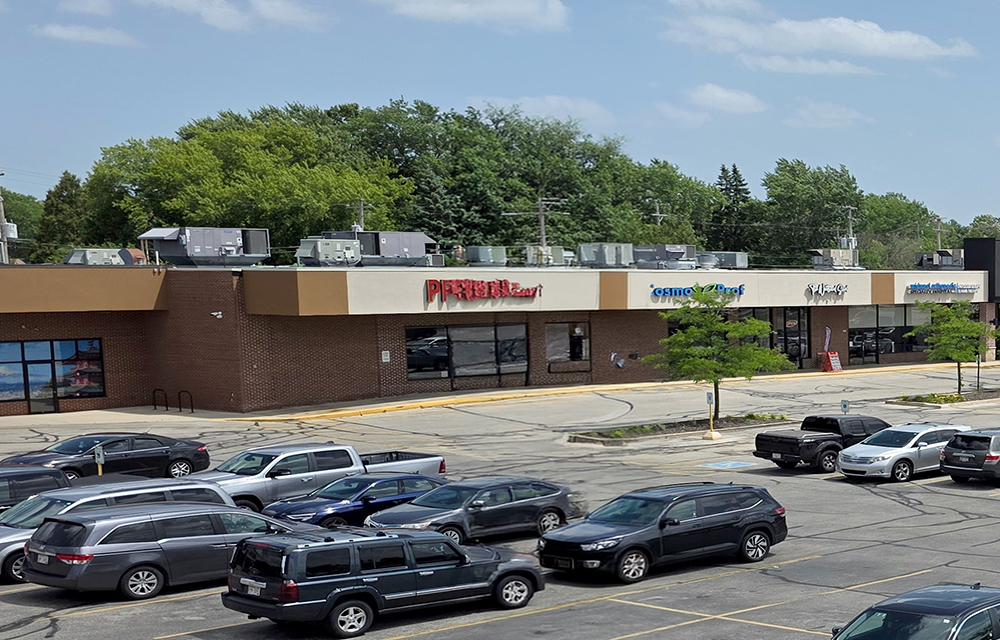
United Properties Corp. expands Wisconsin and Illinois retail presence adding 200,000 s/f
West Allis, WI United Properties Corp. completed two retail acquisitions totaling $27.4 million across Illinois and Wisconsin, adding 205,000 s/f of shopping center space to its portfolio





Quick Hits

Columns and Thought Leadership

Positive forecast for New York’s pro-housing push? - by Philip Butler
New York’s housing crisis remains a hot button topic despite growing consensus that varied and affordable housing is desperately needed statewide. Governor Hochul has recently introduced several initiatives to overcome N.Y.’s anti-housing

A guide to finding the right NYC property management company - by Sanjay Gandhi
Being a small to midsize landlord in NYC is an increasingly demanding endeavor. From navigating complex regulations, increased compliance demands to dealing with tenant issues and remediating violations. It is wise to enlist the assistance of a partner, a professional

Hunt commercial real estate question and answer: Fortune 500 wisdom - by David Hunt
Yes, there are lessons to be learned from the largest companies in America when comes to managing your real estate. But the decision to buy or lease real estate may not be one of

New York’s streets are full again, and the retail numbers prove it - by Noam Aziz
Walk down any New York block this year and you can feel it. The sidewalks are crowded, the storefronts are lit, and the energy that defines this city is back at full volume.
.gif)