



News:
Brokerage
Posted: July 29, 2025
Rent-stabilized increases fail to keep pace with costs – and small property owners are paying the price - by Robert Withers
The New York City Rent Guidelines Board (RGB) recently approved increases of 2.75% for one-year leases and 5.25% for two-year leases on the city’s rent-stabilized apartments, effective this fall. While tenants’ advocates have been quick to decry these hikes as burdensome, the reality for small multifamily property owners — many of whom are mom-and-pop landlords — is that these modest adjustments fall woefully short of addressing the skyrocketing costs of operating rent-stabilized housing in today’s inflationary climate.
At a glance, a 5.25% increase may seem significant, but it’s important to contextualize this figure against the backdrop of a marketplace that’s been anything but stable. Over the past several years, small building owners have faced relentless upward pressure on property taxes, insurance premiums, fuel and utility costs, maintenance expenses, and compliance-related fees. Inflation alone has compounded these challenges, eroding the already narrow margins many owners rely on to maintain their properties and provide safe, habitable housing.
According to the Rent Guidelines Board’s own Price Index of Operating Costs (PIOC), operating expenses for rent-stabilized buildings increased by 4.2% in the most recent period, following an alarming 8.1% increase the year prior — the highest jump in nearly a decade. Insurance costs alone rose by double digits for many owners, while property taxes — often the single largest expense line item — continued their steady ascent.
The issue is particularly acute for small property owners who lack the economies of scale and diversified portfolios of institutional landlords. These are local owners who manage six, twelve, or twenty-unit buildings, often in working-class neighborhoods. Many live in the same boroughs where they own property and have been providing stable housing for decades. They don’t have access to the financing structures, political influence, or operational scale enjoyed by large real estate investment firms — but they are subject to the same regulatory constraints.
The 2019 Housing Stability and Tenant Protection Act (HSTPA) further complicated matters for small owners, eliminating or severely limiting longstanding financial incentives such as vacancy decontrol, preferential rent adjustments, and Major Capital Improvement (MCI) pass-throughs. As a result, owners are often forced to navigate rising costs while their ability to adjust rents — even modestly — remains tightly capped by politically charged RGB determinations.
This misalignment between expense growth and permitted rent increases has already begun to manifest in the market. Maintenance deferrals, building sales at discounted valuations, and a rising number of distressed assets are increasingly common. According to recent industry surveys, over 60% of small property owners reported they are unable to cover basic operating expenses without reducing services or taking on additional debt.
The consequences extend beyond individual owners. The deterioration of the small multifamily housing stock threatens the long-term viability of the city’s rent-stabilized inventory itself. If owners can’t afford to properly maintain their buildings, tenants will ultimately suffer through deferred repairs, slower response times, and a diminished quality of life. Moreover, as financially stressed owners sell or default, the control of these properties often shifts to private equity-backed groups — the very entities critics of rent increases claim to oppose.
What’s needed is a more balanced, pragmatic approach that acknowledges the economic realities faced by small property owners while preserving tenant protections. The RGB should consider implementing increases that at least match the annual PIOC, ensuring that owners can cover the basic costs of providing housing. Additionally, policy adjustments that reintroduce limited, regulated mechanisms for rent adjustments tied to building improvements would help safeguard the long-term quality and affordability of the rent-stabilized stock.
Small property owners are not Wall Street landlords; they are the backbone of New York’s multifamily housing system. Without a fair and sustainable framework, the city risks losing a critical segment of its housing market — and the people who have quietly supported it for generations.
Robert Withers is president of M1 Capital Corp., White Plains, N.Y.
Tags:
Brokerage
MORE FROM Brokerage
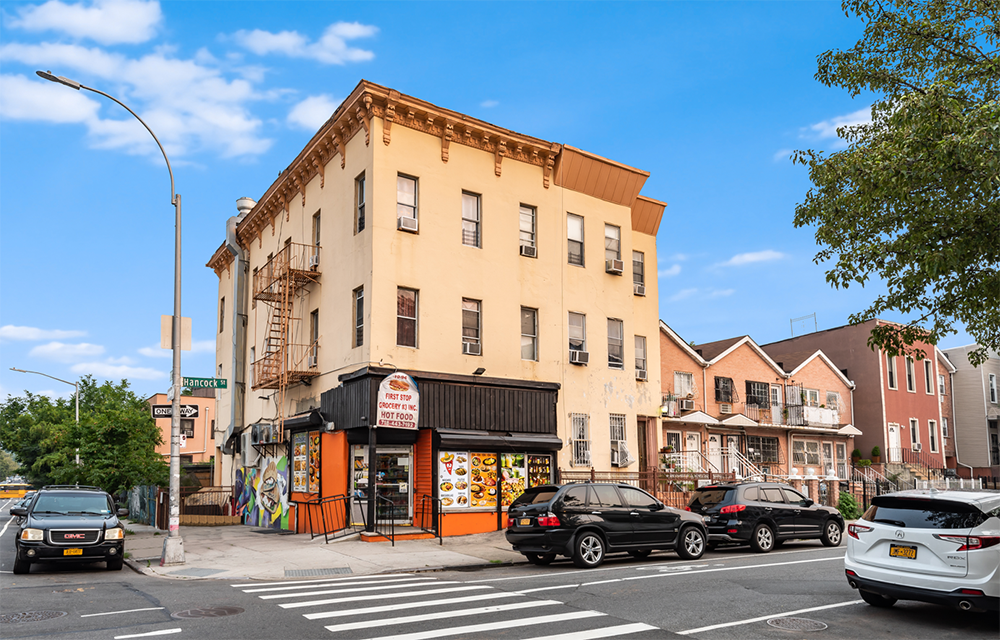
Investment Property Realty Group closes $1.75 million sale of 1094 Hancock Street in Brooklyn
Brooklyn, NY Investment Property Realty Group (IPRG), a New York-based commercial investment firm, has closed the sale of 1094 Hancock St., a mixed-use building in the Bushwick section, for $1.75 million.


Quick Hits

Columns and Thought Leadership

Hunt commercial real estate question and answer: Fortune 500 wisdom - by David Hunt
Yes, there are lessons to be learned from the largest companies in America when comes to managing your real estate. But the decision to buy or lease real estate may not be one of

A guide to finding the right NYC property management company - by Sanjay Gandhi
Being a small to midsize landlord in NYC is an increasingly demanding endeavor. From navigating complex regulations, increased compliance demands to dealing with tenant issues and remediating violations. It is wise to enlist the assistance of a partner, a professional

New York’s streets are full again, and the retail numbers prove it - by Noam Aziz
Walk down any New York block this year and you can feel it. The sidewalks are crowded, the storefronts are lit, and the energy that defines this city is back at full volume.

Hunt CRE question and answer: Choosing a real estate agent - by David Hunt
First, we will only work with one agent exclusively. The primary reason is that we want that agent to legally represent our client’s interests. In New York State, a real estate agent has a fiduciary
.gif)