


News:
Owners Developers & Managers
Posted: July 6, 2026
West 55th Street: The missing files and where Tony Bennett Lived - by Joseph Aquino

New York has a way of hiding its history in plain sight.
People walk past buildings every day without realizing that behind their brick and stone facades are thousands of stories. Some belong to celebrities. Most belong to ordinary New Yorkers whose lives quietly become part of the city’s history.
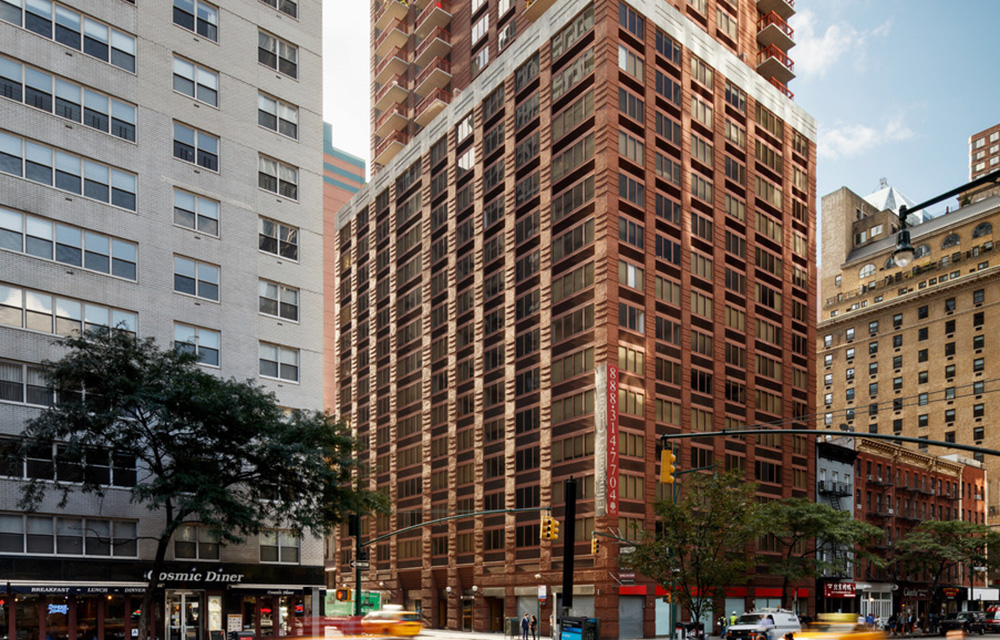
For several years, my wife and I lived on West 55th Street in a building that, according to several longtime members of the staff, had once been home to the legendary Tony Bennett.
One employee told me something that always stayed with me.
“He lived here twice.”
I’ve never been able to independently verify that story, but the staff believed Tony Bennett eventually returned because he missed the building before later moving to an apartment overlooking Central Park. By the time my wife and I moved in, he was long gone, although every so often I’d see him around Columbus Circle wearing a full-length leather coat over his workout clothes.
Tony Bennett seemed to embody New York. Born Anthony Dominick Benedetto in Queens, he achieved worldwide fame without ever losing the warmth and authenticity that made him unmistakably a New Yorker.
That conversation reminded me of something I’ve learned during more than forty years in New York commercial real estate.
Buildings have memories.
Some become famous because of their architecture. Others because of the businesses they house. But a fortunate few become woven into the city’s history because extraordinary people once called them home.
Then I realized something else. In late 2021, after developing severe vertigo during COVID, the only thing I could see clearly was my laptop screen two feet in front of me. Reading was difficult. Television was impossible. But somehow, I could type.
So, I finally decided to tell the story I had been carrying inside me for decades.
On the very first day, I typed more than 3,000 words—the opening two chapters of my life’s journey, beginning in 1976. In Junior High School they taught us how to type with ten fingers and type I did. Just six weeks later, while still battling vertigo, I completed the first draft, thirty-six chapters of Memoirs of a Watch Salesman: A New York Real Estate Story.
During that time, I had to wear a bicycle helmet whenever I left the apartment for fear of falling and cracking my head open.
Editing was an entirely different challenge. It took more than thirty weeks. As every author eventually discovers, writing is only the beginning. Finding the courage to dig deep and tell the whole story is the hard part. Then comes another lesson altogether—carefully shaping those memories into clear, honest prose and getting every word right.
The memoir follows my fifty-year journey through New York—from selling pots n’ pans on street corners, to selling watches door-to-door, to running health clubs to one of the first big health club chains, that eventually opened 300 locations throughout the United States, to eventually representing some of Manhattan’s best-known luxury retailers and property owners. It also recounts one of the most painful chapters of my professional life, my breakup with my longtime partner Faith Hope Consolo and the firing from the firm we both joined as a team in 2004.
Before publishing, I distributed about forty-five advance copies to brokers, landlords, architects, members of the press, clients, and friends within the real estate industry.
Then something happened that has never left me.
Files connected to my former company began disappearing from my office, nothing else.
To this day, I have never accused anyone of taking them because I have absolutely no evidence of what happened. They may simply have been misplaced. But I was wondering was this a warning shot for the book not to be published.
But the timing was unsettling.
One weekend my wife and I returned from the Hamptons, and I noticed things in my office no longer seemed to be where I had left them. I mentioned it to my wife.
“That’s impossible,” she said.
I asked her to take another look in my file draws.
A few moments later she walked back and quietly said, “You’re right. They’re not there.”
I never found those files.
Whether their disappearance meant anything or nothing at all, I’ll probably never know.
But it was enough to make me hesitate.
So, I shelved the book.
The manuscript remained on my computer for several years while my life moved forward.
Then public controversy eventually surrounded that former company, I found myself asking a simple question.
“What am I waiting for?”
At that moment the answer became obvious.
If I didn’t tell my own story, no one else would.
So, I published it. The date I chose was the day my mom passed away in 1978, September 25th 2025.
Not to attack anyone.
Not to settle old scores.
Simply to tell my story as I experienced it—the successes, disappointments, friendships, setbacks, and resilience that shaped both my career and my life.
Then something unexpected happened.
The very first author’s copy—the first published book off the press—was mistakenly delivered to my old address on West 55th Street. The woman I had worked with for more than ten years, who helped transform the final manuscript into a finished book that met all of the publisher’s specifications, had inadvertently neglected to update my contact information in her files and it was sent to my old address.
I went back to pick it up.
The staff recognized me immediately.
I told them I wrote my book, my story, when I was living at their building, upstairs. They smiled. We opened the package together.
I handed them the copy of the book, shared some of the stories in the book and then we stood outside the building and took photographs together. It was a very proud day for me; tears came to my eyes. I was officially a published writer.
At that moment it struck me.
The building that had preserved the memory of Tony Bennett had now become part of my own story as well.
I no longer live on West 55th Street, but I still think about that building from time to time.
New residents now walk through the same lobby, ride the same elevators, and create stories of their own. Most will never know who lived there before them. They won’t know that Tony Bennett once called home, or that another resident nearly convinced himself not to tell his own story.
That’s one of the things I love most about New York.
The distance between ordinary and extraordinary is often nothing more than a single address.
Buildings don’t simply shelter people.
They quietly collect their lives.
Joseph Aquino is president of JAACRES, Manhattan, N.Y.
MORE FROM Owners Developers & Managers

76% of flex operators plan to expand in the next 12 months driven by increasing occupancy, according to Workthere survey
Manhattan, NY Savills flexible office specialist Workthere, has revealed that more than three quarters (76%) of the flex operators surveyed worldwide as part of its 2026 Flexmark

 (2).gif)

Columns and Thought Leadership
Hunt Commercial Real Estate Q&A: Location, location, location? - by David Hunt
In working with our clients, we break down our search objectives into two categories. The first category involves the specific needs of your business such as warehouse height, amount of office space and number of loading
NYC's Community Opportunity to Purchase Act is back - and multifamily owners should pay attention - by Ron Cohen
New York City’s Community Opportunity to Purchase Act (COPA) is back, and this latest version could have a much better chance of becoming law. The proposal would give qualified nonprofit organizations
Don’t leave severance damages behind - by Sebastian Jablonski
When the government takes a portion of a landowner’s property, most assume just compensation stops at the value of the land taken. However, in partial takings, that is only half of the equation.
New York City’s historic rent freeze now rests with the courts - by Ron Cohen
New York City’s first-ever two-year rent freeze is now in the hands of a state Supreme Court judge, and the decision could reset income for owners of roughly one million rent-stabilized apartments housing some 2.4 million residents.