



News:
Brokerage
Posted: May 1, 2018
University at Albany breaks ground for $180 million Emerging Technology and Entrepreneurship Complex at the Harriman State Office Campus

Albany, NY According to governor Andrew Cuomo, the University at Albany has broken ground on its Emerging Technology and Entrepreneurship Complex (ETEC) at the Harriman State Office Campus, paving the way for a new interdisciplinary hub for STEM research, public policy development and entrepreneurship. The $180 million complex, funded in part by the NYSUNY 2020 program, will be built on the Harriman Campus and will be the future home of University at Albany’s first-in-the-nation College of Emergency Preparedness, Homeland Security and Cybersecurity.
Consigli Construction is the general contractor for this project, which will be completed in 2021.
“This new complex will continue to grow the Capital Region as a hub of technological innovation as well as help ensure New York is prepared for emerging threats, such as extreme weather and terrorism that are increasingly becoming the new normal,” said governor Cuomo. “By bringing academia and the business sector together, we are enabling the industries vital to our preparedness effort to grow and thrive right here in New York.”
ETEC will combine UAlbany’s existing research strengths, some of its fastest-growing new programs and innovative entrepreneurial resources in a single facility, fostering teaching, research and business collaborations. It will also house the University’s Department of Atmospheric and Environmental Sciences, Atmospheric Sciences Research Center and other UAlbany academic departments. The complex will provide new instructional spaces for University use and co-locate private business partners and the University’s technology transfer offices to help commercialize breakthroughs made in the complex.
The University’s development team has already completed preparatory site work as well as installation of ETEC’s geothermal well field, which will make the building more sustainable by using the earth beneath it to reduce heating and cooling costs and the reliance on fossil fuels.
ETEC will include classroom and office space; research labs; specialty instrumentation facilities; an emergency preparedness situation room, weather research and instruction map rooms and observation facilities; business and technology transfer services offices; and conference facilities.
A pedestrian path from UAlbany’s existing perimeter road as well as shuttle bus service from Uptown Campus buildings to the new building will connect ETEC to the main academic podium.
In addition, the complex will house the New York State Mesonet, the nation’s most advanced weather-detection system which was built by University at Albany at the direction of governor Cuomo in the aftermath of Super Storm Sandy to ensure New York will be better prepared and protected from future severe weather.
In 2016, governor Cuomo announced that the University would develop 12 neighboring acres on the Harriman Campus to build the 245,000-square-foot complex. ETEC’s partnership with the state is vital to private collaboration as the building is located just steps from the NYS Division of Homeland Security and Emergency Services, Office of Emergency Management and New York State Police. This proximity also offers students better access to powerful hands-on experiential learning opportunities with state agencies that work daily to make New York safer, more prepared and more resilient.
Since its launch by governor Cuomo in 2015, CEHC has rapidly outgrown its current space on UAlbany’s Downtown Campus. Though projected to have about 70 majors by this semester, the college now has more than 750 majors, and hundreds more minors and intended majors. Once completed in 2021, ETEC will have the capacity to house more than 200 full-time faculty and researchers, 100 research and industry partners and as many as 800 students.
With close to 120 faculty, researchers and staff, UAlbany is also home to the largest concentration of atmospheric, climate and environmental scientists in New York State, and one of the largest in the nation. The University’s Department of Atmospheric and Environmental Sciences features the largest graduate program in the nation with more than 80 current students.
Tags:
Brokerage
MORE FROM Brokerage
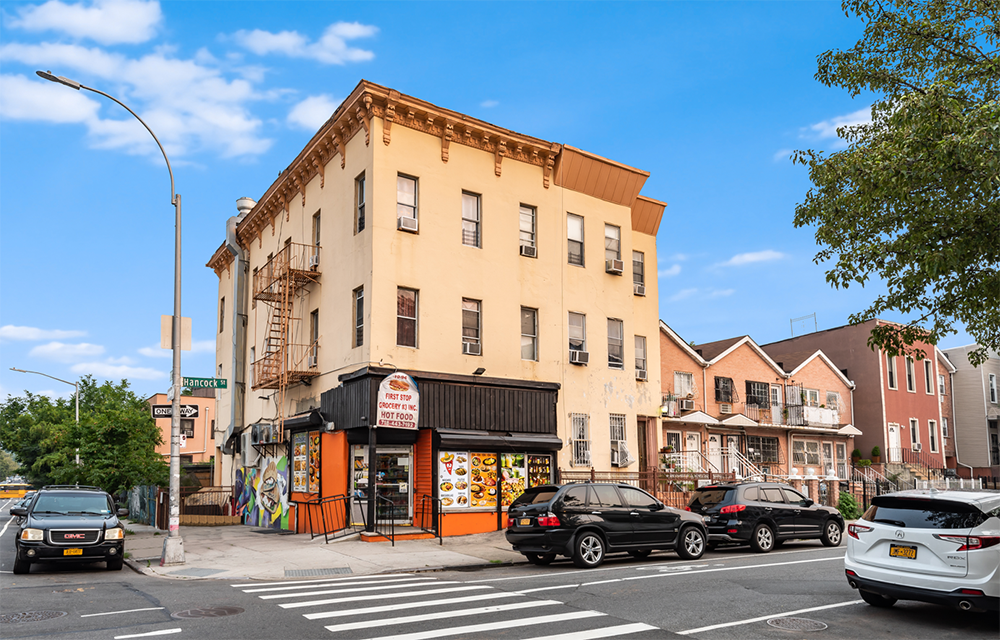
Investment Property Realty Group closes $1.75 million sale of 1094 Hancock Street in Brooklyn
Brooklyn, NY Investment Property Realty Group (IPRG), a New York-based commercial investment firm, has closed the sale of 1094 Hancock St., a mixed-use building in the Bushwick section, for $1.75 million.


Quick Hits

Columns and Thought Leadership

A guide to finding the right NYC property management company - by Sanjay Gandhi
Being a small to midsize landlord in NYC is an increasingly demanding endeavor. From navigating complex regulations, increased compliance demands to dealing with tenant issues and remediating violations. It is wise to enlist the assistance of a partner, a professional

New York’s streets are full again, and the retail numbers prove it - by Noam Aziz
Walk down any New York block this year and you can feel it. The sidewalks are crowded, the storefronts are lit, and the energy that defines this city is back at full volume.

Hunt CRE question and answer: Choosing a real estate agent - by David Hunt
First, we will only work with one agent exclusively. The primary reason is that we want that agent to legally represent our client’s interests. In New York State, a real estate agent has a fiduciary

Hunt commercial real estate question and answer: Fortune 500 wisdom - by David Hunt
Yes, there are lessons to be learned from the largest companies in America when comes to managing your real estate. But the decision to buy or lease real estate may not be one of
.gif)