



News:
Brokerage
Posted: March 21, 2011
Trapped in the past: Garment center and SoHo zoning
50 years ago N.Y.C. adopted a new Zoning Resolution (ZR) that was intended to plan for a more orderly growth of our city's economy and population. Two key principles embodied in the ZR to promote these goals were an expansion of areas devoted for manufacturing and an exclusion of residential use from all manufacturing districts. These decisions were problematic from the start and present ongoing land use problems in the Garment Center and SoHo.
At that time, city planners expected growth of industrial activity, the largest employment sector of the city's economy. It designated large areas of the city for manufacturing use including large areas along the waterfront and in Midtown Manhattan south of 42nd St. Also, it designated predominantly residential neighborhoods, such as Long Island City, for manufacturing to meet this expected growth. Since its enactment in 1961, employment in the manufacturing sector has plummeted. Between 1961 and 1975, N.Y.C. manufacturing employment dropped from one million to less than 500,000 jobs. Over the last 35 years this sector of our economy has continued to steadily shed jobs. Today, N.Y.C. has 75,000 manufacturing jobs. This decline has been the result of market factors, global and national, that have driven these manufacturers out of New York or out of business.
The ZR provides greater protections to manufacturers than the old code which permitted residential use in light manufacturing areas. Nevertheless, manufacturing advocates pushed for greater protections for manufacturing, particularly in the Garment Center. As a result, the city adopted a more restrictive preservation area that required property owners to set aside 50% of their floor area for apparel uses. These provisions have thwarted economic revitalization in the area between Times Sq. and Herald Sq. and have been ineffective in stemming the loss of manufacturing jobs there.
The underutilized manufacturing buildings that proliferated with the decline in manufacturing employment and the restrictions on other uses, especially in Manhattan, opened the door to illegal residential uses, including that by artists. The illegality was so widespread that in 1971 the city created a new use category Joint Living Work Quarters for Artists (JLQWA) that allowed artists certified by the Dept. of Cultural Affairs to live in these converted industrial units in SoHo. In 1976, the city extended this provision to NoHo. These limited exceptions were done to preserve the industrial uses in these neighborhoods and protect the artists who had illegally begun to live in their work space. A later city survey of these two neighborhoods found that only a third of these units were actually occupied by certified artists. Therefore, the city granted an amnesty to the illegal occupants of these units.
With the continuing decline of industrial uses, there was an increase in illegal residential occupancy in loft buildings in manufacturing districts throughout Manhattan. As a result, the state passed a Loft Law which legalized these residential uses (with no artist certification requirement) and required that these buildings be made safe and renovated according to code for these residential uses.
There appears to be a more rigorous enforcement of the artist certification requirement when people apply for building permits and renewals of a C of O. As a result, sales are grinding to a halt, according to our brokers, as prospective buyers are unwilling to purchase an apartment knowing that they must be certified as an artist to occupy it legally.
There are long-time residents in SoHo and NoHo who cling to an image of these areas as they were and are reluctant to support a change in the zoning that would lift the artist certification requirements and make the zoning compatible with the evolution of this neighborhood as predominantly residential.
In 1916 New York was the first city in the country to adopt a zoning resolution to protect the health and well-being of its citizens. Zoning has been integral and beneficial to the growth and development of our great city. However, zoning cannot always keep pace with the changing character of our neighborhoods or our rapidly changing economy. Also, changing the zoning of an area has grown more complicated and difficult with a demanding and costly public and environmental review process. The evidence of this difficulty is vividly demonstrated in the case of the Garment Center and SoHo where updates needed for many years have not yet been made.
We all can lament the decline of manufacturing jobs that were crucial to the economic prosperity of so many hardworking New Yorkers. However, out of date, overly restrictive zoning will not bring back these jobs and will impede efforts to revitalize these areas with new and vibrant uses.
Steven Spinola is the president of REBNY, New York, N.Y.
Tags:
Brokerage
MORE FROM Brokerage
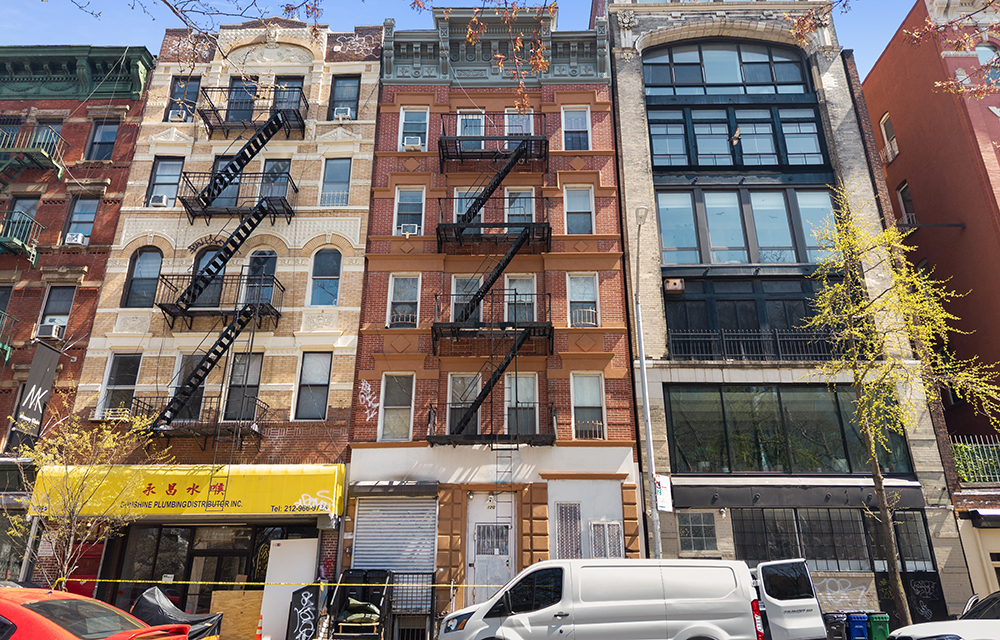
Investment Property Realty Group sells 120 Forsyth St. for $1.35 million
Manhattan, NY Investment Property Realty Group (IPRG) closed the sale of 120 Forsyth St., a mixed-use building located in the Lower East Side section of the city, for $1.35 million.



 (2).gif)

Columns and Thought Leadership

Hunt commercial real estate question and answer: Fortune 500 wisdom - by David Hunt
Yes, there are lessons to be learned from the largest companies in America when comes to managing your real estate. But the decision to buy or lease real estate may not be one of

A guide to finding the right NYC property management company - by Sanjay Gandhi
Being a small to midsize landlord in NYC is an increasingly demanding endeavor. From navigating complex regulations, increased compliance demands to dealing with tenant issues and remediating violations. It is wise to enlist the assistance of a partner, a professional

Positive forecast for New York’s pro-housing push? - by Philip Butler
New York’s housing crisis remains a hot button topic despite growing consensus that varied and affordable housing is desperately needed statewide. Governor Hochul has recently introduced several initiatives to overcome N.Y.’s anti-housing

New York’s streets are full again, and the retail numbers prove it - by Noam Aziz
Walk down any New York block this year and you can feel it. The sidewalks are crowded, the storefronts are lit, and the energy that defines this city is back at full volume.
.gif)