



News:
Brokerage
Posted: October 27, 2014
Tishman Speyer Properties acquires 183 Madison Avenue for $185 million
Argentinean real estate investment firm, Inversiones y Representaciones Sociedad Anónima (IRSA) has sold 183 Madison Ave. for $185 million to Tishman Speyer Properties. IRSA initially purchased a two-thirds share of the 19-story Art Deco office building in November 2010 for $88 million and acquired the balance of the shares in 2012, at a valuation of $150 million.
Tishman Speyer acquired the 274,413 s/f office property in a joint venture with The Cogswell-Lee Development Group, a recently formed partnership of Cogswell Realty and Lee & Associates NYC. In less than four years of ownership, IRSA implemented comprehensive renovations that included infrastructure upgrades and a contemporary pre-built office program. The distinctive lobby and façade were restored and awarded landmark designations. Also during this period, the building's tenant profile was diversified to add more technology, advertising and media businesses, which resulted in 100% occupancy.
"Among the many reasons we purchased this building was the stunning architecture by Warren & Wetmore, the firm that was also responsible for Grand Central Terminal and the Crown Building," said Daniel Elsztain, IRSA's director. "But while our mission included re-establishing its design pedigree, we were also committed to modernizing its functionality."
When IRSA first acquired 183 Madison Ave., it was 50% vacant. Fully occupied today, the current roster reflects approximately 60% TAMI tenants. Moreover, the building is again considered a trophy property; consistent with the firm's impact on its commercial portfolios worldwide.
Elsztain said, "Our vision was to bring new life to a New York landmark and I believe we have succeeded to everyone's benefit."
IRSA's other New York City commercial asset is the Lipstick Building at 885 Third Ave., between 53rd and 54th Sts. The Philip Johnson-designed office tower is 95% occupied and its largest tenant is international law firm, Latham & Watkins.
Since 2009, IRSA's activity in the U.S. has also included investments in two publicly-traded hospitality REIT's, comprising Supertel Hospitality, Inc., a group of approximately 94 hotels primarily in the Midwest; and Hersha Hospitality Trust, which owns over 50 hotels in gateway cities, including 22 in the greater New York metro area.
Tags:
Brokerage
MORE FROM Brokerage
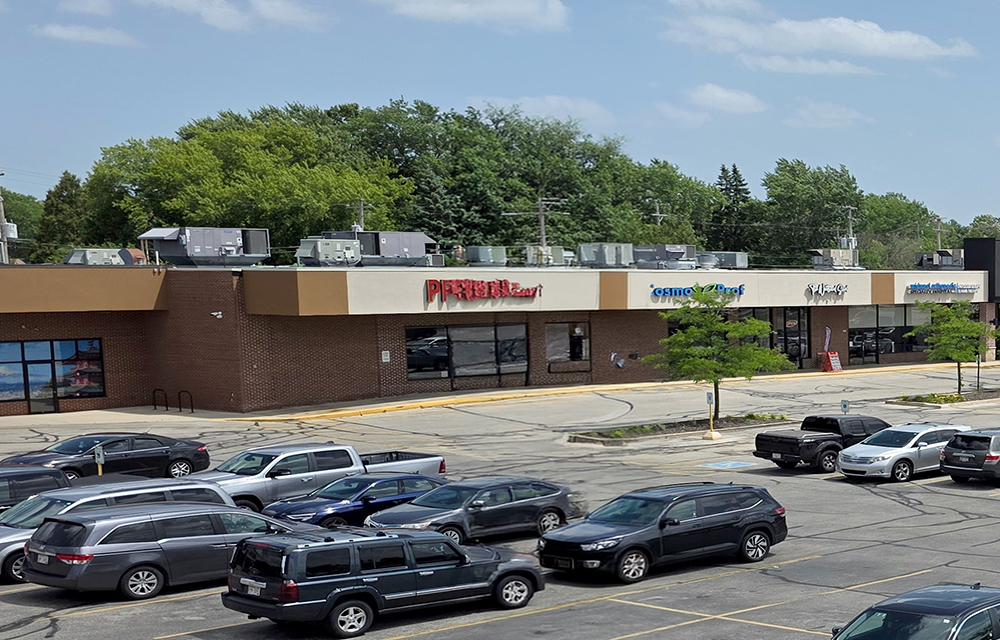
United Properties Corp. expands Wisconsin and Illinois retail presence adding 200,000 s/f
West Allis, WI United Properties Corp. completed two retail acquisitions totaling $27.4 million across Illinois and Wisconsin, adding 205,000 s/f of shopping center space to its portfolio



Columns and Thought Leadership

Hunt commercial real estate question and answer: Fortune 500 wisdom - by David Hunt
Yes, there are lessons to be learned from the largest companies in America when comes to managing your real estate. But the decision to buy or lease real estate may not be one of

Positive forecast for New York’s pro-housing push? - by Philip Butler
New York’s housing crisis remains a hot button topic despite growing consensus that varied and affordable housing is desperately needed statewide. Governor Hochul has recently introduced several initiatives to overcome N.Y.’s anti-housing

A guide to finding the right NYC property management company - by Sanjay Gandhi
Being a small to midsize landlord in NYC is an increasingly demanding endeavor. From navigating complex regulations, increased compliance demands to dealing with tenant issues and remediating violations. It is wise to enlist the assistance of a partner, a professional

New York’s streets are full again, and the retail numbers prove it - by Noam Aziz
Walk down any New York block this year and you can feel it. The sidewalks are crowded, the storefronts are lit, and the energy that defines this city is back at full volume.
.gif)