



News:
Brokerage
Posted: March 21, 2017
Tips to make you a better, more valuable real estate professional by Schnurman
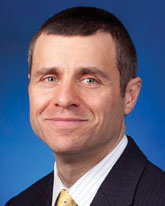 Mark Schnurman, Eastern Consolidated
Successful brokers are competitive, hard driving and possess a passion for winning. Any strength overused can become a weakness and these traits can manifest themselves in a myriad of unfortunate ways that may lead to difficulty with others.
What follows is a quick “coaching session” to help you stay focused and create collegial and valuable relationships.
Do not underestimate the importance luck plays in success
For example, Malcolm Gladwell in “Outliers” shows that the majority of NHL hockey players are born in the first half of the year because making them significantly bigger and stronger than their five-year-old peers. Birth month luck leads to extra and better coaching that results in higher performance.
Get feedback
Success stops many from hearing, in Tom Peters’ words, “the unvarnished truth.” Absent feedback, successful brokers can go unchecked by others and often extrapolate their success into all areas of their lives and careers. I worked with a lot of very smart people but fewer wise ones. The wise ones understand the limits of their knowledge and skills and don’t extrapolate them into other areas. They rely on the expertise of their colleagues.
Listen to disparate perspectives
It is often difficult for a strong-minded person to hear the other opinions. Through sharing of thoughts and brainstorming sessions, however, ideas are honed and perfected. Coalescing different views can lead to knowledge and improvement. Be open-minded, especially outside of your expertise.
Prioritize consensus
Collaboration enables sharing and fosters buy-in. A recent study indicated that when employees take ownership and pride in a project, they work on average at 95% of their capacity; when they don’t, they work at 55% of capacity. Sharing the decision-making process builds support and productivity.
Don’t add too much value
In Marshall Goldsmith’s book, “What Got You Here Won’t Get You There,” he suggests that when someone offers an idea, they possess ownership and are motivated to make it flourish. Perhaps, due to your experience and knowledge, you can show them how to make the idea 10% or 20% better. Often when we add “value,” however, we reduce the other person’s ownership commitment by say 50% because the idea is no longer theirs. Let people run with their ideas without the compulsion to make them better.
Don’t show how smart you are
Goldsmith indicates that a blind spot for successful people is the need to show others how smart they are. This can manifest itself by stating something as simple as “I know that,” passing judgment or interrupting another person. Prioritize being bearable over smart.
Don’t blame
Leaders take responsibility. When people receive blame, they become resentful, angry and shut down. The last thing you want is a person working at less than 100% capacity because you pointed a finger at them. Instead of blame, focus on what can be learned.
Recognize others
When people put their hearts and souls into a project or a task, it is important to reward them. Often, the simplest reward is best. Give them a sincere pat on the back or praise them for their effort, if not their result. The bottom line: It is important to build strong relationships by leveraging and utilizing those around you.
These tips can help make you a better, more collaborative real estate professional.
Mark Schnurman is chief sales officer, principal at Eastern Consolidated, New York, N.Y.
Tags:
Brokerage
MORE FROM Brokerage
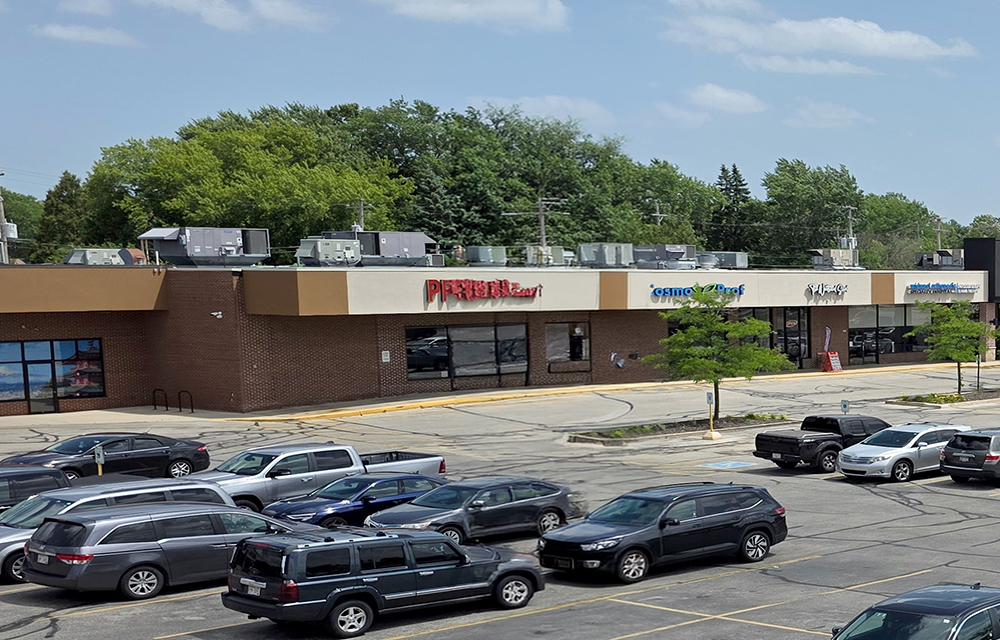
United Properties Corp. expands Wisconsin and Illinois retail presence adding 200,000 s/f
West Allis, WI United Properties Corp. completed two retail acquisitions totaling $27.4 million across Illinois and Wisconsin, adding 205,000 s/f of shopping center space to its portfolio




Quick Hits
 (2).gif)

Columns and Thought Leadership

A guide to finding the right NYC property management company - by Sanjay Gandhi
Being a small to midsize landlord in NYC is an increasingly demanding endeavor. From navigating complex regulations, increased compliance demands to dealing with tenant issues and remediating violations. It is wise to enlist the assistance of a partner, a professional

Positive forecast for New York’s pro-housing push? - by Philip Butler
New York’s housing crisis remains a hot button topic despite growing consensus that varied and affordable housing is desperately needed statewide. Governor Hochul has recently introduced several initiatives to overcome N.Y.’s anti-housing

New York’s streets are full again, and the retail numbers prove it - by Noam Aziz
Walk down any New York block this year and you can feel it. The sidewalks are crowded, the storefronts are lit, and the energy that defines this city is back at full volume.

Hunt commercial real estate question and answer: Fortune 500 wisdom - by David Hunt
Yes, there are lessons to be learned from the largest companies in America when comes to managing your real estate. But the decision to buy or lease real estate may not be one of
.gif)