



News:
Brokerage
Posted: February 6, 2009
The trees are shaken every 17 years for a reason
Isaac Newton discovered that what goes down must come back up (or was it the other way around?) I used to tell my kids that before they passed the law of gravity, things fell up. I wonder if they believed me. I also tell the tote teller at the horse race track that when they pass the law of averages, I'll finally cash a big ticket. I wonder if she thinks I'm nuts.
A recent survey showed that over 80% of the people polled still believe everything they read in the newspaper. That's called the power of the press or the pen is mightier than the sword.
Is that good? I suppose it is if you search for the good stuff. We all know that newspapers print what they think the reader wants, such as: violence, scandals, tragedies, etc. More and more articles are appearing about doom and gloom that really doesn't enhance anyone's positive attitude.
I haven't met anyone in any business who doesn't know about the current recession (recessions, if you checked, come along approximately every 17 years).
Granted, this one may be worse than the last, but look at the calendar. The last recession began in 1989 and ended in 1991 - three years long. By the way, the average recession lasts 7 to 11 months.
This recession started in Dec. 2007. Do the math. 1991 - 2008, that equals 17 years. Should we be shocked that the country is experiencing a recession?
Of course not! How many of us were prepared?
Many messages ago I suggested that people search their local newspaper for the good positive news, usually it is hidden toward the back of the paper. Nevertheless, here are some examples from my local paper, Jan. 28th, Ocala Star: "Interest Rates to Be Kept at Record Low," "Funds to Finally Be Made Available," "Renters Now Able to Buy Homes," and "Profits Boost Wall St. Earnings." Granted, I had to hunt for those stories, but they were there just the same and I believe them.
So why do we have recessions every 17 years and how do we survive them? A recession is very much like shaking an apple tree in the fall. The weak apples fall off and rot. The strong ones stay waiting to be harvested.
The economy has been good for a long time and where there might have been five companies in a category thriving, maybe several more sprang up to compete.
Now, after 17 years, Mother Nature shakes the tree and the weak apples fall to the ground. Maybe even 50% of them. It's called the survival of the fittest.
Who decides? In a free society, that we are still fortunate enough to be in, you decide. Start be seeking and finding the positive stories in the newspaper.
Negative story: "New York Times to sell their share of the Boston Red Sox." Positive angle: Put together a bunch of jokers and buy it (bad example, but fun to think about).
The companies who will fail are the ones who go into hiding, the ones who you don't read about anymore. Out of site, out of mind.
The Journal's mission (and always has been) is to keep you in business by keeping your name in the bright lights. The power of the press. People still believe what they read.
If you are the 50% of the companies that we read about (or if you choose to run away and hide) well, you do the math. See you in the papers (or not).
Roland Hopkins, Sr., is the founder of the New York Real Estate Journal, Norwell, Mass.
Tags:
Brokerage
MORE FROM Brokerage

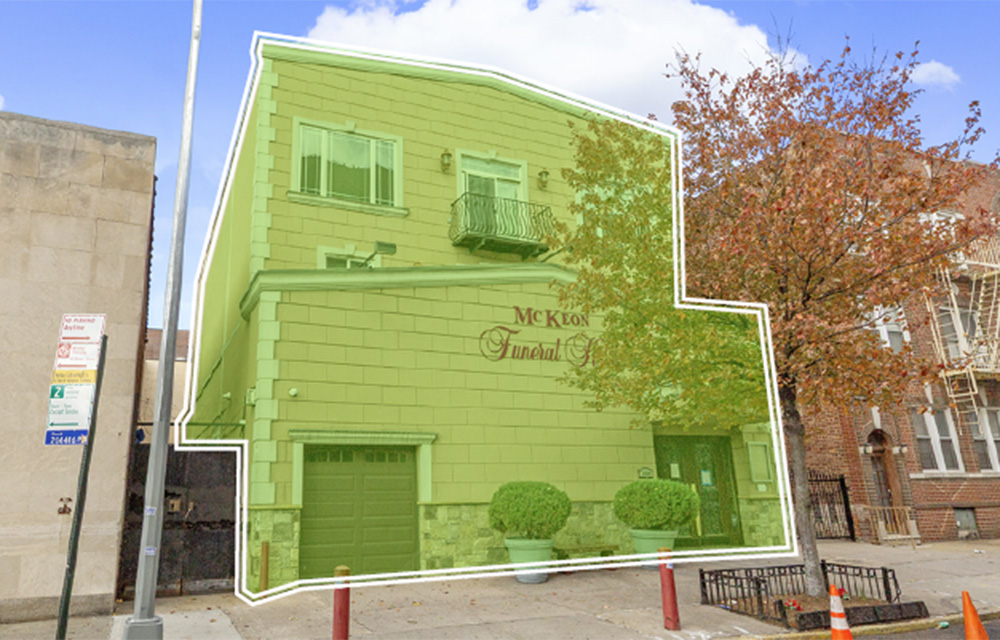
Marcus & Millichap brokers $2.8 million sale of free-market mixed-use property in Brooklyn
Brooklyn, NY Marcus & Millichap brokered the sale of 733 Dekalb Ave., a fully free-market multifamily and retail property in the Bed-Stuy neighborhood. The asset sold for $2.8 million.





 (2).gif)

Columns and Thought Leadership

New York’s streets are full again, and the retail numbers prove it - by Noam Aziz
Walk down any New York block this year and you can feel it. The sidewalks are crowded, the storefronts are lit, and the energy that defines this city is back at full volume.

Hunt commercial real estate question and answer: Fortune 500 wisdom - by David Hunt
Yes, there are lessons to be learned from the largest companies in America when comes to managing your real estate. But the decision to buy or lease real estate may not be one of

Positive forecast for New York’s pro-housing push? - by Philip Butler
New York’s housing crisis remains a hot button topic despite growing consensus that varied and affordable housing is desperately needed statewide. Governor Hochul has recently introduced several initiatives to overcome N.Y.’s anti-housing

A guide to finding the right NYC property management company - by Sanjay Gandhi
Being a small to midsize landlord in NYC is an increasingly demanding endeavor. From navigating complex regulations, increased compliance demands to dealing with tenant issues and remediating violations. It is wise to enlist the assistance of a partner, a professional
.gif)
September Promotion
