



News:
Brokerage
Posted: July 8, 2025
The real estate market needs geo-political stability to thrive—especially in New York - by Paul Adler
The real estate market is built on confidence—and confidence is built on stability.
For decades, New York City and its surrounding suburbs—including the vital, diverse communities of Rockland County—have been among the most resilient and attractive real estate markets in the country. But resilience is not immunity. In today’s environment of constant disruption, that resilience is being tested in unprecedented ways.
The forces shaping real estate today extend far beyond interest rates or zoning decisions. They are macroeconomic, geopolitical, cultural, and even existential. Volatility is coming from all sides: unstable national elections, unpredictable monetary policy, rising tariffs, policy gridlock in Washington, shifting global alliances, and ongoing wars in Europe and the Middle East. These pressures combine with sweeping domestic transformations—from the work-from-home revolution to a changing educational infrastructure—and create a cocktail of uncertainty that stifles investor confidence and freezes market momentum.
Real estate does not thrive in uncertainty. It thrives in predictability. Buyers want to know what the future holds for taxes, schools, infrastructure, interest rates, and public safety. Developers need to anticipate demand and rely on consistent government processes. Lenders want to see risk minimized, not amplified by an erratic global stage. In the absence of those conditions, hesitation replaces investment, and stagnation replaces growth.
Nowhere is this more apparent than in the New York metropolitan area. This region, so often seen as the nerve center of global finance, culture, and innovation, now sits at the nexus of global and domestic volatility. The City’s commercial office market remains in limbo as hybrid and remote work models persist. Leasing velocity in office space has slowed. Class B and C office properties are struggling to remain viable, with many now being reimagined for alternate uses such as life sciences or residential conversions. These trends reflect a broader shift in how people live, work, and move—and it’s happening faster than governments and institutions can adapt.
Meanwhile, suburban markets like Rockland are experiencing both opportunity and pressure. On one hand, more families and businesses are seeking space, quality of life, and affordability outside the five boroughs. On the other hand, local infrastructure, schools, and housing stock are under strain. Zoning policies that have long served as a bulwark against overdevelopment are now challenged by the urgent need for housing and economic development. Navigating that tension requires more than just local planning—it requires a coordinated, regional approach informed by stability and vision.
But how can we craft a vision when the playing field keeps shifting?
Every time a major geopolitical event unfolds—a new tariff imposed, a foreign war escalated, a federal budget crisis—it sends a tremor through the real estate market. Investors hold back. Banks re-evaluate lending criteria. Families delay buying homes. Businesses postpone relocation or expansion plans. The economic engine sputters.
Closer to home, state and municipal governments are tasked with making long-term infrastructure and housing investments in an environment that feels increasingly short-term. Faith in political institutions is eroding, and the lack of functional governance in Washington is not just a Beltway problem—it’s a local one, too. Every stalled infrastructure bill or housing initiative at the federal level means delays and missed opportunities on the ground in places like Rockland, Westchester, and Bergen.
The post-COVID era was supposed to bring clarity. Instead, it brought paradigm shifts—some overdue, some chaotic. Remote work is here to stay in some form, altering the traditional commercial landscape. Schools and universities are reimagining their roles and their real estate footprints. Mass transit remains in flux. And consumers, having grown accustomed to flexibility, now demand it in how and where they live.
Amidst this backdrop, the old saying rings louder than ever: “When New York City sneezes, the rest of the country catches a cold.” That sneeze today sounds more like a chronic cough—a persistent, unsettling signal that all is not well. If the foundational markets of New York falter, the rest of the country will feel it, whether in the form of reduced capital flows, lower investor appetite, or faltering consumer confidence.
So, what do we do?
We begin by demanding stability—at every level. We urge our elected officials to prioritize predictability and functionality over performative politics. We call on regional leaders to work collaboratively across jurisdictions. We ask institutional players to reinvest in our communities. And we, as business leaders, need to embrace agility without surrendering to chaos.
The road to real estate recovery is not paved with speculation. It is paved with structure, clarity, and long-term thinking. We must cultivate a climate where families feel secure to put down roots, where businesses feel confident to invest, and where communities feel empowered to grow.
Stability is not a luxury. It is a necessity. And in New York, where the stakes are always higher, the need has never been more urgent. This article first appeared in the Rockland County Business Journal.
Paul Adler is the chief strategy officer of Rand Commercial, Nyack, NY.
Tags:
Brokerage
MORE FROM Brokerage
Investment Property Realty Group closes $1.75 million sale of 1094 Hancock Street in Brooklyn
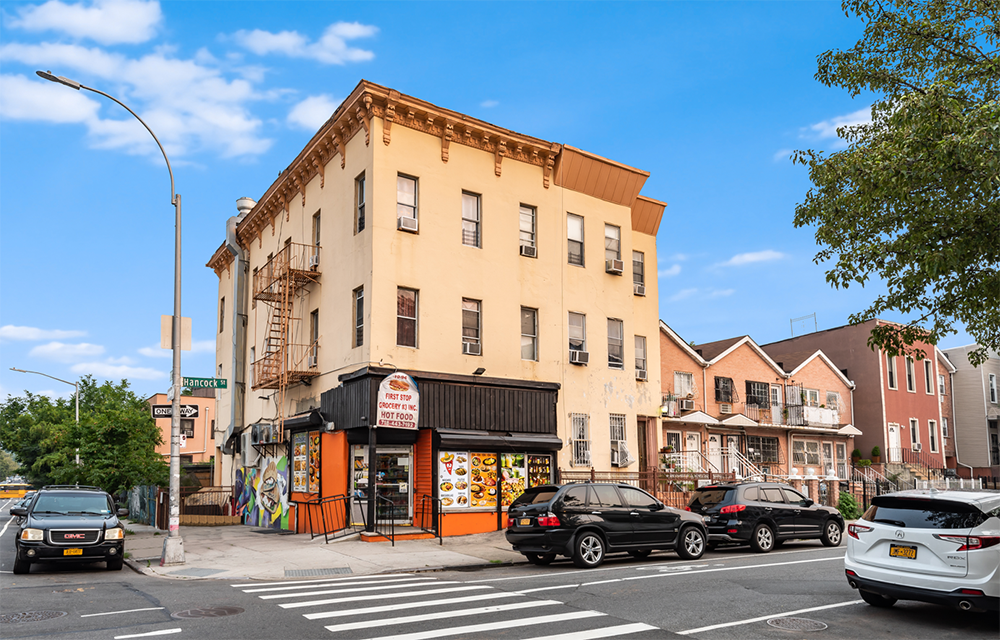
Brooklyn, NY Investment Property Realty Group (IPRG), a New York-based commercial investment firm, has closed the sale of 1094 Hancock St., a mixed-use building in the Bushwick section, for $1.75 million.


 (2).gif)

Columns and Thought Leadership

Hunt commercial real estate question and answer: Fortune 500 wisdom - by David Hunt
Yes, there are lessons to be learned from the largest companies in America when comes to managing your real estate. But the decision to buy or lease real estate may not be one of

New York’s streets are full again, and the retail numbers prove it - by Noam Aziz
Walk down any New York block this year and you can feel it. The sidewalks are crowded, the storefronts are lit, and the energy that defines this city is back at full volume.

Hunt CRE question and answer: Choosing a real estate agent - by David Hunt
First, we will only work with one agent exclusively. The primary reason is that we want that agent to legally represent our client’s interests. In New York State, a real estate agent has a fiduciary

A guide to finding the right NYC property management company - by Sanjay Gandhi
Being a small to midsize landlord in NYC is an increasingly demanding endeavor. From navigating complex regulations, increased compliance demands to dealing with tenant issues and remediating violations. It is wise to enlist the assistance of a partner, a professional
.gif)