



News:
Brokerage
Posted: August 2, 2016
The future of the way we live, love and work by Du
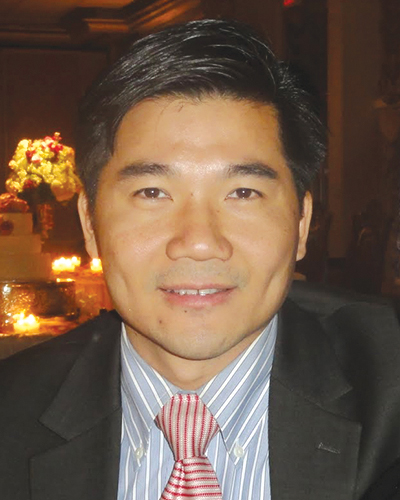 Richard Du, Agorafy, Inc.
We live in a world full of possibility. And yet sometimes, our daily lives seem limited. The time we spend earning, commuting and taking care of daily responsibilities uses up the majority of our hours. In this world full of possibility, why is it that we sometimes feel locked into a system that appears unconcerned with our quality of life? Does it have to be that way? Is it possible to alter the course of how we live, love and work?
A morning commute in New York City can tell us a lot about how our culture is structured—rows of people walking silently down stairs into harshly lit underground tunnels, waiting for a train to come that we pack ourselves into, making no human connection in a sea of humanity. Something as simple as public transportation shows how the very cities we live and work in objectify us.
The world of real estate development holds limitless potential for how we can re-shape our cities to vastly improve our quality of life. Currently, architecture is evolving to take into account not only environmental sustainability, but also how we relate to each other as people. Shared work spaces bring people and businesses together and apartment buildings are being designed with communal areas for everything from working out to watching movies.
Technology is beginning to facilitate a more interactive urban experience. The gathering of data from digital devices can be mined and analyzed to curate personalized experiences of everything from your apartment’s climate control to food delivery options. But when we look deeply into our highest values, the modern urban experience often fails to satisfy our desire for things like spending time with family, forming meaningful relationships and engaging in satisfying work.
Seeking this kind of balance may become more viable as populations begin to move from cities into areas with open spaces that can be designed, not only with efficiency and pragmatism, but with a focus on building communities and improving quality of life. Through this purposeful design of communities, infrastructure can be made to serve the people who live there rather than people conforming to the technology and resources available. For example, in order to make enough money to afford to build a pool in your backyard (or afford a back yard for that matter), oftentimes one must work so much there may not be time to enjoy it. But, in an intentionally designed community, groups of people gather their resources. The amount of work required for 50 people to afford a pool is, well, 50 times less. Now you have a pool and the time to enjoy it. This idea of using communities to leverage greater value in their purchasing power serves two purposes: first, to leverage buying power, and secondly, to bring people together based on common values. Work space can be provided to minimize the need for commuting, saving time that can now be used for spending with family and friends. A minimized commute can also decrease dependency of fossil fuels, saving money and, at the same time, improving air quality and reducing CO2 emissions.
These communities could create excellent opportunities for real estate investment and development while building businesses and communities that can dramatically increase capital leverage, efficiency and quality of life. This is a world full of possibility. If we choose to, we can take advantage of this, rather than conform to what we have. If we choose, this can be the future of how we live, love and work. It is ours for the taking.
Richard Du is CEO and founder of Agorafy, New York, N.Y.
Tags:
Brokerage
MORE FROM Brokerage

Marcus & Millichap releases fourth-quarter 2026 NYC industrial market report
Manhattan, NY Marcus & Millichap has published its fourth-quarter 2026 New York City Industrial Market Report. “New York City’s industrial market is showing a clear



 (2).gif)

Columns and Thought Leadership

New York’s streets are full again, and the retail numbers prove it - by Noam Aziz
Walk down any New York block this year and you can feel it. The sidewalks are crowded, the storefronts are lit, and the energy that defines this city is back at full volume.

The art of investing in real estate - by Thomas Donovan
Real estate investing is as much an art as it is a skill. No one can time the market, or the factors that drive it, perfectly. Location, zoning, size, transportation, and neighborhood density give you a baseline for

Hunt CRE question and answer: Choosing a real estate agent - by David Hunt
First, we will only work with one agent exclusively. The primary reason is that we want that agent to legally represent our client’s interests. In New York State, a real estate agent has a fiduciary

Hunt commercial real estate question and answer: Fortune 500 wisdom - by David Hunt
Yes, there are lessons to be learned from the largest companies in America when comes to managing your real estate. But the decision to buy or lease real estate may not be one of
.gif)