



News:
Brokerage
Posted: May 12, 2014
The case for asking prices; Increase accountability
At Agorafy we have made the case since day one that requiring verified asking prices for all of our listings increases transparency and accountability in the market place. We also believe it helps to create a more efficient market by educating principals and clients alike, which leads to more informed conversations, and saves agents and their client's time confirming availability and pricing.
Access to market pricing is a necessity to all market participants, and one of our goals is to make it widely available. Those looking for a new home for their family or business need to be able to research and compare prices across different buildings and neighborhoods. Real estate agents need to price out new vacancies and potential exclusives as negotiated the best deal for their client. Investors need to spot shifting trends and be able to properly underwrite potential deals.
Having access to data on recent transactions for comparables helps to give a partial picture of the current market environment. However when pricing a potential exclusive or underwriting an asset it's not enough to know where prices have been, you need to forecast where they are going. This is the case for asking prices.
There are many positive aspects to relying on asking prices when determining market pricing. Not only do they give a starting point for negotiation and establish and expectation between the parties, but they are also a forward looking assumption on what the market can bear.
By focusing on shifting asking prices, real estate professionals gain enormous insights into pricing trends. Since they are forward looking by nature, active listings are sensitive to supply and demand and are more responsive to the market. This feed back in real time can be much more valuable than recent taking rents or closing prices, which degrade in relevance as time goes on.
It is true that asking prices can be inflated by misinformed real estate agents or unrealistic sellers and landlords. However, mispriced listings typically stand out as outliers and get corrected through market feedback. The majority of the time the taking rent or closing price is a small percentage below the asking price. However during periods of short supply, deals get done quickly above the starting price, and subsequent asking prices get revised upwards.
Most real estate professionals can use their experience to forecast where the deal will get done in relation to the asking price and can spot changes in pricing by monitoring the spread between asking prices and the taking rent or closing price. Taking rents as a comparable provide a nice clean data point which can be used for pricing listings and underwriting assets. Once verified they provide a nice historical record of a transaction which professionals can point to when making a decision.
However there a number of downsides to relying too heavily on taking rents as comparables. Mentioned earlier, they lose relevance rapidly as time goes on. Especially in periods of market volatility taking rents quickly fail to reflect the current market environment and trends in market pricing. As just a data point they lose the context of the available supply and numerous other factors that led to the deal price.
Most importantly when they are distilled down to a deal price on a per square foot basis, they become stripped away from all of the factors that led to the two parties coming to an agreement. The taking rent per square foot doesn't reflect the length of time on the market, or landlord concessions such as tenant improvement allowance, free rent, and landlord build out required to secure the deal. Without this context taking rents on a per square foot basis can become somewhat meaningless.
We believe strongly that asking prices are the most important data point for underwriting assets and pricing out new availabilities, not to mention searching for availabilities. For this reason we will continue to expand the reach of Agorafy in the hope of increasing transparency in the New York real estate market. Our platform is built on verified asking prices to provide access and value to every market participant in the city.
Richard Du is the founder and CEO of Agorafy, New York, N.Y.
Tags:
Brokerage
MORE FROM Brokerage
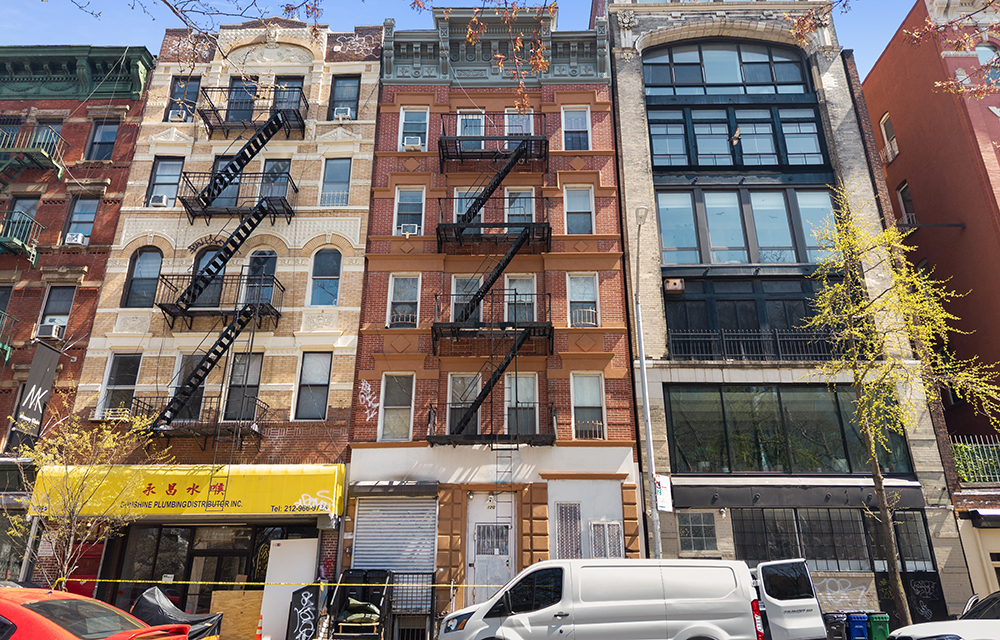
Investment Property Realty Group sells 120 Forsyth St. for $1.35 million
Manhattan, NY Investment Property Realty Group (IPRG) closed the sale of 120 Forsyth St., a mixed-use building located in the Lower East Side section of the city, for $1.35 million.





Columns and Thought Leadership

Positive forecast for New York’s pro-housing push? - by Philip Butler
New York’s housing crisis remains a hot button topic despite growing consensus that varied and affordable housing is desperately needed statewide. Governor Hochul has recently introduced several initiatives to overcome N.Y.’s anti-housing

A guide to finding the right NYC property management company - by Sanjay Gandhi
Being a small to midsize landlord in NYC is an increasingly demanding endeavor. From navigating complex regulations, increased compliance demands to dealing with tenant issues and remediating violations. It is wise to enlist the assistance of a partner, a professional

New York’s streets are full again, and the retail numbers prove it - by Noam Aziz
Walk down any New York block this year and you can feel it. The sidewalks are crowded, the storefronts are lit, and the energy that defines this city is back at full volume.

Hunt commercial real estate question and answer: Fortune 500 wisdom - by David Hunt
Yes, there are lessons to be learned from the largest companies in America when comes to managing your real estate. But the decision to buy or lease real estate may not be one of
.gif)