



News:
Brokerage
Posted: December 23, 2014
TerraCRG sells Prospect Heights/Crown Heights development site for $1.585 million
TerraCRG, Brooklyn's leading commercial real estate brokerage firm, announced that they have closed on the sale of the development site located at 949 Pacific Street, situated on the border of Prospect Heights and Crown Heights in Brooklyn. Ofer Cohen, Melissa DiBella Warren, Dan Marks, Peter Matheos, Michael Hernandez, and Joey Terzi of TerraCRG represented the owner and sold the property last week for $1.585 million, which equates to $385/BSF.
The site is located between Washington Avenue and Grand Avenue on the border of Prospect Heights and Crown Heights. The property was partially constructed and delivered with active permits and approved plans for 4,120 s/f gross s/f and calls for four units, including three floor-through one bedroom apartments and one duplex two bedroom penthouse apartment.
The site is just three blocks from Vanderbilt Avenue, which has been established as a true retail corridor. More than 20 food establishments have opened on the Avenue, including some of Brooklyn's trendiest restaurants. The Vanderbilt corridor draws from several different neighborhoods, uniquely close to Park Slope, Clinton Hill, and Fort Greene.
The property is located near the Barclays Center, Prospect Park, The Brooklyn Museum, Brooklyn Public Library, and the Brooklyn Botanic Garden. The site is just three blocks from the Clinton Street C subway station, and is also accessible by the 2 & 3 lines at the Bergen Street subway station and the Q & B subway lines at the Seventh Avenue subway station. The Barclays Center is just blocks away, with access to the 2, 3, 4, 5, D, N, R, B & Q trains as well as the Long Island Railroad.
"The sellers achieved premium pricing by delivering the partially constructed site with approved plans and active permits," said Peter Matheos, senior associate at TerraCRG. "In today's dynamic market, this is a rare find," Matheos adds.
Tags:
Brokerage
MORE FROM Brokerage
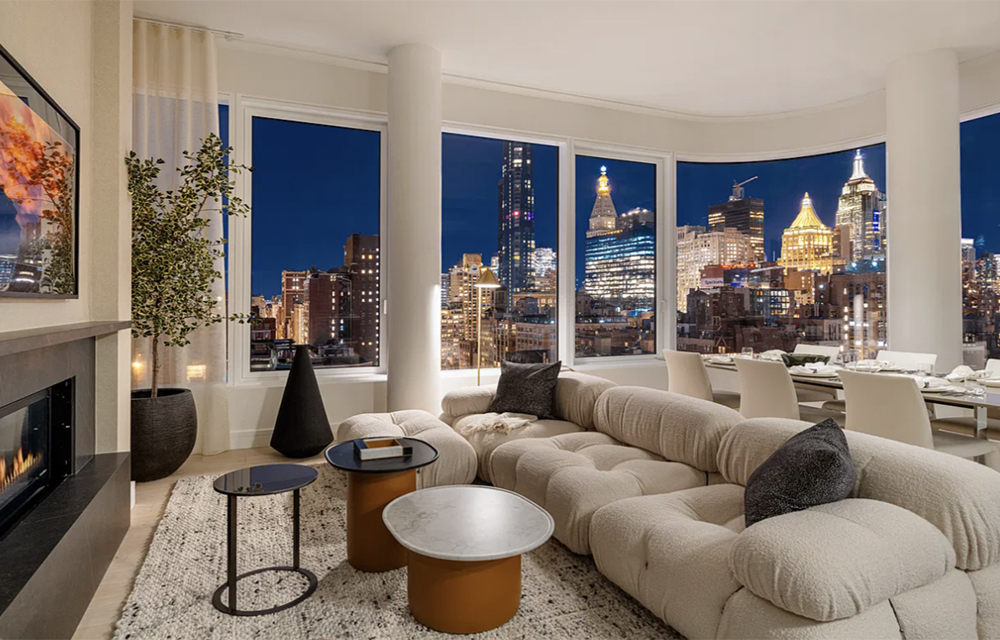
200E20TH sells out in Gramercy, penthouse A closes out sales at the CetraRuddy-designed condominium residences
Manhattan, NY 200E20TH, the CetraRuddy-designed architectural masterwork that brought a curved, contemporary sensibility to Gramercy’s Beaux-Arts streetscape, has



Quick Hits
 (2).gif)

Columns and Thought Leadership

Hunt CRE question and answer: Choosing a real estate agent - by David Hunt
First, we will only work with one agent exclusively. The primary reason is that we want that agent to legally represent our client’s interests. In New York State, a real estate agent has a fiduciary

Hunt commercial real estate question and answer: Fortune 500 wisdom - by David Hunt
Yes, there are lessons to be learned from the largest companies in America when comes to managing your real estate. But the decision to buy or lease real estate may not be one of

The art of investing in real estate - by Thomas Donovan
Real estate investing is as much an art as it is a skill. No one can time the market, or the factors that drive it, perfectly. Location, zoning, size, transportation, and neighborhood density give you a baseline for

New York’s streets are full again, and the retail numbers prove it - by Noam Aziz
Walk down any New York block this year and you can feel it. The sidewalks are crowded, the storefronts are lit, and the energy that defines this city is back at full volume.
.gif)