



News:
Brokerage
Posted: August 8, 2011
Sorrenti of JRS Architect installed on NCARB's board of directors
John Sorrenti, FAIA, of JRS Architect, P.C. in Mineola, was installed on the National Council of Architectural Registration Boards' (NCARB) board of directors at its 92nd Annual Meeting and Conference in June. Sorrenti was elected by the council's Middle-Atlantic Conference (Region 2), which comprises the jurisdictions of Delaware, District of Columbia, Maryland, N.J., N.Y., Pennsylvania, Virginia, and West Virginia. He previously served as the conference's chair, and vice chair/treasurer.
Since 2006, Sorrenti has volunteered on NCARB's Committee on Professional Development (PDP).
Serving as chair since 2008, he led the committee's effort to revise the council's continuing education standard to help stanÂdardize CE requirements among the 54 U.S. jurisdictions. The joint effort with the Member Board Executive ComÂmittee and the Committee on Procedures and Documents culminated with a recommendation resolution that was passed by NCARB's Member Boards in June.
Sorrenti has been a member of the New York State Board of Architecture since 2005, and is currently serving as its chair. He is the founder and president of JRS Architect, P.C., a full-service architectural firm with three locations in the greater New York tri-state area. Since its inception in 1986, the firm has grown from six to 35 professionals and received numerous design awards under his leadership.
A recognized leader in the profession, Sorrenti became a fellow of the American Institute of Architects (AIA) in 2008. He is the national chair of the College of Fellows Regional Representatives. Previous professional leadership positions include vice president of National AIA, president of New York State AIA, and president of the Long Island AIA Chapter. He is also the vice chair of the Town of North Hempstead Landmarks Commission.
In 2008, Sorrenti was presented with the Lifetime Achievement Award from the AIA Long Island Chapter in recogÂnition of over 20 years of outstanding achievement in the architectural profession.
Sorrenti received a Bachelor of Architecture degree from New York Institute of Technology (NYIT) in 1972, a MasÂters in Architecture from Ohio University in 1974, and a Masters in Business Administration from NYIT in 1978. He is licensed in New York, Connecticut, Pennsylvania, and New Jersey.
Tags:
Brokerage
MORE FROM Brokerage

Marcus & Millichap brokers $2.8 million sale of free-market mixed-use property in Brooklyn
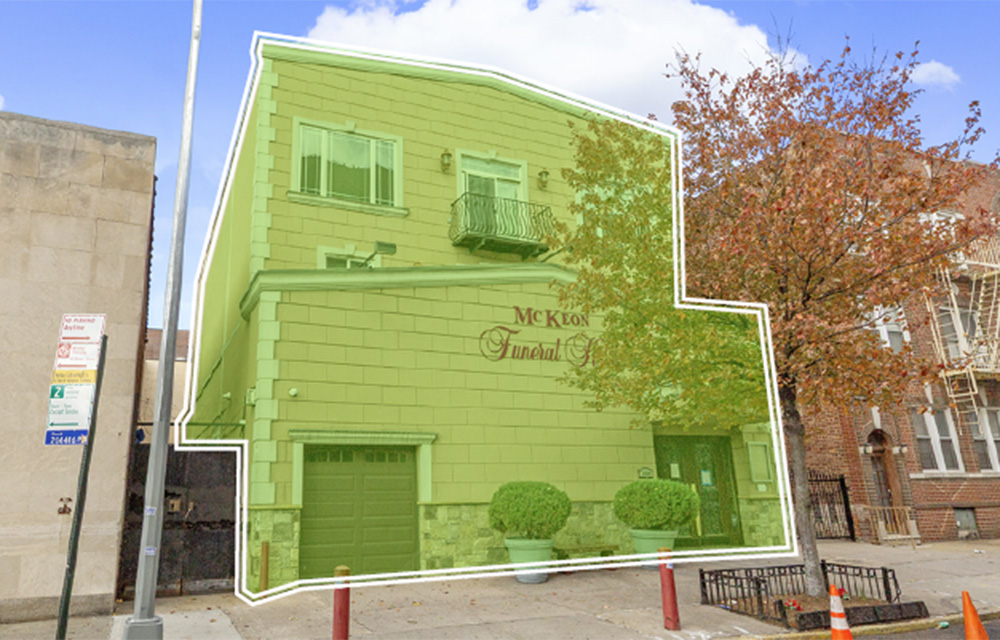
Brooklyn, NY Marcus & Millichap brokered the sale of 733 Dekalb Ave., a fully free-market multifamily and retail property in the Bed-Stuy neighborhood. The asset sold for $2.8 million.




Quick Hits

Columns and Thought Leadership

New York’s streets are full again, and the retail numbers prove it - by Noam Aziz
Walk down any New York block this year and you can feel it. The sidewalks are crowded, the storefronts are lit, and the energy that defines this city is back at full volume.

A guide to finding the right NYC property management company - by Sanjay Gandhi
Being a small to midsize landlord in NYC is an increasingly demanding endeavor. From navigating complex regulations, increased compliance demands to dealing with tenant issues and remediating violations. It is wise to enlist the assistance of a partner, a professional

Hunt commercial real estate question and answer: Fortune 500 wisdom - by David Hunt
Yes, there are lessons to be learned from the largest companies in America when comes to managing your real estate. But the decision to buy or lease real estate may not be one of

Positive forecast for New York’s pro-housing push? - by Philip Butler
New York’s housing crisis remains a hot button topic despite growing consensus that varied and affordable housing is desperately needed statewide. Governor Hochul has recently introduced several initiatives to overcome N.Y.’s anti-housing
.gif)
September Promotion
