



News:
Brokerage
Posted: September 22, 2020
Sage Realty and JLL complete lease expansion for Cambridge Associates
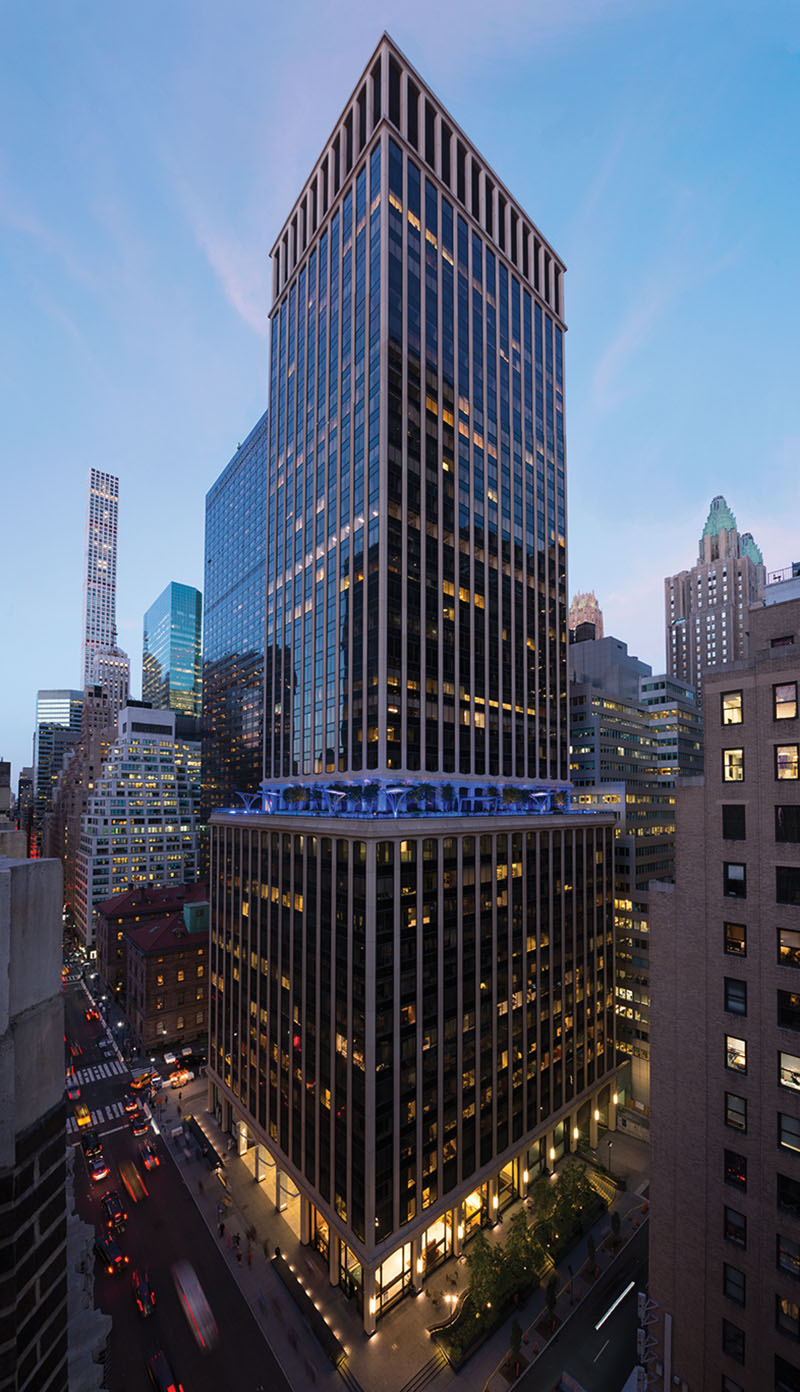
Manhattan, NY According to Sage Realty Corp., the leasing and management division of the William Kaufman Organization (WKO), global investment firm Cambridge Associates is relocating and expanding within 437 Madison Ave., a 40-story, 850,000 s/f office tower in the Plaza District.
The firm, which currently occupies 5,000 s/f on a portion of the 22nd floor, is moving its operations to a brand-new 10,191 s/f pre-built office suite on the 39th floor, a move that doubles its presence in the building.
Michael Lenchner and Jack Brennan with Sage, along with the Jones Lang LaSalle leasing team of Frank Doyle, David Kleiner, Cynthia Wasserberger, Andrew Coe, and Georgina Cook, represented building ownership in the transaction. Alex Benisatto and Ryan Alexander of CBRE represented the tenant.
“We are excited to be upsizing at 437 Madison. Our clients, colleagues and investment partners all value its location in the heart of Midtown, and we remain committed to our presence in New York for years to come,” said Jeff Blazek, head of healthcare practice and regional head for New York at Cambridge Associates.
“We are thrilled to expand our relationship with this prestigious investment firm at 437 Madison Ave.,” said Michael Lenchner, vice president and director of leasing at Sage Realty Corp. “This transaction is a perfect example of the timeless appeal of our building, our strong Midtown location, and our commitment to working with our tenants as their space needs grow and evolve over time.”
“We were thrilled to help facilitate and expand Cambridge’s presence in such an ideal location for them,” said Alex Benisatto, senior vice president at CBRE.
With the new agreement, Sage has leased another office suite that is part of the building’s pre-built program. These suites feature efficient floorplates, pantries, and views of the Midtown skyline.
Built in 1967 and renovated in 2015, 437 Madison Avenue includes a grand lobby and arcade area, outdoor plazas and seating areas, upgraded building systems and an 8,870 square-foot wraparound terrace on the 14th floor designed by Fogarty Finger, with spectacular views of St. Patrick’s Cathedral. The tower is situated in the heart of Midtown and occupies the entire blockfront between 49th and 50th Sts.
Other major tenants at the property include reinsurer Munich American Reassurance Company; financial services firm Citizens Bank; philanthropic organization Carnegie Corporation of New York; national law firm Wiggin and Dana LLP; global strategic communications firm Kekst CNC; and specialty finance company Medallion Funding Corp.
Tags:
Brokerage
MORE FROM Brokerage

Adirondack Capital Partners arranges $45 million sale of West Chelsea development site to Toll Brothers
Manhattan, NY Adirondack Capital Partners (ACP) closed the $45 million sale of 126/128 Tenth Ave. and 456 W. 18th St. to Toll Brothers City Living. The acquisition forms part of a broader






Quick Hits
 (2).gif)

Columns and Thought Leadership

Positive forecast for New York’s pro-housing push? - by Philip Butler
New York’s housing crisis remains a hot button topic despite growing consensus that varied and affordable housing is desperately needed statewide. Governor Hochul has recently introduced several initiatives to overcome N.Y.’s anti-housing

A guide to finding the right NYC property management company - by Sanjay Gandhi
Being a small to midsize landlord in NYC is an increasingly demanding endeavor. From navigating complex regulations, increased compliance demands to dealing with tenant issues and remediating violations. It is wise to enlist the assistance of a partner, a professional

New York’s streets are full again, and the retail numbers prove it - by Noam Aziz
Walk down any New York block this year and you can feel it. The sidewalks are crowded, the storefronts are lit, and the energy that defines this city is back at full volume.

Hunt commercial real estate question and answer: Fortune 500 wisdom - by David Hunt
Yes, there are lessons to be learned from the largest companies in America when comes to managing your real estate. But the decision to buy or lease real estate may not be one of
.gif)