



News:
Brokerage
Posted: May 21, 2012
Rudin family obtains 100% ownership of One Battery Park
In a move that continues to grow its presence while reaffirming its strong commitment and belief in the future of the downtown business district, the Rudin family has obtained 100% ownership of the 35-story, 885,000 s/f office building at One Battery Park Plaza by acquiring the Rose family's 50% interest in the property.
The Rudin and Rose families jointly built the tower in 1970, but their partnership was actually forged back in 1962 when patriarchs Samuel Rudin and David Rose first began assembling the site for the building, which is also known as 24 State Street.
"This transaction reaffirms the Rudin family's commitment to downtown and our belief that Lower Manhattan's recovery continues," said Bill Rudin, co-vice chairman and CEO of Rudin Management Company, the operating arm of the Rudin Family holdings.
"We're tremendously proud of our nearly 50-year partnership with the Rose family and the incredible working relationship we've enjoyed with them, which has enabled this Class A building to remain one of the preeminent office properties in downtown market," said Jack Rudin, Chairman of Rudin Management.
Said Daniel Rose, Chairman of Rose Associates, "the Rudins have been ideal partners for half a century, and it is only because of our changing portfolio needs that we chose to transfer our interest to our wonderful partner." Added Adam R. Rose, Co-President, "with 38,000 residential units under management it is clear that we are a residential firm. This was a perfect opportunity to solidify our brand and focus our attention on our core area of activity."
Among the major tenants headquartered at One Battery Park Plaza are Hughes Hubbard & Reed LLP, Seward & Kissel, Liberty Mutual Insurance Company, The Partnership for New York City Inc, and Mound, Cotton, Wollan & Greengrass.
In addition to One Battery Park Plaza, other downtown office buildings owned by the Rudin family include 80 Pine Street, 55 Broad Street, One Whitehall Street, 110 Wall Street and 32 Avenue of the Americas.
Rudin Management Company is a full service real estate organization representing the interests of the Rudin Family, which owns and manages one of the largest private property portfolios in New York City. Among its commercial real estate holdings are 16 office buildings containing approximately 10 million s/f of space and 20 apartment buildings comprising over four million s/f of residences.
Tags:
Brokerage
MORE FROM Brokerage
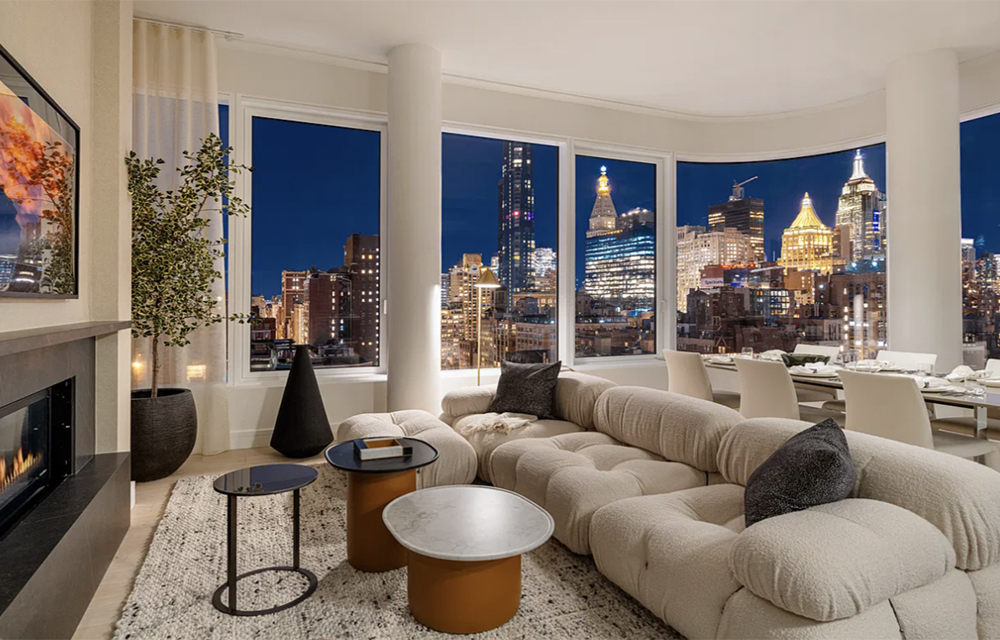
200E20TH sells out in Gramercy, penthouse A closes out sales at the CetraRuddy-designed condominium residences
Manhattan, NY 200E20TH, the CetraRuddy-designed architectural masterwork that brought a curved, contemporary sensibility to Gramercy’s Beaux-Arts streetscape, has





Quick Hits

Columns and Thought Leadership

The art of investing in real estate - by Thomas Donovan
Real estate investing is as much an art as it is a skill. No one can time the market, or the factors that drive it, perfectly. Location, zoning, size, transportation, and neighborhood density give you a baseline for

New York’s streets are full again, and the retail numbers prove it - by Noam Aziz
Walk down any New York block this year and you can feel it. The sidewalks are crowded, the storefronts are lit, and the energy that defines this city is back at full volume.

Hunt CRE question and answer: Choosing a real estate agent - by David Hunt
First, we will only work with one agent exclusively. The primary reason is that we want that agent to legally represent our client’s interests. In New York State, a real estate agent has a fiduciary

Hunt commercial real estate question and answer: Fortune 500 wisdom - by David Hunt
Yes, there are lessons to be learned from the largest companies in America when comes to managing your real estate. But the decision to buy or lease real estate may not be one of
.gif)